

The complete guide
Hydroponic Nutrients: A Practical Buyer's Guide to A&B Liquid Plant Food
The problem with growing in water
Soil is forgiving. It holds a reserve of minerals, it buffers pH swings, and it quietly feeds a plant for weeks between waterings. Take the soil away and all of that goes with it. In a hydroponic system the roots sit in water, and that water is the entire diet. If something is missing, the plant notices within days.
That is why people who buy an indoor garden and run it on plain tap water end up disappointed. The seedlings sprout, the first true leaves look healthy, and then everything stalls. Lower leaves yellow. Growth slows to nothing. Nobody did anything wrong, the plants just ran out of food.
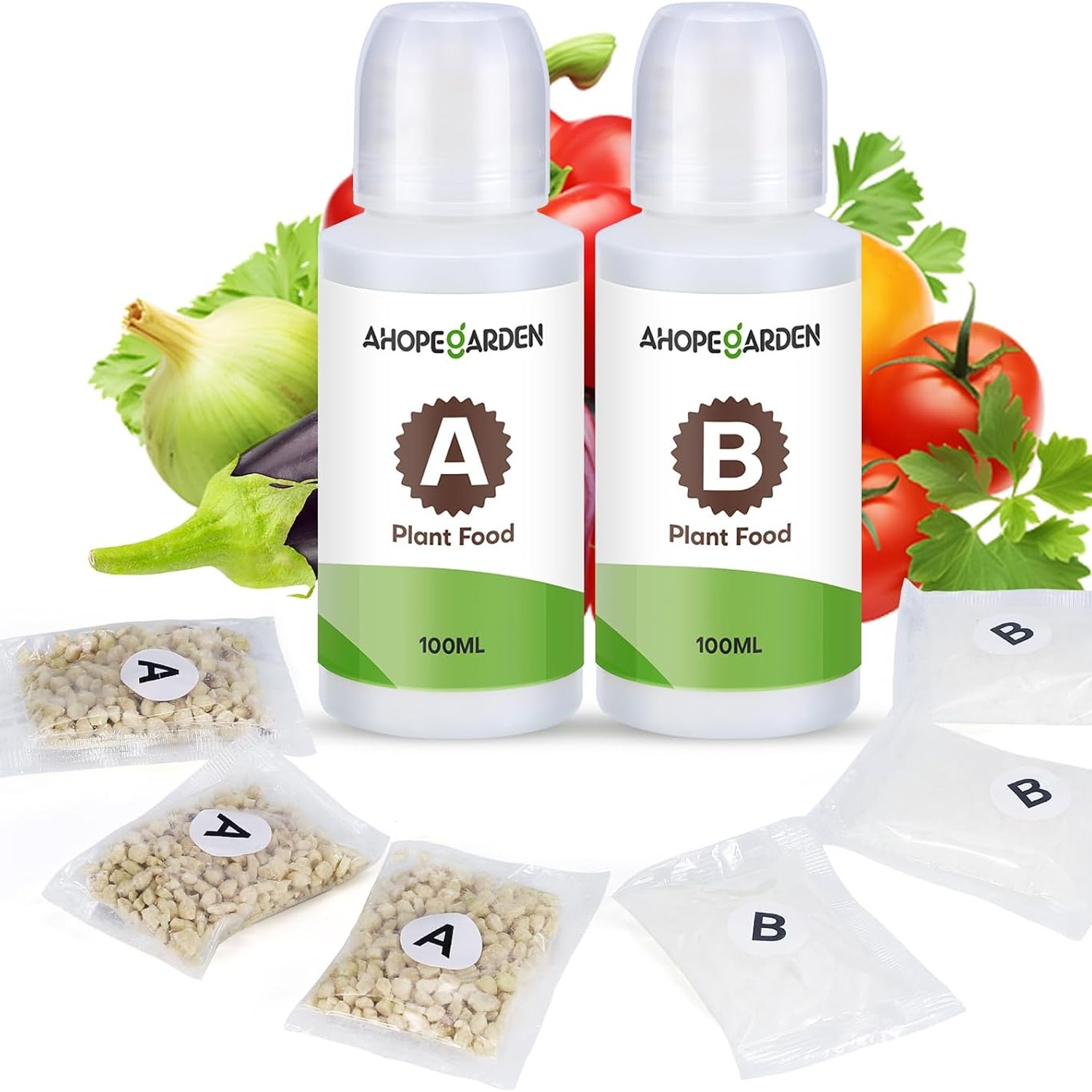
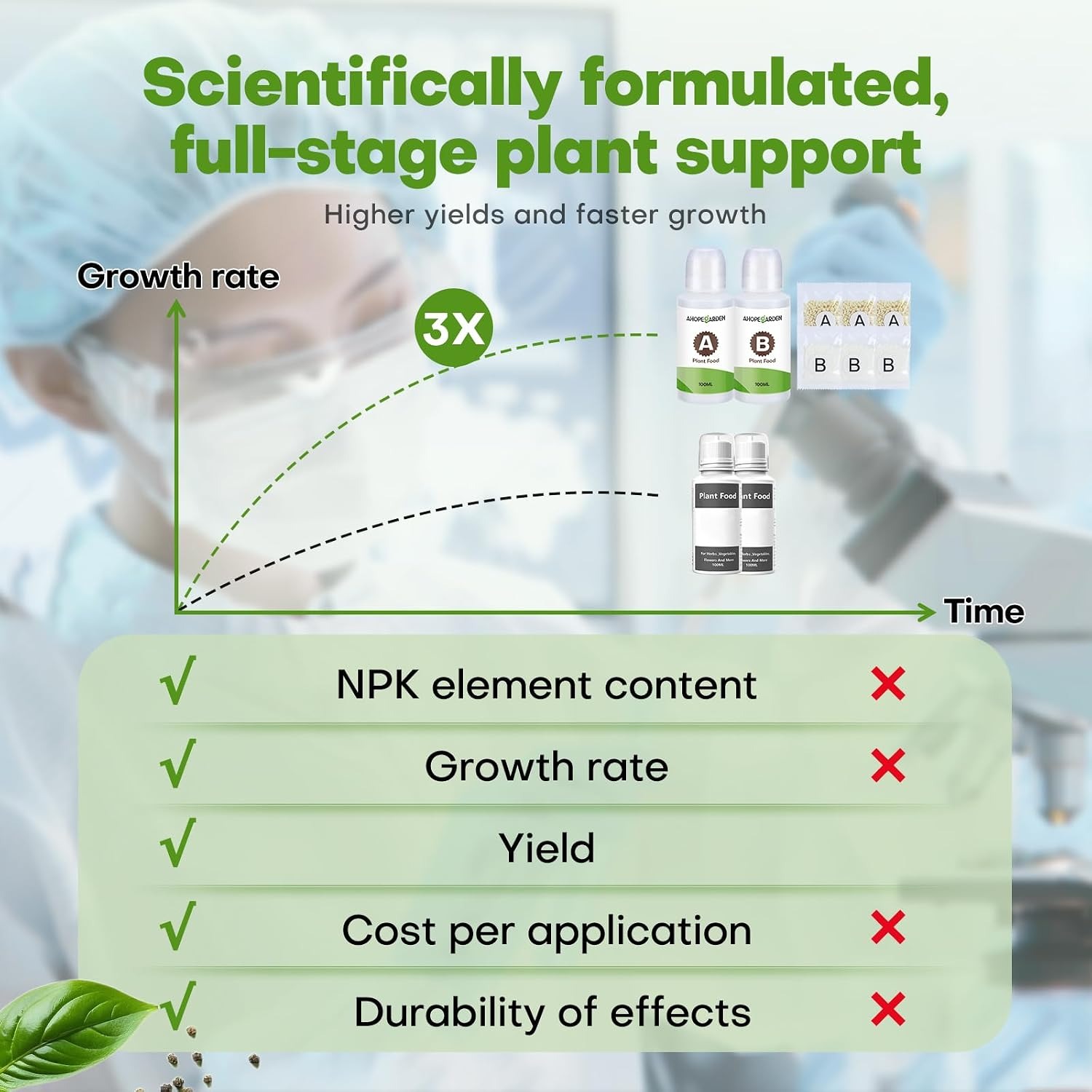
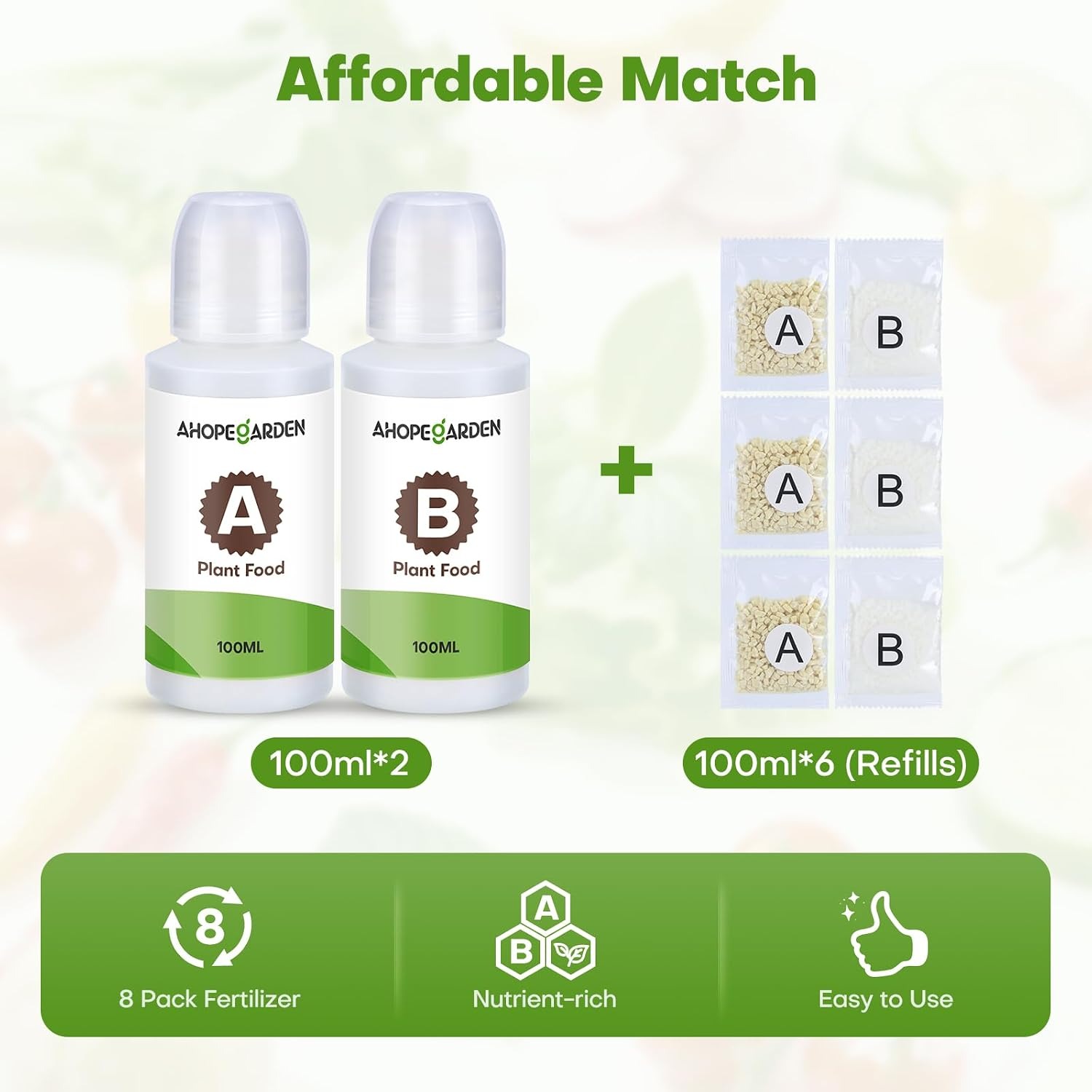
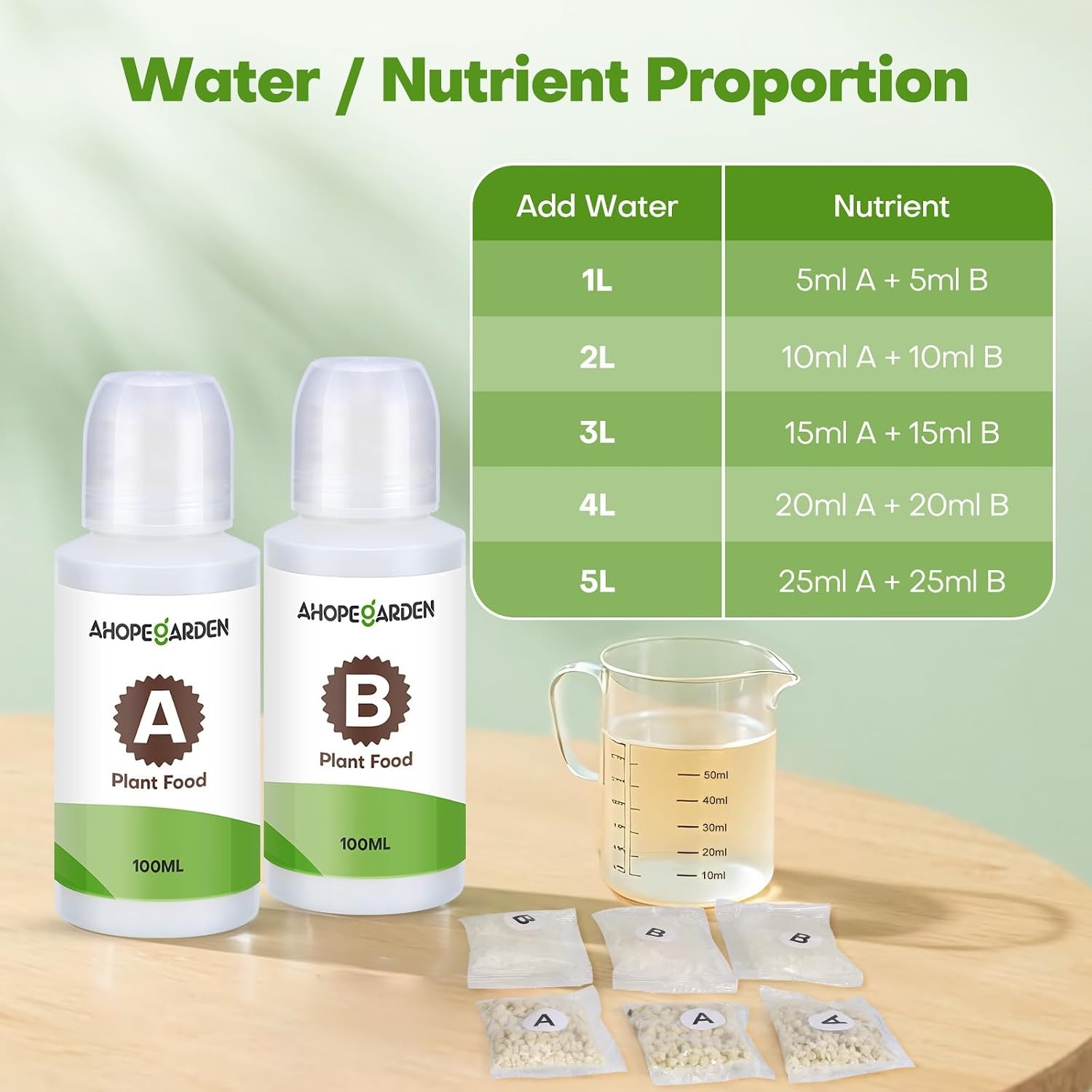
Hydroponic nutrients solve that by delivering every element a plant needs in a form it can absorb straight away. The pack here is a two-part liquid concentrate, 800ml in total, with Solution A and Solution B mixed at a 1:1 ratio into your tank water.
Why two bottles and not one
New growers often wonder why hydroponic plant food comes in pairs. It looks like extra work. The reason is chemistry rather than marketing.
Calcium is the usual culprit. In a strong concentrate, calcium reacts with sulphates and phosphates and forms solids that settle out as a chalky sludge. Once that happens the calcium is gone as far as your plants are concerned, and so is some of the phosphorus. Keeping those elements in separate bottles stops them meeting until the concentration is low enough to be safe.
That is the whole trick. Solution A carries one group, Solution B carries the other, and the dilution in your reservoir is what makes them compatible. It also explains the one rule you must not break: never pour the two concentrates together. Add A to the water, stir it in, then add B.
How to mix it
The process takes about a minute.
Fill your reservoir with water first. Always water first, never nutrients first. Measure your dose of Solution A using the marked cap and stir it through. Then measure the same amount of Solution B and stir again. The 1:1 ratio means you are not doing sums in your head at the kitchen sink, which matters more than it sounds when you are topping up a tank before work.
If you have a pH pen, check the solution after both parts are in and adjust if it sits well outside the 5.5 to 6.5 range that most crops like. If you do not have one, do not let that stop you. Plenty of countertop gardens run happily for years without anyone touching a meter.
Dose strength is the one thing worth paying attention to. Seedlings and young cuttings want a weak mix, roughly half of what a mature plant takes. Leafy greens and herbs sit in the middle. Fruiting plants like tomatoes, chili peppers and strawberries take the most, particularly once flowers appear. If you are hunting for the best hydroponic fertilizer for tomatoes, the answer is usually the same balanced solution run a bit stronger, not a different bottle.
Who this suits
This is a general purpose feed, and that is its strength. If you own a pod style countertop unit and the sachets that came in the box have run out, a bottle of liquid concentrate is cheaper per feed and far easier to store. If you have moved on to a deep water culture bucket or a vertical tower, the same bottles do the job.
It also suits the person running several small setups at once. One set of nutrients across a herb garden in the kitchen, a lettuce tower in the laundry and a strawberry bucket on the balcony is simpler than keeping four different products on a shelf. For anyone searching for the best plant food for indoor gardens, flexibility usually beats specialisation at this scale.
Where it is less relevant is commercial growing or very specific hobby crops where growers tune nitrogen and potassium week by week. Those setups tend to run three-part or four-part systems with separate bloom boosters. For a home grower producing salad, herbs and the odd punnet of cherry tomatoes, that level of control is more work than payoff.
Choosing between liquid and powder
Powdered nutrients are cheaper to ship and they keep for a very long time. They also need proper dissolving, and in a small tank with a weak pump you can end up with grit sitting on the bottom and a feed that is stronger at the base than the top.
Liquid concentrate goes into solution the moment it hits water. For small reservoirs that are topped up often, that is a real advantage. The trade-off is that you are paying to ship water, and the bottles take up more cabinet space. At 800ml this pack sits in a sensible middle ground for home use, big enough to last through several cycles without needing a shelf of its own.
Looking after the solution and the system
The concentrates store well. Keep the caps tight, stand the bottles upright, and put them somewhere cool and dark. Sunlight on a bottle of nutrient is not catastrophic but it does nothing good over months.
Mixed solution is a different story. Once diluted, it becomes a nice environment for algae and bacteria, especially if light reaches the water. Mix what you need rather than making a big batch for later. Change the reservoir completely every two to three weeks, topping up with fresh solution in between as the level drops.
Watch for evaporation. As water leaves the tank the nutrients stay behind, so the mix gradually gets stronger. Topping up with plain water for a few days then doing a full change is a reasonable rhythm for most small systems.
Keep the tank covered. Light on the water is the single biggest cause of green slime in home hydroponics. Block the gaps around net pots with collars or foam and the problem mostly disappears.
Finally, give the system a rinse between crops. Mineral scale builds up slowly in pumps and tubing. A wash with warm water, or a mild vinegar solution for stubborn deposits, keeps flow rates where they should be.
Reading your plants
Your plants will tell you more than any meter. Pale lower leaves that yellow from the bottom up usually mean the feed is too weak or too old. Burnt, crispy leaf tips and curled edges usually mean it is too strong. Slow growth with healthy color often points to light or temperature rather than nutrition.
Make one change at a time and give it a week. Chasing symptoms with three adjustments at once leaves you with no idea which one helped.
The short version
Hydroponic plants eat what is in the water, nothing else. A two-part A&B solution keeps the reactive minerals apart in the bottle so they stay available once diluted, and the 1:1 ratio here makes mixing quick.
Water first, then A, stir, then B. Light dose for seedlings, medium for greens and herbs, heavier for fruiting plants. Change the reservoir every couple of weeks, keep light off the water, and store the concentrates somewhere cool and dark.
Do that much and an 800ml pack will carry a small indoor garden through a lot of harvests.