
The complete guide
The Practical Buyer's Guide to Countertop Hydroponic Growing Systems
The problem with growing food indoors
Most people who try to grow herbs inside end up with the same sad result. A grocery store basil plant lives on the windowsill for two weeks, drops its leaves and dies. A pot of cilantro bolts. A tray of lettuce seedlings stretches into pale threads and never fills out.
The cause is almost always the same two things. Not enough light, and inconsistent water. A window that looks bright to your eyes gives a plant a fraction of what it gets outdoors, and that drops off sharply in fall and winter. Meanwhile potting mix swings between soggy and bone dry depending on how busy your week was.
A hydroponics growing system removes both problems at once. The plant sits in a basket with its roots reaching into a tank of water mixed with nutrients. A pump circulates that water so the roots get oxygen as well as food. An LED panel sitting directly above provides light at the intensity the plant actually needs, on a timer, every day, regardless of the season or which way your kitchen faces.
How this system works
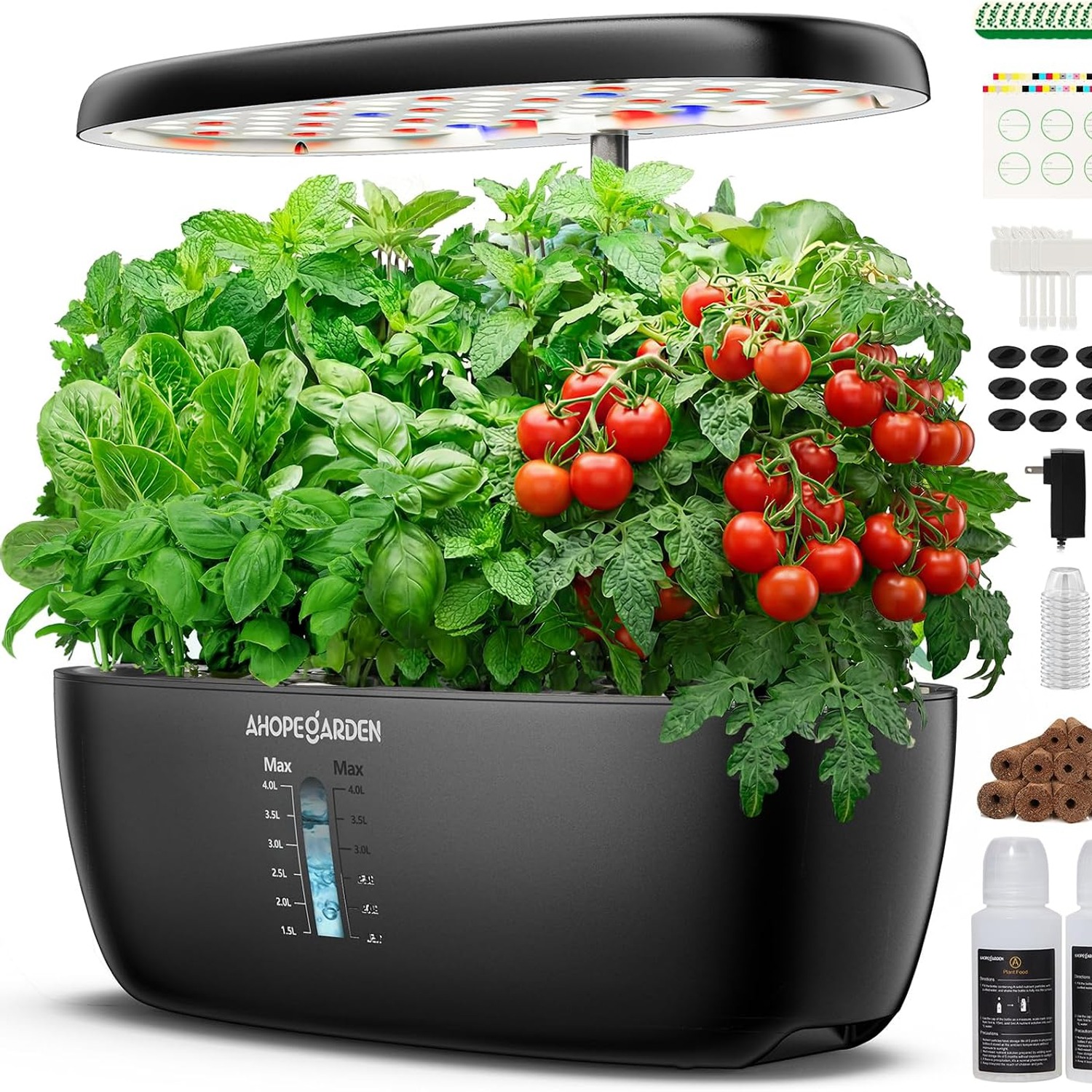
Twelve small baskets sit in the lid of a 4 liter tank. Each basket holds a sponge, and a seed goes into the sponge. Roots grow down through the sponge and into the water below.
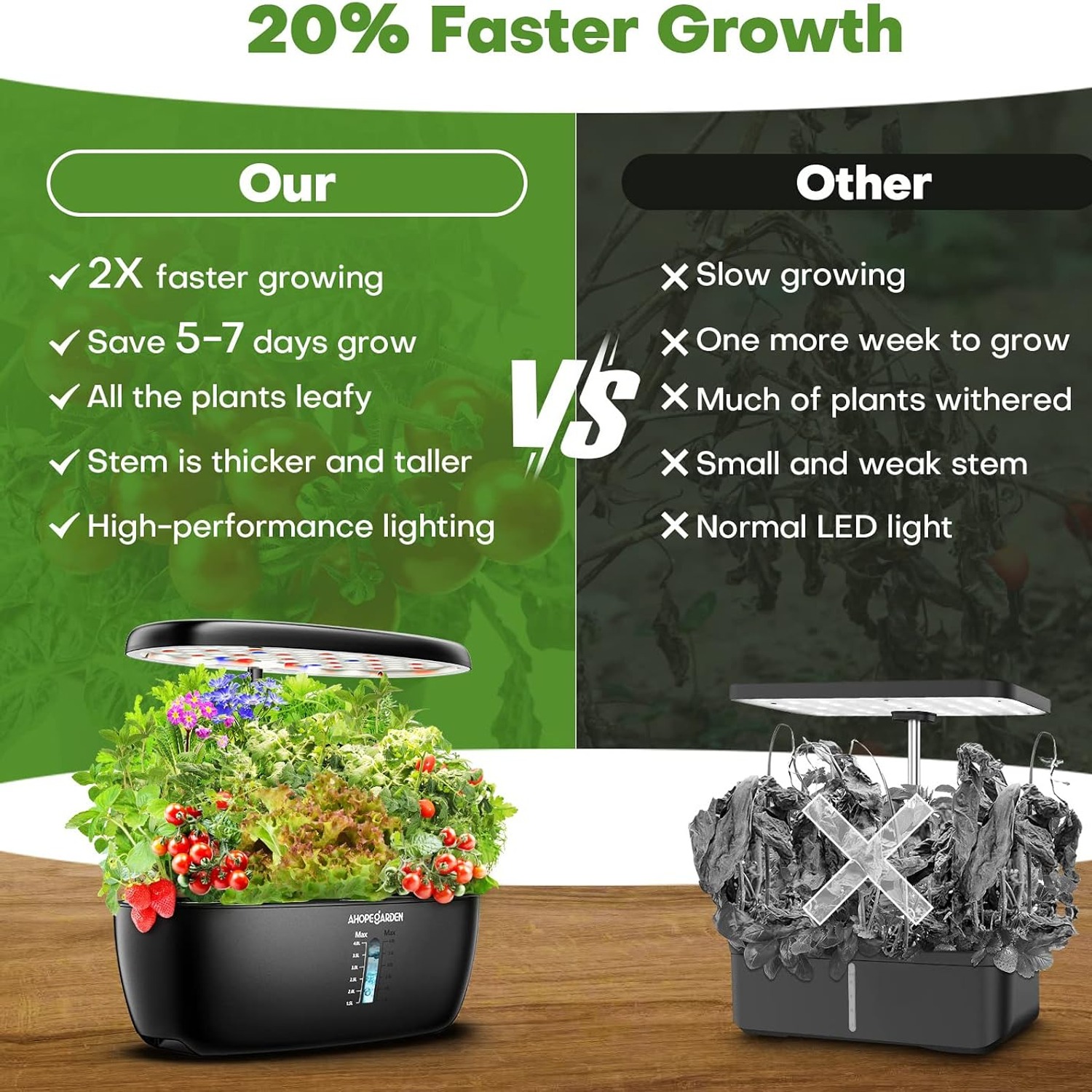
The pump runs on a 30-minute on and off cycle. During the on phase it moves water through the system, stirring in oxygen and pushing nutrient around the root zone. During the off phase the roots get air. That alternation is a big part of why hydroponic plants grow faster than the same seed planted in a pot of soil, because soil roots spend a lot of their energy hunting for water and air pockets.
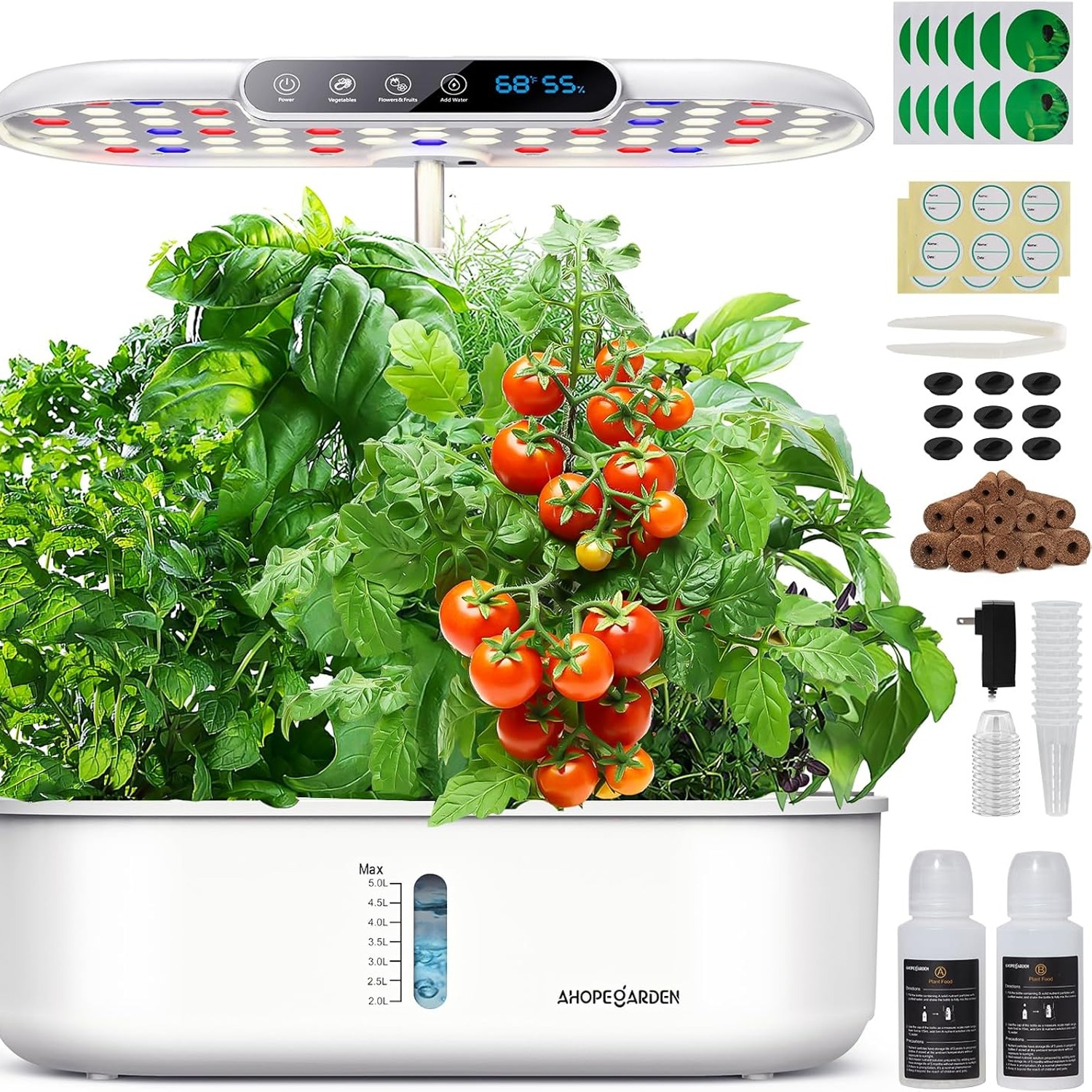
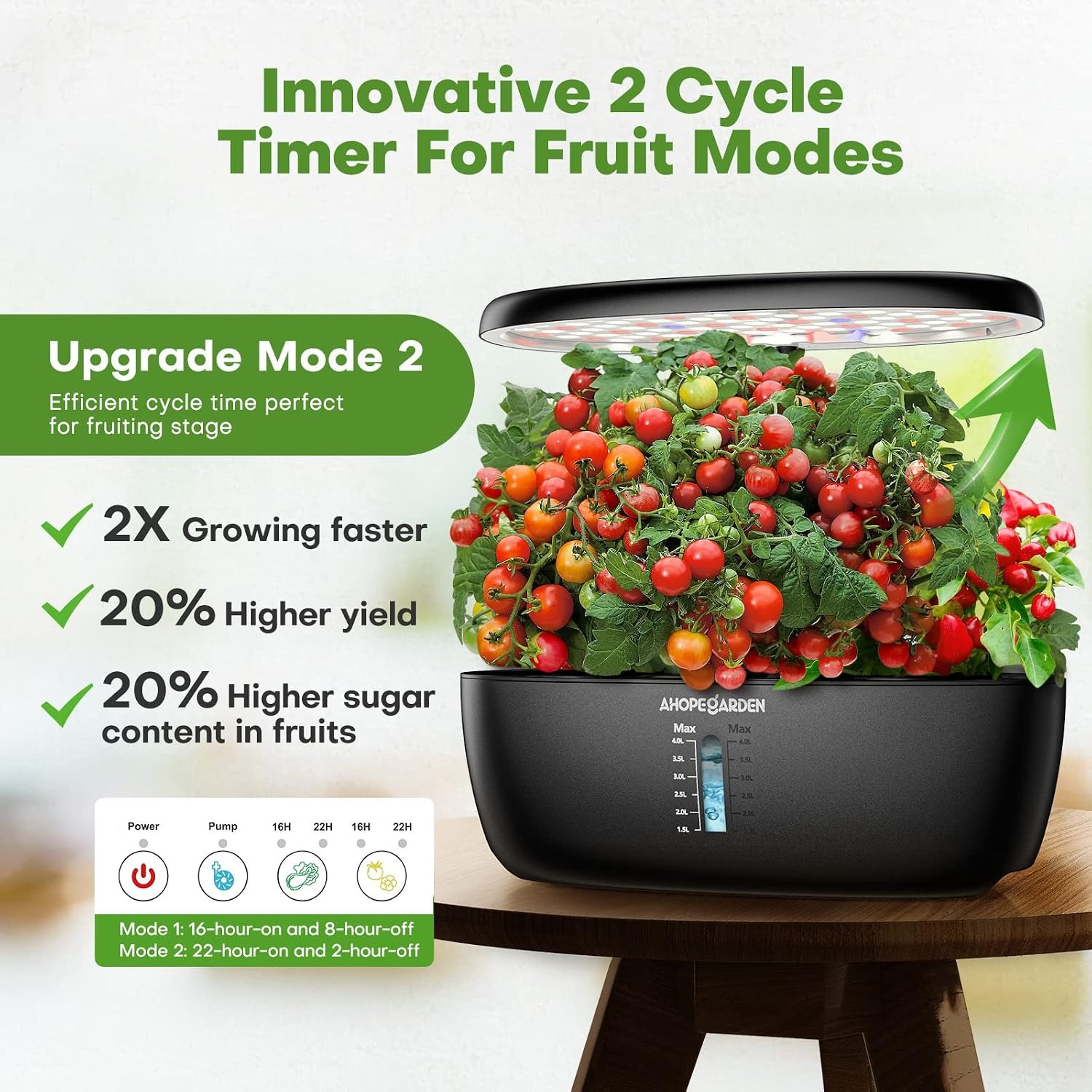
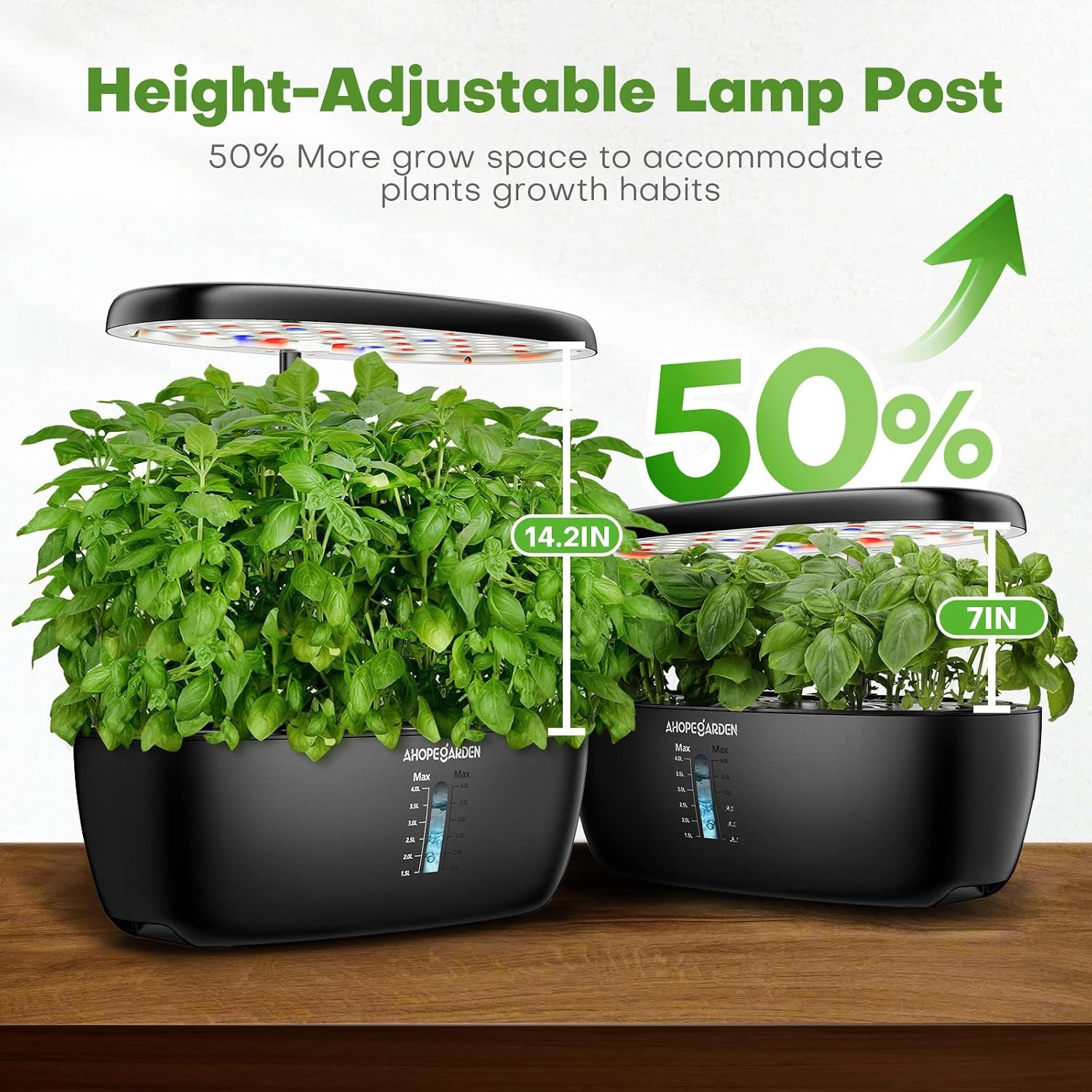
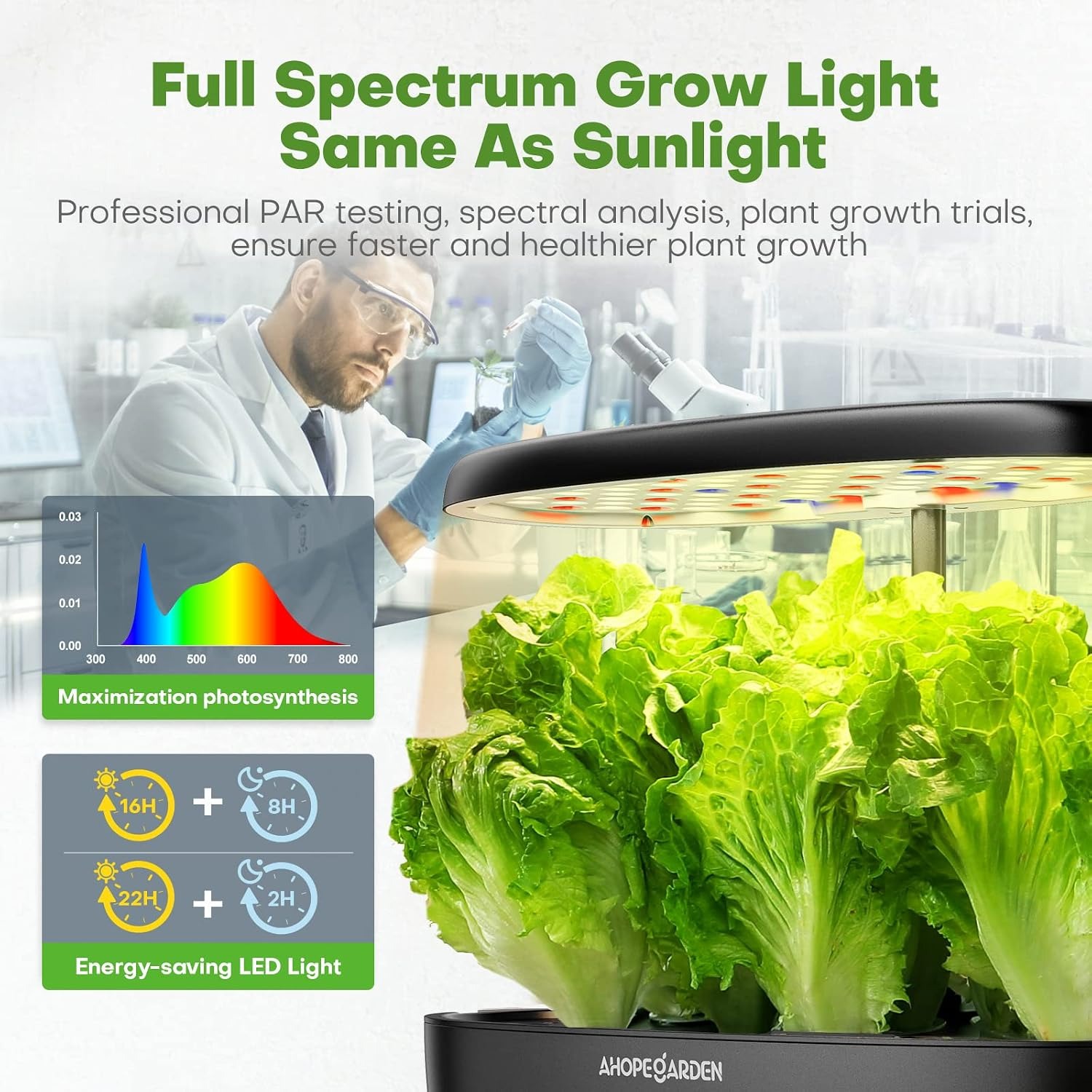
Above the tank, a full-spectrum LED panel sits on a post that raises to around 14.2 inches. You keep it low over new seedlings so they do not stretch, then lift it as the plants grow so the light stays an even distance from the leaves. Two modes cover different plant types. The veggie setting suits leafy herbs and greens. The fruit and flower setting is for plants that need to bloom and set fruit.
The timer gives you a choice of a 16-hour or a 22-hour daily cycle. Sixteen hours is a sensible default for herbs and salad. Twenty-two hours pushes harder, which suits fruiting plants where you want more yield.
A see-through water window runs down the side of the tank. It sounds minor, but it is the feature you will use every single day, because knowing the level at a glance is the difference between a system you maintain and one you neglect.
Who it suits
Apartment dwellers are the obvious fit. If you have no balcony, no garden and a north or south wall with no useful light, this is the only realistic way to grow anything edible at home.
Cooks are the other group. If you use fresh herbs regularly, the economics work fast. A grocery store packet of basil costs real money, goes slimy in four days and you throw half away. A living plant on the counter gives you leaves on demand for months.
It also works well for anyone who wants a low-commitment plant project. The system handles the schedule. You are not watering daily or moving pots around chasing sun. Parents often set one up as a kids' project because the growth is fast enough that children stay interested, and there is no soil to spill on the floor.
Where it is less suited is anyone wanting to grow in volume. Twelve pods is a meaningful herb supply, not a vegetable patch. If you want to feed a family from it, look at larger multi-level units rather than a compact countertop model.
Choosing the right size and setup
Pod count is the first decision. Twelve is the sweet spot for a counter unit. It gives you enough stations to run several different herbs plus a few lettuces without taking over the kitchen. Larger 40 and 60 pod systems exist, but they need floor space and a proper spot in a utility room or spare corner.
Tank size matters more than people expect. A 4 liter reservoir means you can genuinely go two to three weeks between refills during the growth stage. Smaller tanks need attention every few days, which is exactly the kind of chore that leads to abandoned equipment.
Check the light post height against what you want to grow. At roughly 14.2 inches of lift, this unit comfortably handles herbs, lettuce and compact varieties. Tall tomato plants will outgrow it, so choose dwarf or bush varieties if you want fruit.
Measure the spot before you order. The body is 14.96 inches wide and 7.48 inches deep, with 7.28 inches of body height, plus the light post above that. Most benches handle it easily, but a shelf with a low cabinet above it may not.
Finally, think about where the wall outlet is. The unit needs to stay plugged in to run the pump and light, so a trailing cord across a walkway is worth avoiding at the planning stage.
Getting started and keeping it going
Planting is simple. Soak the sponges, drop two or three seeds into each one, slot them into the baskets and sit the seedling covers on top. Those covers hold humidity around the seed while it germinates. Once you see green, the covers come off.
Fill the tank with water, add the A&B nutrient solution at the stated dose, set your light mode and timer, and that is the setup done. Germination for most herbs takes a few days to a week.
As plants grow, thin them. If all three seeds in a sponge come up, snip the two weakest at the base rather than pulling them, which would disturb the roots of the one you are keeping. Crowded pods produce weak plants.
Harvest little and often. With basil and mint, pinch the growing tip above a pair of leaves and the plant branches into two stems. Keep doing that and one plant becomes a bush. With lettuce, take outer leaves and leave the center growing. Cutting the whole plant off at the base ends it.
Nutrients get consumed as plants grow, so they need replenishing. Top up water as the level drops, and add fresh nutrient when you do a larger refill. Every few weeks, or between crops, empty the tank completely, rinse it with warm water, wipe it out and start fresh. Keep the hole covers on unused pods, because blocking light out of the tank is the simplest way to stop algae forming.
Clean the LED panel occasionally with a dry cloth and always unplug first. Keep water off the light post and the control panel. The housing is ABS, which handles moisture fine, but the electronics inside it do not.
The short version
A 12 pod countertop hydroponic system solves the two reasons indoor herbs usually die, which are weak light and erratic watering. This one gives you a full-spectrum LED on an adjustable post with two modes and two timer cycles, a 4 liter tank with a visible level window, and a quiet pump that runs on a 30-minute cycle to keep water fresh and roots fed.
It arrives with baskets, sponges, seedling covers, hole covers and nutrient solution. You add seeds and a wall outlet. If you cook with fresh herbs, live without a garden, or just want a plant project that keeps itself alive, it earns its space on the counter quickly.