Hydroponics Company
Company
Shop By Category
T&Cs
Shop Online
  • Clear materials and product specifications
  • Free tracked USA-wide delivery over $75
  • 14-day returns

Aquarium Air Pump | Dual Outlet Fish Tank Aerator | Adjustable Air Pump Kit

Uniclife Dual Outlet Aquarium Air Pump with Air Stones, Tubing and Check Valves

$29.99 $35.99 Save $6
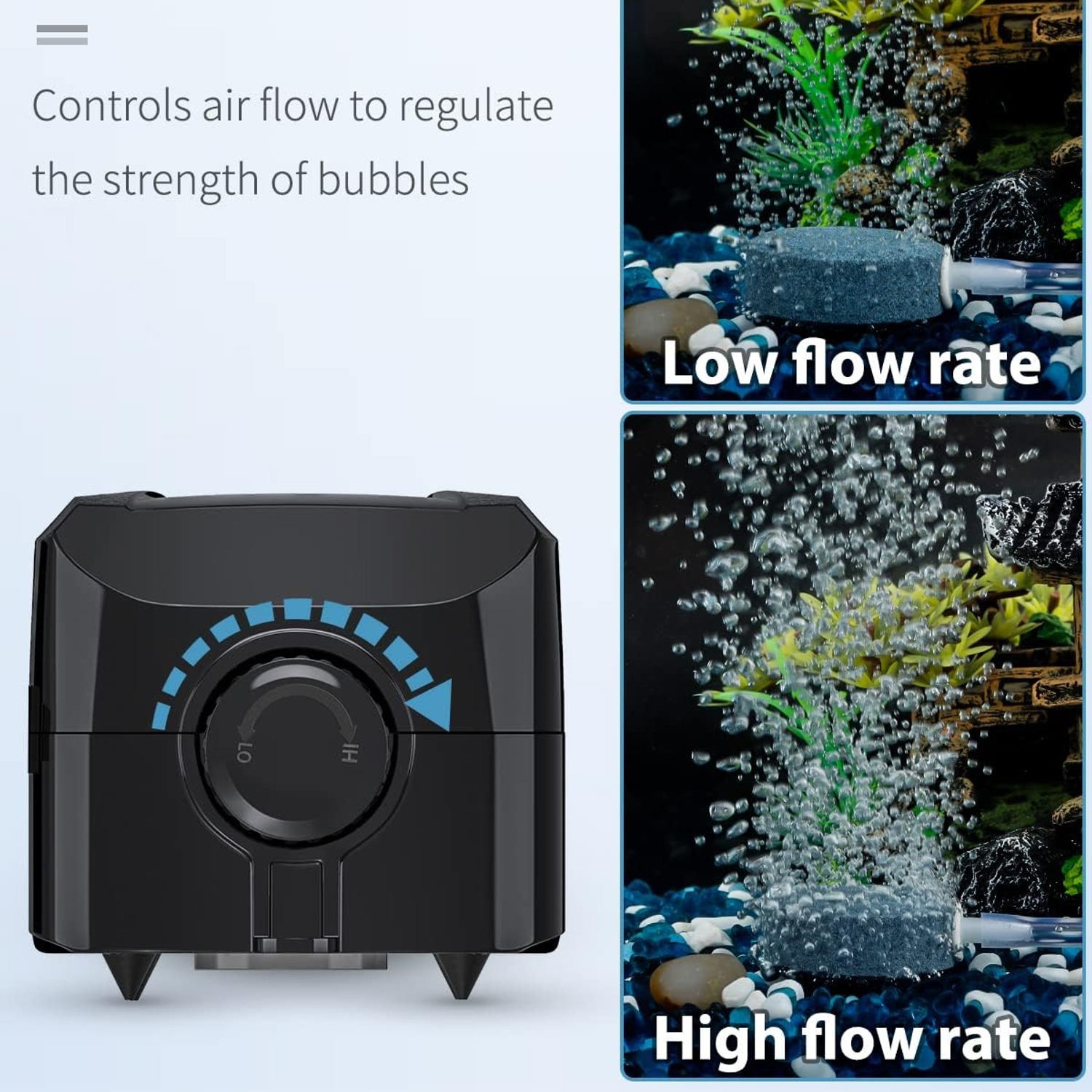
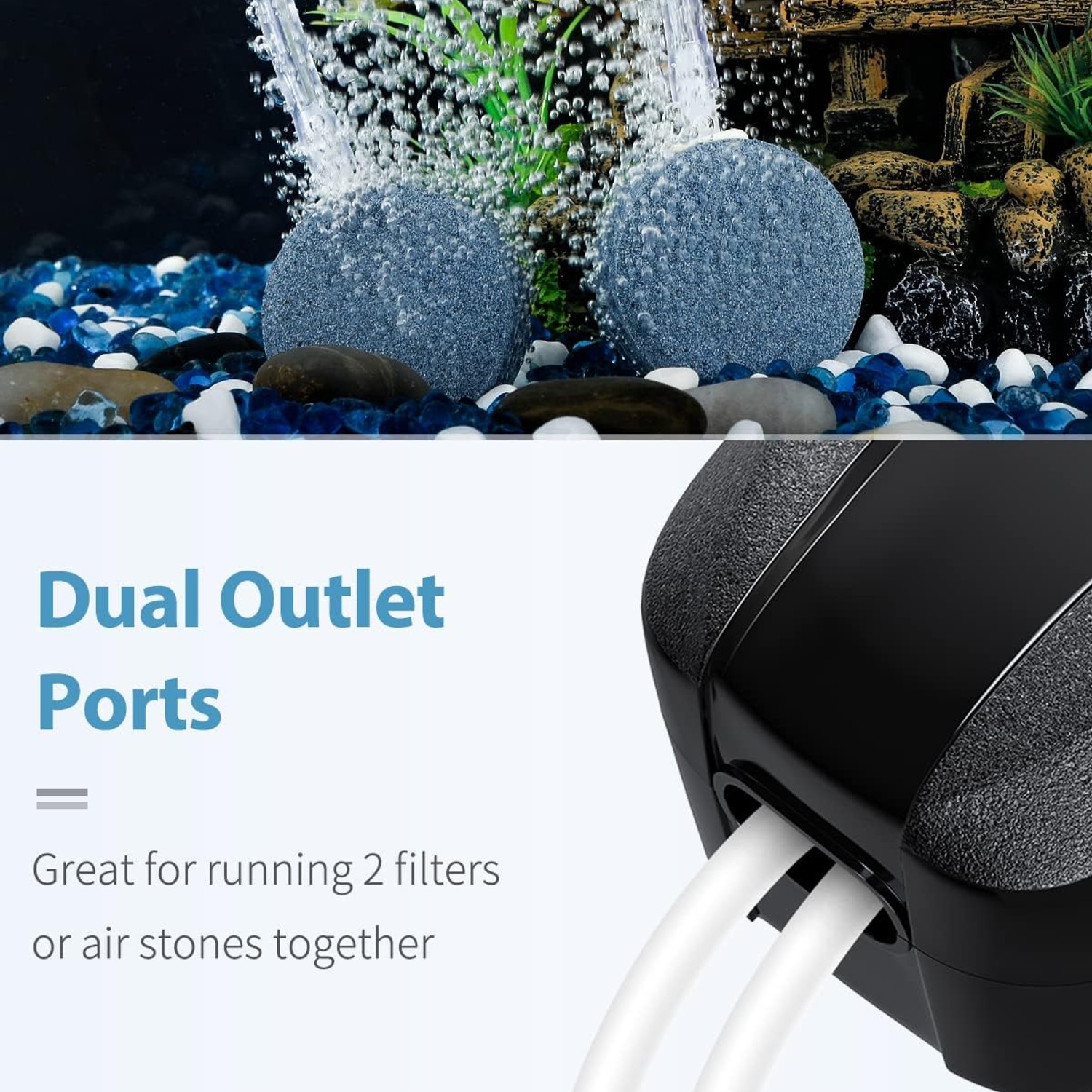
  • Two Adjustable Outlets
  • Low Noise Running
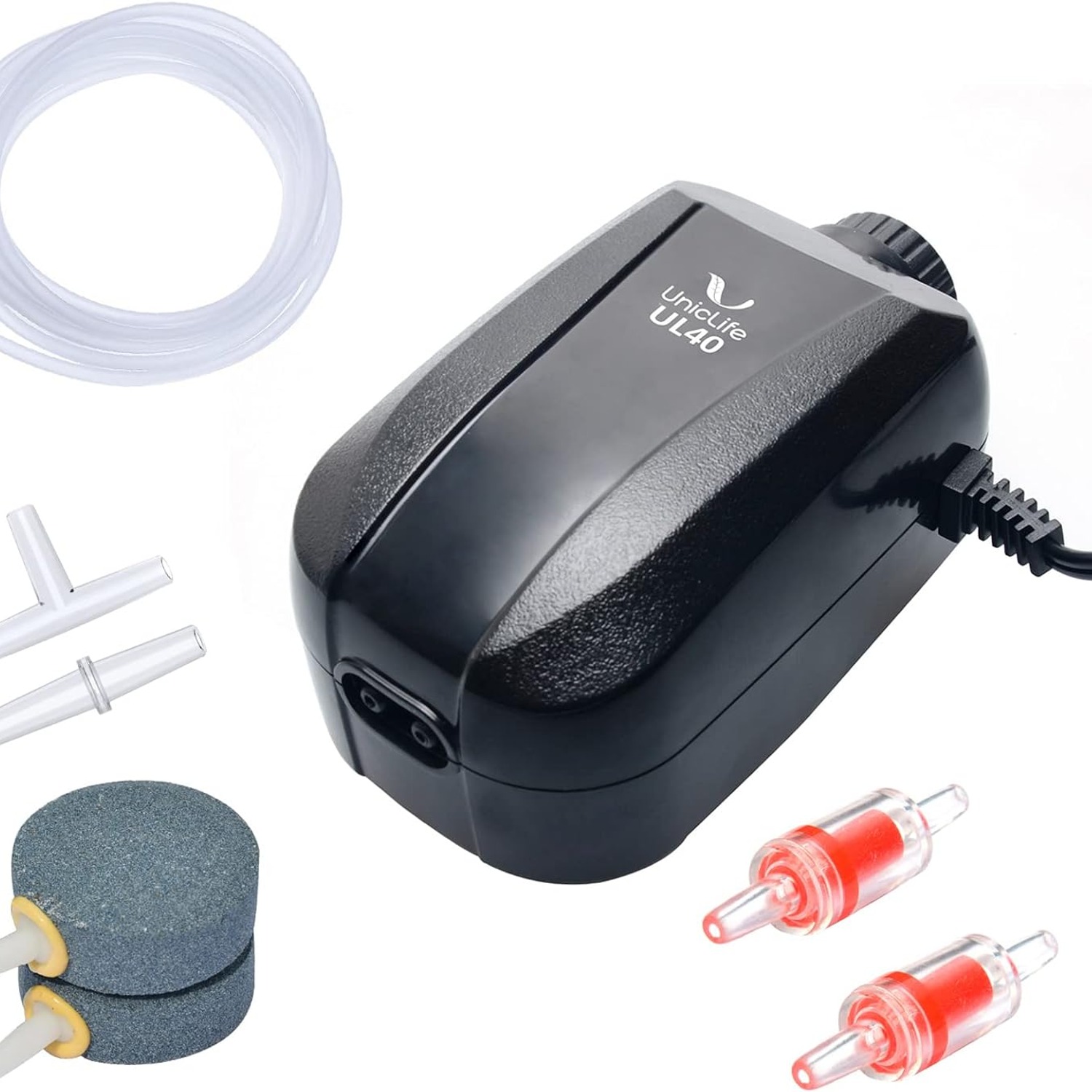
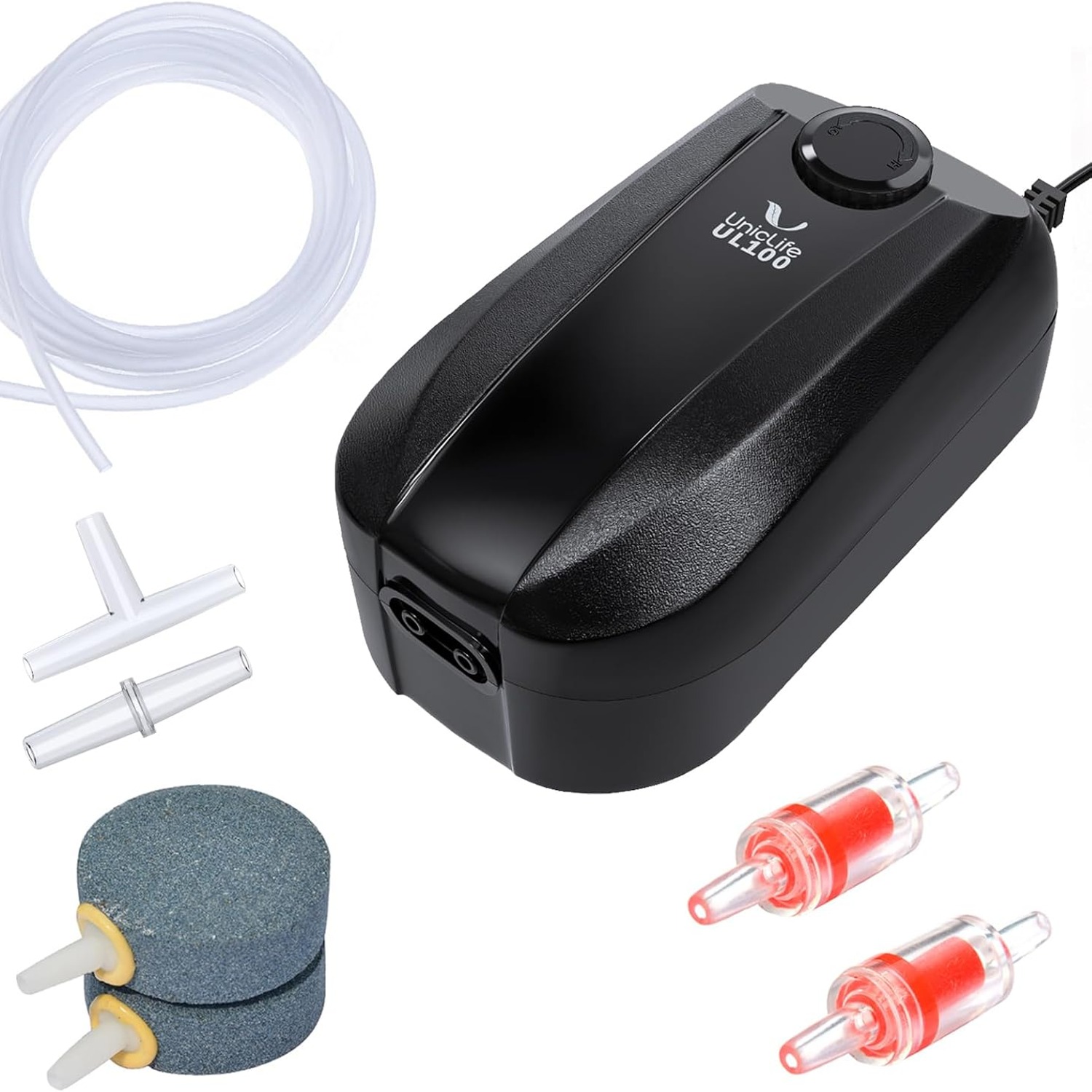
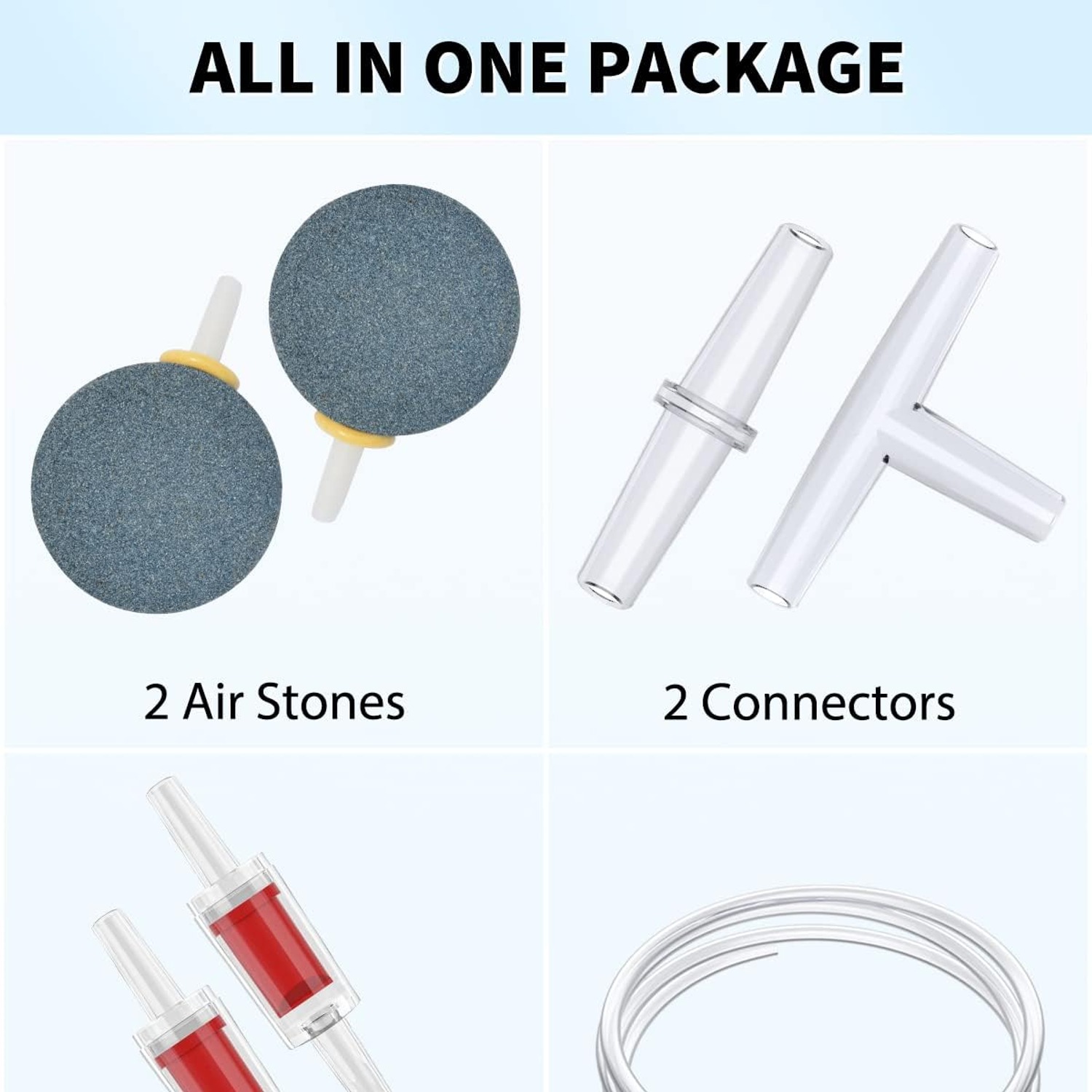
  • Complete Starter Kit
  • Low Power Draw

Price: $29.99 $35.99

  • Free tracked USA-wide delivery on orders $75+, otherwise a flat $9.95
  • Pay by card or PayPal, handled by the payment provider
  • 14 days to change your mind, plus your statutory rights
Product specifications
BrandUniclife
Model NumberUniclife-UL080
Power SourceCorded electric
Power Draw4 W
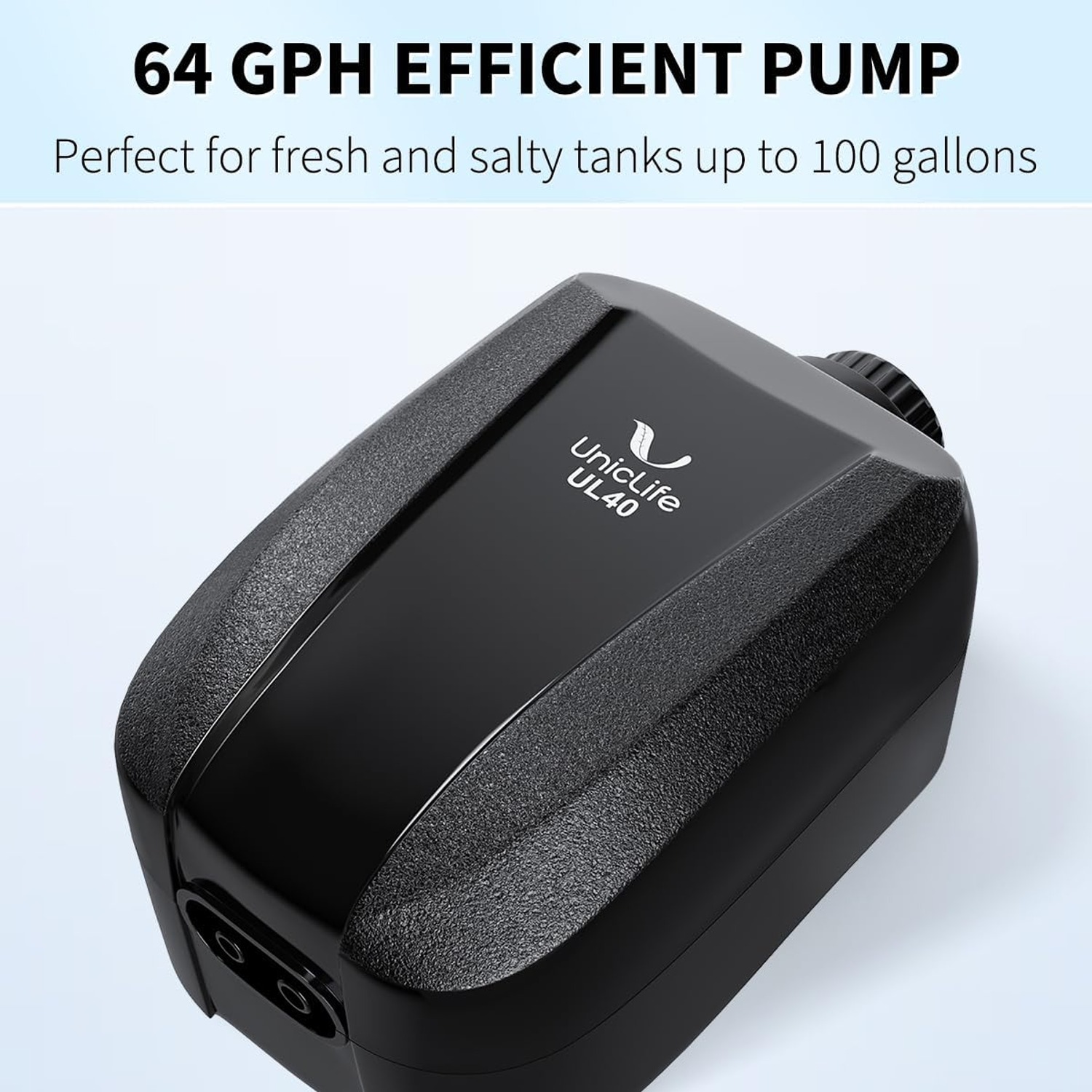
Maximum Air Flow64 GPH
Maximum Pressure16000 pascal (0.016 MPa)
Outlets2
Operation ModeAutomatic
Connector TypeUS power plug
Unit Dimensions5.1 in L x 2.8 in W x 2.5 in H
Hose Length6.5 feet
Included Components2 air stones, 6.5 ft hose, 2 check valves, 2 connectors
Number Of Items7
Number Of Packs1
UPC712383629692
Shipping & returns

Tracked delivery anywhere in the USA. It is free on orders of $75 or more, and a flat $9.95 below that.

If it is not right for you, send it back within 14 days of delivery in resaleable condition and we refund the price you paid, including standard delivery. That is a voluntary policy we offer on top of your legal rights. You cover the cost of returning it unless the item is faulty.

If it arrives faulty, damaged or not as described, we put it right at no cost to you under the consumer protection law of your state and the Federal Trade Commission Act, return postage included.

Shipping details · Refunds and returns

Two Adjustable OutletsA single rotary knob sets the air flow for both outputs.
Low Noise RunningRated 25 dB on low and up to 45 dB at full flow.
Complete Starter KitTwo air stones, 6.5 ft of tubing, two check valves and two connectors.
Low Power DrawJust 4 W, so it can stay on around the clock.

Give your fish the steady, quiet oxygen they need with an aquarium air pump that runs all day without filling the room with noise.

A dual outlet fish tank aerator rated at 64 GPH with a rotary flow knob, 4 W draw, two air stone discs, 6.5 feet of tubing, two check valves and two connectors in the box.

A dual outlet aquarium air pump rated at a maximum 64 GPH air flow and 0.016 MPa pressure, suited to fresh water and marine tanks.

The rotary knob lets you dial the air back for a small betta tank or open it up for a heavily stocked community setup.

Two air stone discs break the output into dense medium bubbles that lift steadily to the surface and keep the water moving.

Everything needed for a basic aeration setup comes in the box, including 6.5 feet of airline tubing and two check valves.

At 4 W it costs very little to run, which matters when the pump is on 24 hours a day.

Uniclife Dual Outlet Aquarium Air Pump with Air Stones, Tubing and Check Valves

Oxygen is the quiet part of fishkeeping. You notice the filter, the light and the heater, but the thing that actually keeps fish comfortable is gas exchange at the water surface. Still water forms a lazy top layer that swaps very little oxygen with the air above it. An aquarium air pump fixes that by pushing a stream of bubbles up through the tank, which drags water to the surface and keeps the whole volume turning over. This Uniclife unit is built for exactly that job and nothing more complicated.

Uniclife Dual Outlet Aquarium Air Pump with Air Stones, Tubing and Check Valves

The pump has two outlets fed by one body, and a rotary knob on top controls how much air goes out. That matters more than people expect. A new tank with a single air stone needs very little air, while a long or heavily stocked tank needs a lot more, and a pump that only runs flat out can push a small fish around or create a surface churn that is louder than the pump itself. Being able to turn the output down means you can match the bubbles to the tank instead of the other way around.

Uniclife Dual Outlet Aquarium Air Pump with Air Stones, Tubing and Check Valves

Published figures from the manufacturer put maximum air flow at 64 GPH with pressure at 0.016 MPa and power draw at 4 W. The quoted noise range is 25 dB on the low setting rising to a maximum of about 45 dB at full air flow, which is often compared to a fridge hum. Those numbers were taken with test equipment and real world results will shift a little depending on how deep the air stones sit, how long the tubing run is and how clean the intake filter is.

Uniclife Dual Outlet Aquarium Air Pump with Air Stones, Tubing and Check Valves

The box is a complete basic setup rather than just a motor. You get two air stone discs, 6.5 feet of airline tubing, two check valves and two connectors, seven items in total. The air stones produce dense medium bubbles rather than a few large ones, which is what you want for aeration because smaller bubbles have more surface area and move more water per unit of air. The check valves are the part people forget to buy and then regret, since they stop tank water siphoning down the hose into the pump during a power cut.

Uniclife Dual Outlet Aquarium Air Pump with Air Stones, Tubing and Check Valves

Setup is straightforward. Cut the tubing to length, fit a check valve in each line with the arrow pointing toward the air stone, push the stones into place and sit the pump on a shelf or stand above the water line if you can. Set the knob low to start, watch the surface movement for a day, then adjust. The unit measures 5.1 by 2.8 by 2.5 inches, so it tucks into a cabinet easily. The supplied plug is a US power plug, so check what adapter you need for your region.

Not sure yet? That is fine.

A growing system has to fit your space and what you want to grow, and you cannot always judge that from a photograph. If it is not right for you, send it back within 14 days of delivery in resaleable condition and we refund the price you paid, including standard delivery. That is a voluntary policy we offer on top of your legal rights.

If it turns up faulty, damaged or not as described, that is on us. The consumer protection law of your state covers you, and we pay the return postage. Read the full detail on our refunds and returns page, or ask us anything before you order.

Frequently Asked Questions

What does this aquarium air pump actually do?

It pushes air through tubing to air stones sitting in your tank, which releases a steady column of bubbles. Those bubbles drag water up to the surface, where oxygen enters and carbon dioxide leaves. The result is better circulation and more dissolved oxygen for your fish and beneficial bacteria.

How many outlets does it have?

Two. Both are fed by the same pump body and both are controlled together by the single rotary knob on top. You can run two air stones in one tank or split the lines between two smaller tanks.

What is the maximum air flow?

The manufacturer rates it at a maximum of 64 GPH with pressure of 0.016 MPa. Those figures come from test equipment, so your real output will vary a little with hose length, water depth and how clean the intake filter is.

How much power does it use?

It draws 4 W. That is low enough to leave running around the clock without any noticeable effect on a power bill, which is how most people run an aerator anyway.

How loud is it?

The quoted figures are 25 dB on the low setting and a maximum of around 45 dB at full air flow. Forty five decibels is roughly a fridge hum. Standing the pump on something soft rather than a hard cabinet shelf usually drops the perceived noise further.

Can I turn the air flow down?

Yes, that is what the rotary knob does. It adjusts the output to both outlets at once, so you can dial it right back for a small tank or a betta that does not like current. Many owners run it near the low end most of the time.

Can I adjust each outlet separately?

Not with the knob alone, since it controls both outputs together. If you need independent control, fit an inline air valve on one of the lines. These are cheap and widely sold alongside the best airline tubing for fish tank setups.

What tank size suits this pump?

The supplier lists it for fresh water and marine aquariums in the 10 to 100 gallon range, and the title also mentions use across 5 to 200 gallon tanks depending on setup. For very large or deep tanks you may need a stronger unit or more than one pump.

What comes in the box?

Seven items in total. That is the pump, two air stone discs, 6.5 feet of airline tubing, two check valves and two connectors. It is a complete basic aeration setup.

What is a check valve and do I need it?

A check valve is a small one way fitting that sits in the air line and stops water flowing backward. If the power goes out and the pump is below the water line, tank water can siphon down the hose and into the pump. Two are included, and you should use them.

Which way round does the check valve go?

The arrow or coloured end points toward the tank, so air can travel out but water cannot travel back. If you fit it the wrong way round no air will pass at all, which is the usual reason a new setup seems dead.

How long is the supplied tubing?

6.5 feet total. That is enough for a typical stand to tank run split across two lines, but if you have a long run or want the pump in a distant cabinet you may want extra tubing.

What type of air stones are included?

Two air stone discs. They produce dense medium sized bubbles rather than a few large ones, which moves more water and looks tidier at the surface.

Can I use different air stones or a bubble wall?

Yes. Any standard airline fitting will connect. Bear in mind that longer bubble walls and fine pore stones need more pressure, so you may have to open the knob further to get the same visual effect.

Does it work in saltwater tanks?

The supplier lists it for both fresh water and marine aquariums. Keep the pump itself above the water line and out of spray, since salt creep is hard on electrical housings.

Where should I put the pump?

Above the water line is best, on a shelf, stand or cabinet top. If that is not possible, the check valves become essential. Keep it somewhere dry with air circulation around it and never inside a sealed box.

Will it push my fish around?

Only if you run it too high for the tank. Turn the knob down and watch for a day. Fish like bettas and slow swimming fancy goldfish prefer gentle output, which is why an adjustable pump is a better choice than a fixed one.

Can I use it with an undergravel filter?

Yes, air driven undergravel filters and sponge filters are a common use for this kind of pump. Both outlets can feed a sponge filter each in a quarantine or fry setup.

Can I run two separate tanks from it?

You can, using one outlet per tank. Fit a check valve in each line so there is no chance of cross contamination or back siphoning between tanks.

Does it need a timer?

No. Aeration is normally left on all the time, especially overnight when plants consume oxygen rather than produce it. The low 4 W draw makes continuous running practical.

What plug does it come with?

A US power plug. If you are outside the United States you will need a suitable travel adapter or plug converter for your wall sockets.

How do I clean it?

Unplug it first. Wipe the outside with a dry cloth and never submerge the body. Check the air intake filter periodically and replace it when it looks gray or airflow has dropped off.

Why has my air flow dropped?

The two usual causes are a clogged intake filter on the pump or clogged air stones. Both are simple to fix, and replacing the air stones every few months is normal maintenance for the best aquarium air stone kit results.

Do air stones wear out?

Yes. Minerals and biofilm slowly block the pores, so the bubbles get bigger and fewer. Rinsing helps for a while, but replacing them once or twice a year is the simplest answer.

Can it sit in a cabinet under the tank?

Yes, as long as there is some air flow and the space is dry. Do not seal it in an airtight cabinet, because the pump needs to draw air in.

Does the pump vibrate?

Small diaphragm pumps always vibrate a little. The noise you hear is often the vibration transferring into the surface it sits on, so placing it on a towel, foam pad or rubber mat makes a clear difference.

What are the pump dimensions?

The body measures 5.1 inches long by 2.8 inches wide by 2.5 inches high. It is small enough to sit behind a tank or inside most stands.

How is it delivered and how long does it take?

Orders are shipped to your delivery address with tracking, and timing depends on your country. You will get a confirmation email with the tracking details once the parcel leaves the warehouse.

Does it make a good gift for a fishkeeper?

It does, particularly for someone setting up a first tank or a quarantine tank, because the kit includes the tubing, valves and stones that beginners usually have to buy separately. It is also a sensible spare to keep in the cabinet.

What if it is not right for my tank?

Contact us and we will sort it out. If the pump is unused and in its original packaging you can return it within the stated returns window, and if anything arrives damaged or faulty send a photo and we will arrange a replacement or refund.

How to Choose an Aquarium Air Pump That Keeps Your Tank Healthy and Your Room Quiet

6 min read Hydroponics Company

The problem nobody mentions when you buy a tank

Most people set up their first aquarium with a filter, a heater and a light, and assume that is the full life support system. Then a few weeks in, the fish start hanging near the surface in the afternoon, or the water develops a faint film on top, or a sudden warm spell makes everything sluggish. The usual culprit is oxygen, or rather the lack of it.

Water only takes in oxygen where it touches air. If the surface is flat and still, that exchange happens slowly and only in the top layer. Meanwhile the fish, the plants at night and the bacteria in your filter media are all using oxygen up. Warm water holds less of it than cool water, which is why problems tend to show up in summer or after you nudge the heater higher.

An air pump solves this cheaply. It is a small vibrating diaphragm that pushes air down a hose to a stone in the tank. The bubbles themselves add some oxygen, but the bigger effect is mechanical. As bubbles rise, they drag a column of water up with them. That water spreads across the surface, picks up oxygen, and sinks again. The whole tank turns over instead of sitting in layers.

How this particular pump works

The Uniclife UL080 is a two outlet unit with one knob. Air comes in through a filter on the body, gets pushed by the diaphragm, and leaves through two nozzles on top. The knob opens or closes the output for both nozzles together.

The published numbers are a maximum of 64 GPH air flow, 0.016 MPa of pressure and 4 W of power draw. Pressure matters more than most buyers realize. It is what lets the pump push air down to the bottom of a deep tank against the weight of the water above. A pump with plenty of flow but little pressure will struggle at depth, which is why you sometimes see bubbles slow to a trickle when a stone is moved from a shallow tank to a tall one.

Noise is quoted at 25 dB on low and up to 45 dB when the knob is wide open. In plain terms, on low you have to be close to hear it, and at full output it sounds roughly like a fridge compressor. Both figures assume the pump is sitting on something sensible. A hard timber shelf acts like a soundboard and amplifies the hum, while a folded towel or a scrap of foam absorbs it.

The 4 W draw is worth highlighting because aerators are meant to run continuously. There is no sensible reason to switch one off overnight, which is exactly when oxygen levels dip, so low consumption is a genuine feature rather than a spec sheet filler.

Who this suits

This pump fits the middle of the hobby well. Supplier information lists it for fresh water and marine aquariums roughly in the 10 to 100 gallon range, with broader coverage possible depending on how you set it up.

It works for a community tank where you want visible circulation and a bit of surface movement. It works for a planted tank where you only want air running at night. It works nicely for a quarantine or hospital setup, where a sponge filter on each outlet gives you two gentle, bacteria friendly tanks from one small box. Breeders use pumps like this for fry tanks, where strong filter current would be a hazard but stagnant water would be worse.

It is also a reasonable choice if you keep a betta. The usual worry is current, and the knob answers that. Turn it almost all the way down and you get slow bubbles and light surface ripple rather than a washing machine. Anyone looking for the best air pump for betta tank duty should be looking for adjustability first, not raw output.

Where it will struggle is a very large or very deep tank, a long run of fine pore bubble wall, or a protein skimmer that needs serious pressure. Those jobs call for a bigger pump or more than one.

Matching air flow to your tank

There is a simple way to size air flow without maths. Set the knob low, run it, and look at the water surface from the side. You want a gentle, continuous movement across the top, not a rolling boil. If the surface is barely moving, open the knob a little. If your fish are being pushed sideways or the splash is audible from across the room, close it.

Watch the fish too. Fish gathering at the surface and gulping is a clear sign of low oxygen, and it should ease within a day of adding aeration. Fish hiding from a strong current in the corner is the opposite problem.

A couple of practical notes. Deeper tanks need the knob open further because the water above the stone resists the air. A longer hose run loses a bit of pressure, so keep tubing as short as is tidy. Two stones share the output, so running both halves what each one delivers compared to capping one line off.

Setting it up properly

Put the pump above the water line if you can. A shelf, a stand top or a hook on the back of the cabinet all work. This single decision removes the main failure risk, which is water siphoning back down the hose when the power cuts out and the diaphragm stops holding pressure.

If the pump has to sit lower than the tank, use the included check valves and treat them as compulsory. Each one goes in the air line with the arrow facing toward the stone. Fitted backwards, they block air entirely, which trips up a lot of first time users who assume the pump is faulty.

Cut the 6.5 feet of tubing into two sensible lengths, fit the connectors, press the air stones on firmly and drop them where you want the bubbles. Stones at the back corners look neat and push water along the length of the tank. A stone under a decoration gives a softer, diffused effect.

Then set the knob low and leave it for 24 hours before you decide anything. New bubbles always look stronger than they are on day one.

Keeping it running

Air pumps are about as low maintenance as aquarium gear gets, but two parts wear.

The first is the intake filter on the pump body. It catches dust, and when it clogs, air flow drops. People often blame the pump at this point and buy a new one when a filter swap would have done. Check it every few months and replace it if it looks dirty or the output has fallen off.

The second is the air stones. Minerals and biofilm slowly block the pores, so the bubbles get larger and lazier. A rinse under clean water buys some time, and a soak in a weak vinegar solution followed by a thorough rinse buys more, but replacement is cheap and eventually necessary.

Beyond that, unplug before touching anything, keep the body dry, wipe it with a dry cloth and never put it in water. In saltwater setups, keep it clear of spray because salt creep is unkind to plastics and electrical contacts.

A quick word on plugs and placement

The unit ships with a US power plug, so outside the United States you will need an adapter. Plan where the pump will live before you start cutting tubing, because moving it later means re-measuring everything. Behind the tank, on a cabinet top or on a nearby shelf all work well, provided air can get to the intake. Never seal it inside an airtight cabinet.

The short version

An air pump is the cheapest piece of insurance in fishkeeping. It costs a few watts to run and it addresses the one problem that can empty a tank overnight.

This Uniclife pump gives you two outlets, one adjustable knob, rated output of 64 GPH at 0.016 MPa, and a 4 W draw, plus the tubing, stones, valves and connectors to get going straight out of the box. Set it low, place it high, fit the check valves the right way round, and check the intake filter now and then. Do that and it will quietly do its job in the background, which is exactly what you want from it.

Browse the shop

Not sure how much air your tank needs?

Start low, watch the surface movement for a day, and turn the knob up only until the water is gently turning over.

Ask us a question

Page summary

The Uniclife UL080 is a corded electric dual outlet aquarium air pump for fresh water and marine tanks. Manufacturer figures list maximum air flow at 64 GPH, pressure at 16000 pascal (0.016 MPa) and power draw at 4 W, with quoted noise of 25 dB on low and up to 45 dB at full flow. A rotary knob adjusts air flow to both outlets together. The body measures 5.1 by 2.8 by 2.5 inches and ships with a US power plug. The pack contains seven items in total, two air stone discs, 6.5 feet of airline tubing, two check valves and two connectors. UPC 712383629692. Color, body material, country of origin and shipping weight are not specified in this record.