
The complete guide
Indoor Hydroponic Growing Systems: A Practical Buyer's Guide
The problem with buying herbs
Most people have the same story. You buy a bunch of cilantro for one recipe, use a third of it, and find the rest wilted at the back of the fridge four days later. Or you buy a potted basil from the grocery store, bring it home, and it collapses within a two weeks because it was forced in a greenhouse and never had a chance.
Growing your own fixes the waste problem, but outdoor growing comes with its own obstacles. You need space, decent light, reasonable weather and the patience to deal with slugs, frost and the hungry bird that discovered your seedlings. For anyone in an apartment, a terrace with no direct sun, or a climate that spends half the year freezing, outdoor herbs are not really an option.
An indoor hydroponic growing system sidesteps all of it. No soil, no weather, no pests crawling in. You get a small controlled patch of growing conditions on your kitchen counter, and the plants are two steps away when you are cooking.
How hydroponics works in a unit like this
The idea is straightforward. In soil, roots spend energy searching for water and nutrients. In hydroponics, you hand them both directly. The plant sits in an inert sponge, its roots grow down into a reservoir of water mixed with nutrient solution, and the plant gets exactly what it needs without digging for it.
The catch with still water is that roots also need oxygen, and standing water goes stale. That is why this system includes a circulation setup that keeps the water in the 3 liter reservoir moving. Movement brings oxygen into the water and stops it going flat and smelly.
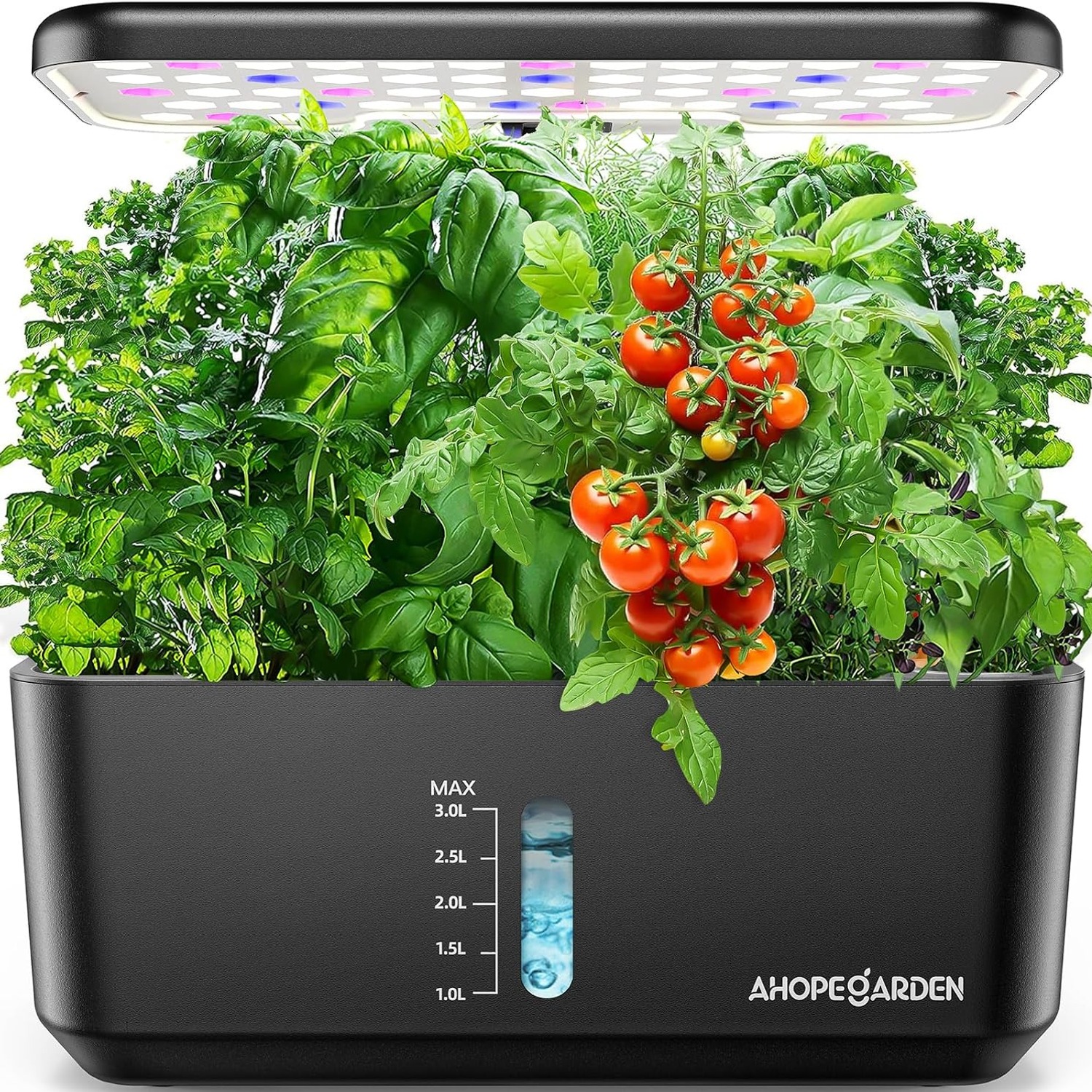
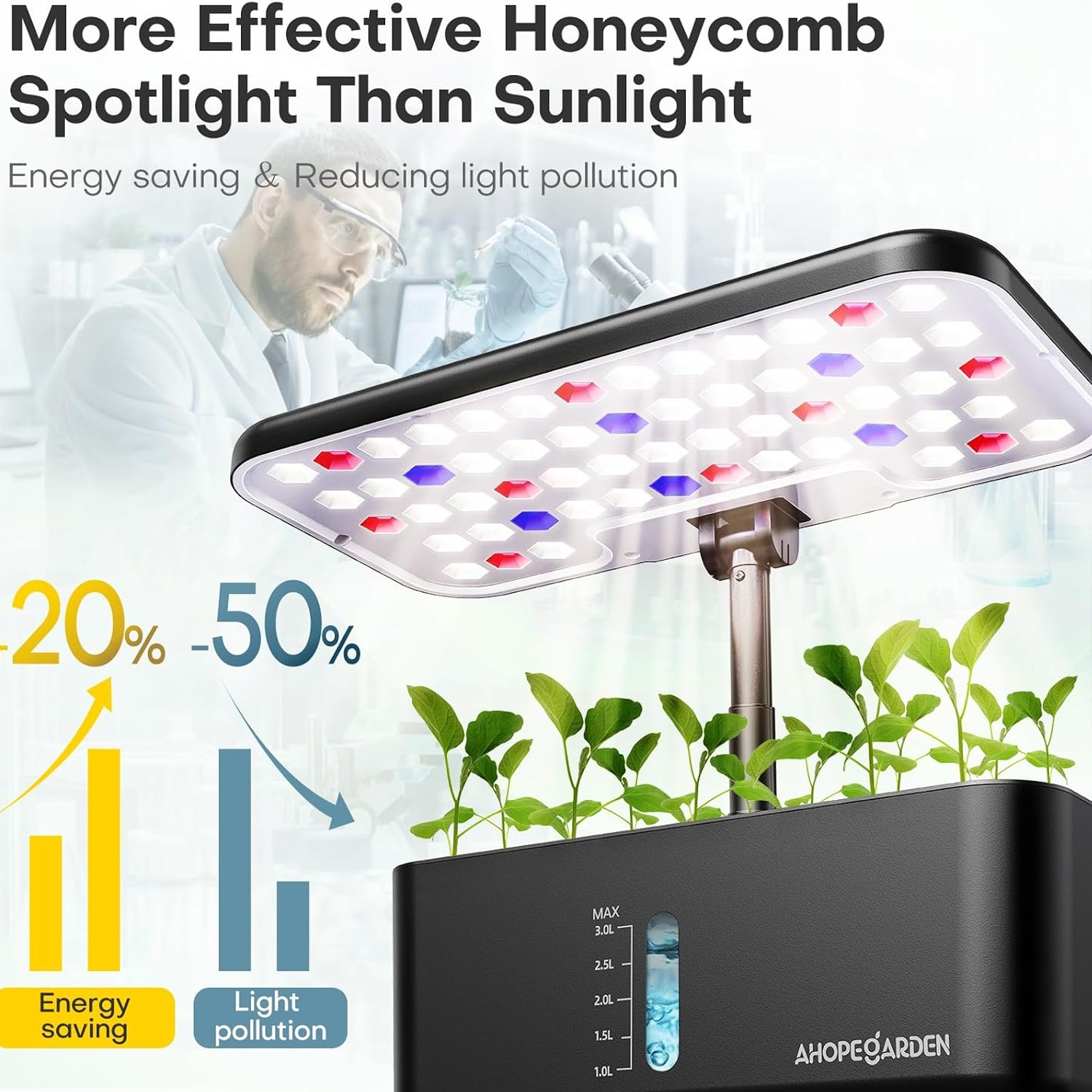
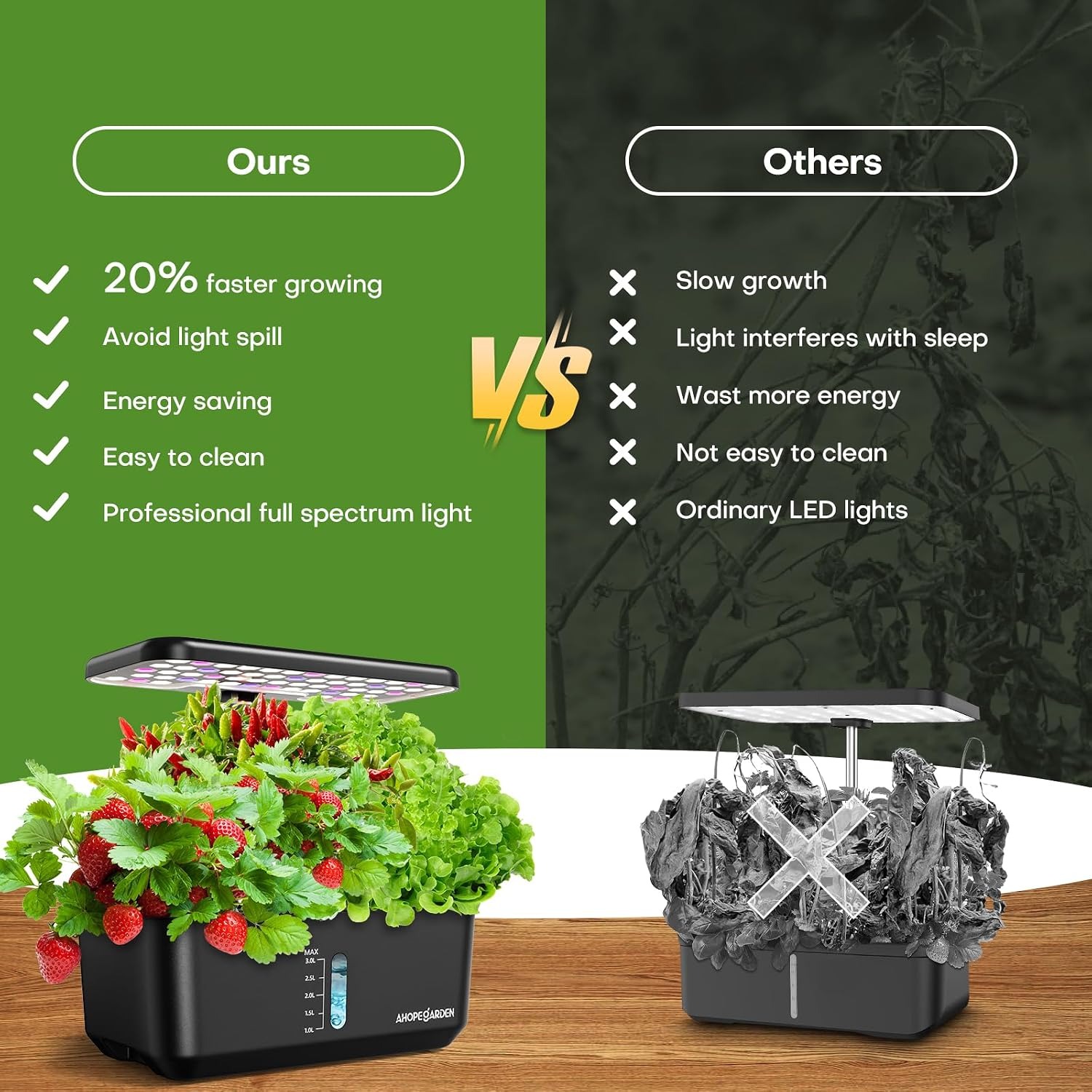
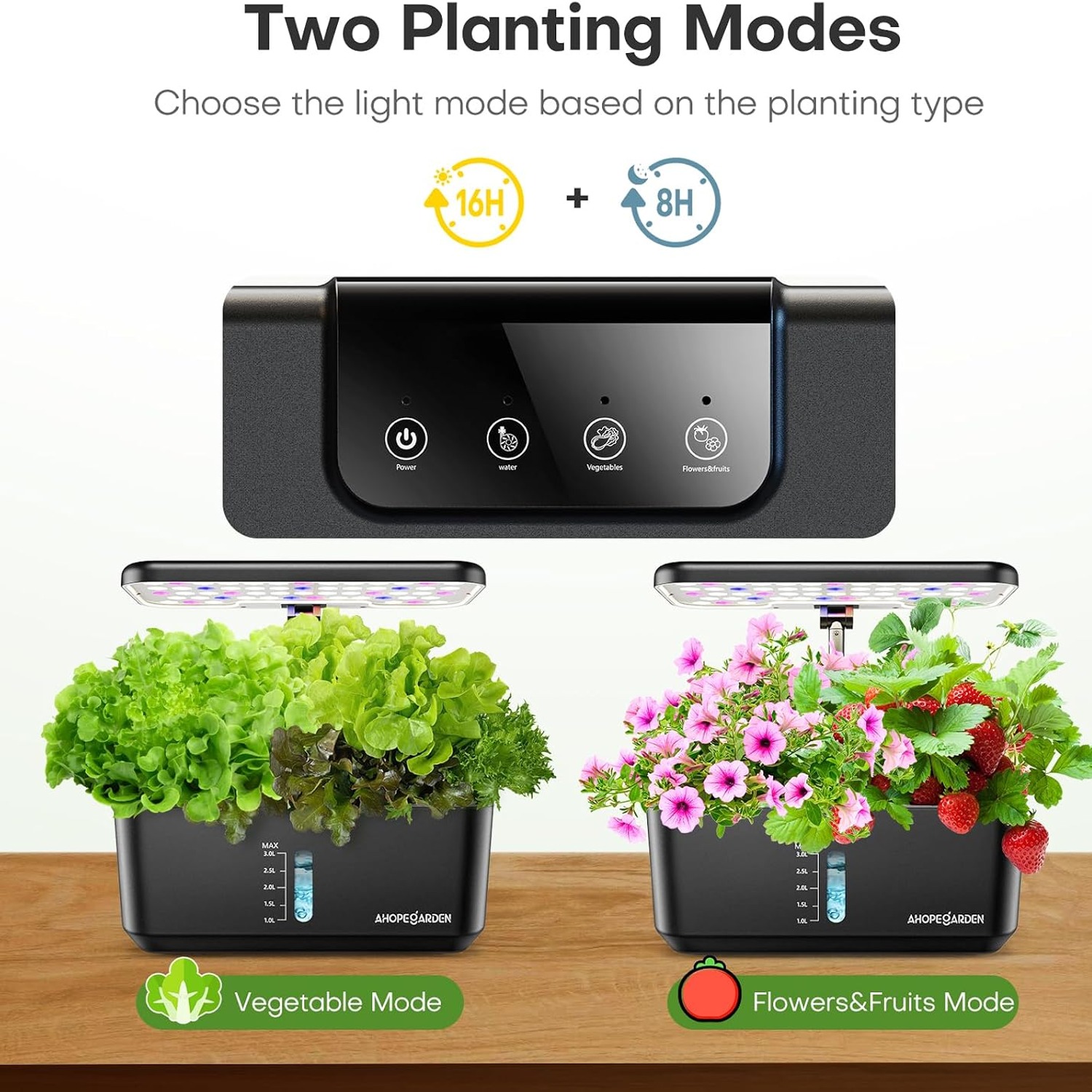
The second half of the equation is light. Plants do not care whether photons come from the sun or a diode, as long as the spectrum and the daily hours are right. The LED panel on this unit is full spectrum, with two selectable modes. The leafy mode weights blue, which encourages compact leaf growth and suits basil, mint, cilantro, thyme and lettuce. The fruit and flower mode weights red, which supports plants you want to actually set fruit, like cherry tomatoes and chili peppers.
Running alongside that is the automatic timer, set to 16 hours on and 8 hours off. That is a good general schedule for edible plants. More importantly, it means the thing that most often kills indoor plants (a human forgetting) is taken out of your hands.
Who this suits
Apartment dwellers are the obvious group. A unit measuring roughly 11.97 by 6.69 inches fits on a counter where a chopping board would sit, and the whole thing weighs 3.5 lb, so moving it is no drama.
Home cooks are the second group. If you reach for fresh herbs several times a week, the maths works out fast. Ten pods of basil, cilantro, parsley and thyme will replace a lot of grocery store bunches.
It also suits people in cold climates who want something green through winter, and parents who want a visible, fast, hands-on way to show children how plants work. Root systems in water are far more interesting to a seven year old than a pot of dirt.
The one group it suits less well is anyone wanting to grow large fruiting plants. With a 14.5 inch height ceiling and a 3 liter tank, this is a herb and salad green machine with room for compact fruiting varieties. A full-size tomato plant will outgrow it in a month.
What to look at when you compare systems
Pod count versus footprint. More pods means more plants, but it also means a bigger unit on your counter. Ten pods in a tray this size is a sensible middle ground for a household that cooks regularly. Smaller six pod units feel limiting quickly. Larger multi-level systems are great, but they become furniture rather than appliances.
Reservoir size. The tank size decides how often you refill. At 3 liters, you are topping up on a schedule that fits comfortably into normal kitchen routine, especially with the see-through water level window telling you where you stand. Tiny reservoirs are a nuisance because mature plants drink hard and you end up refilling every couple of days.
Light adjustability. This is the specification people underrate. A fixed light is fine for a week and wrong for the rest of the cycle. Seedlings want the light close so they stay stocky. Mature plants want it further back so the tops do not dry out. The height-adjustable post on this unit covers the full range up to 14.5 inches.
Timer. An automatic 16 on, 8 off cycle removes the single most common failure point. If a system expects you to manage lighting manually, be honest about whether you will.
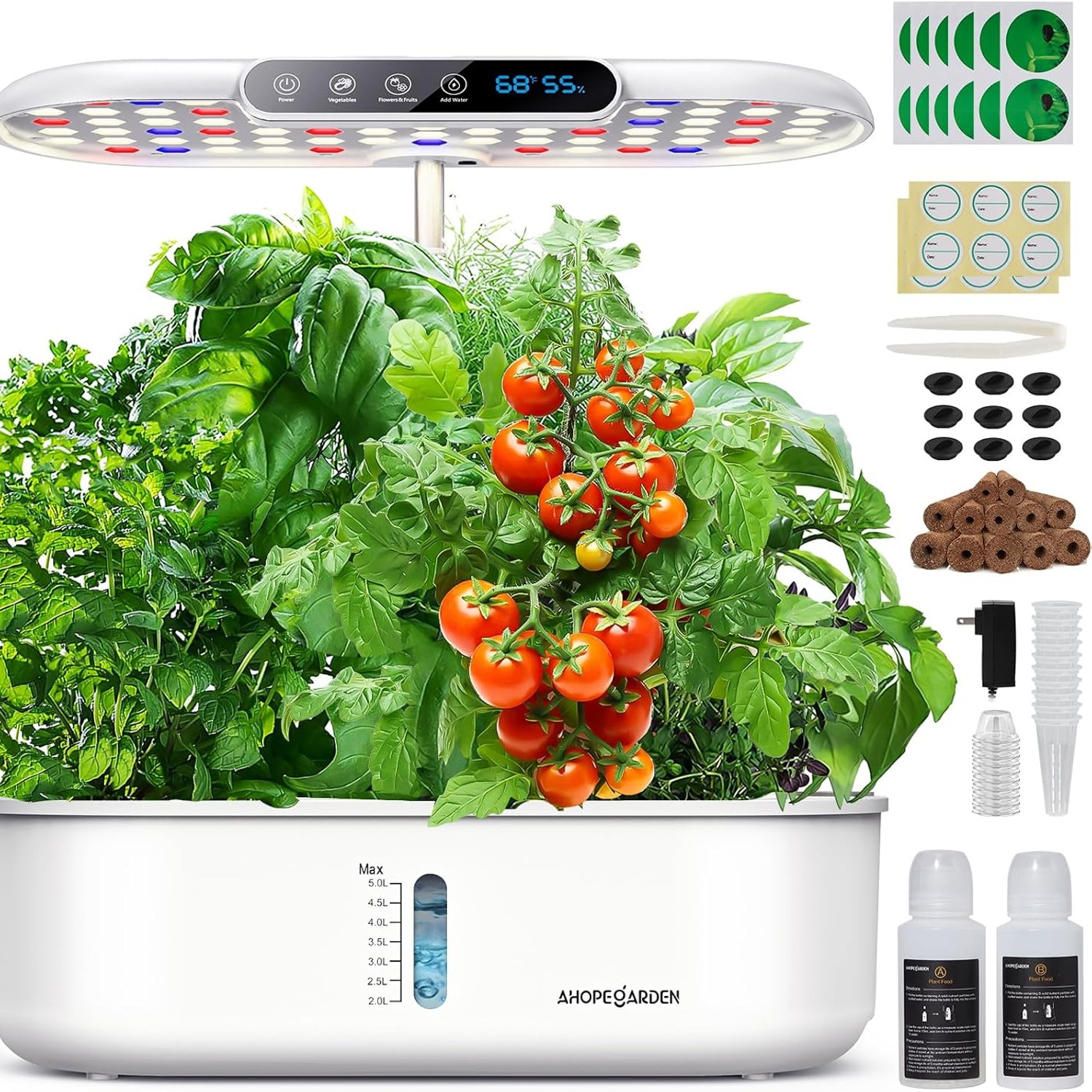
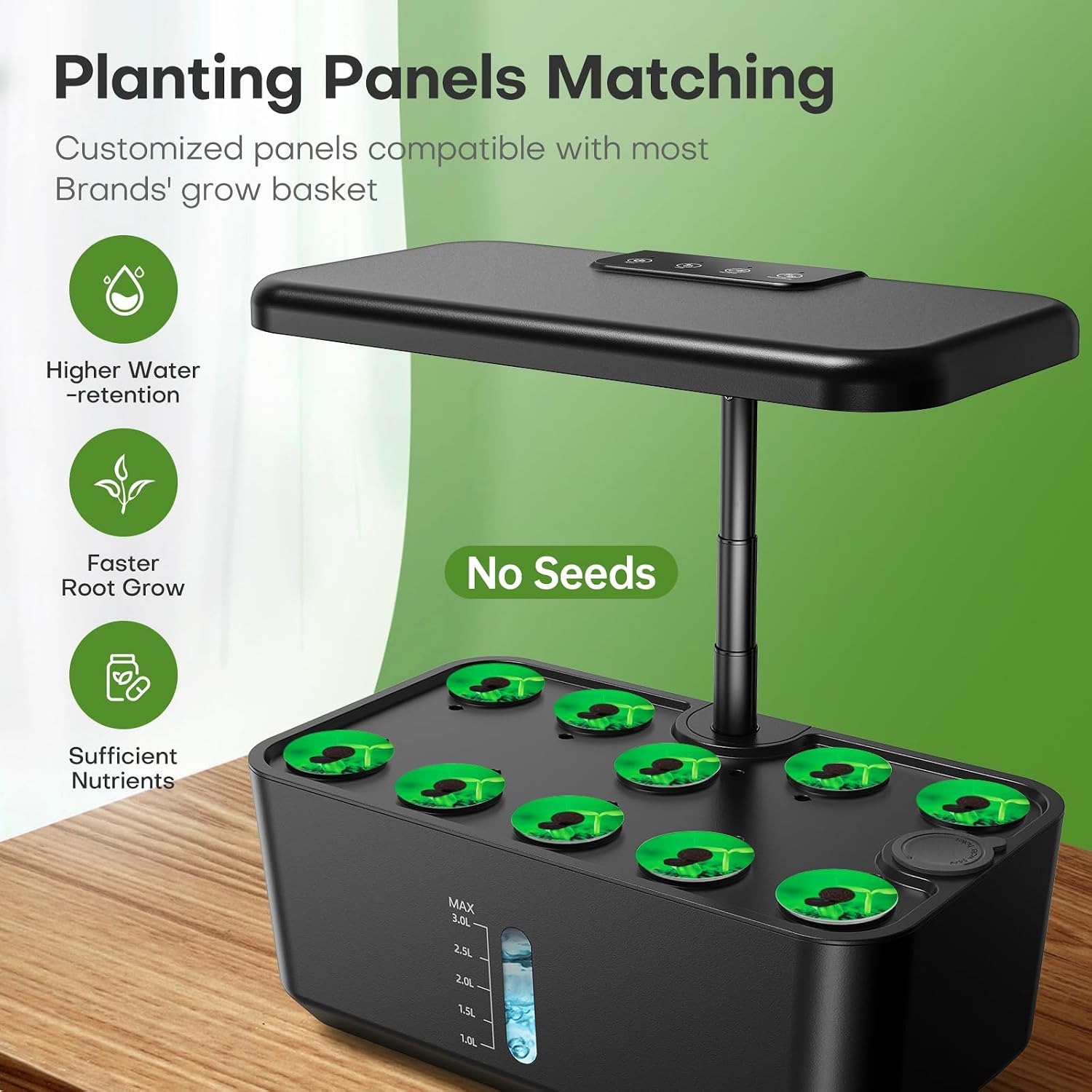
What is in the box. This kit includes 8 baskets, 8 sponges, 9 growth domes, 8 shade papers, 4 covers, 2 labels, 2 stickers, tweezers, a power adapter and A and B fertiliser. Seeds are not listed, so budget for a few packets of what you actually want to eat. Picking your own seed is arguably better than a locked-in pod system, because you are not tied to one supplier's catalog.
Getting a good first crop
Start with herbs rather than fruiting plants. Basil is almost unfairly easy in hydroponics and gives you a result in weeks, which keeps motivation up. Lettuce and other leafy greens are similarly forgiving.
Use the growth domes over newly planted sponges to hold humidity while seeds germinate, and keep the shade papers in place to stop light hitting the wet sponge surface. Light plus moisture plus nutrients is also the recipe for algae, so blocking that surface early saves you cleaning later.
Do not plant all ten pods with the same thing on day one unless you want ten mature basil plants arriving at once. Stagger your planting by a week or two across pods and you get a rolling harvest instead of a glut.
Mix the nutrient solution according to the instructions rather than eyeballing it. More is not better in hydroponics. Over-concentrated solution will burn roots and leave you wondering why the leaf tips are browning.
Harvest regularly and from the top. Pinching basil above a leaf pair makes it branch and bush out rather than bolting upward into the light. Plants that get cut back often stay productive much longer.
Keeping it clean
Hydroponics is low mess, not no mess. Between planting cycles, unplug the unit, tip the reservoir out, and rinse it with warm water and a soft cloth. Rinse the baskets and the planting board at the same time. Let everything dry before you refill.
During a long grow, refresh the water fully every few weeks rather than just topping up. Constant topping up slowly concentrates salts in the tank, which throws the balance off. A full change resets it.
Wipe the LED panel with a dry cloth. Never spray water at it, and keep the power adapter and its connection dry. The unit is painted plastic and built for tabletop indoor use, so keep it off the draining board and away from the sink.
If you see green slime forming, that is algae, and it is almost always a light leak onto wet surfaces. Cover unused pods, keep the shade papers in place, and move the unit out of direct window sun.
The short version
An indoor hydroponic growing system is a small, controlled growing space that runs on electricity rather than weather. This one gives you ten pods, a 3 liter circulating reservoir with a visible water level, a full-spectrum LED grow light with modes for leaves or fruit, an automatic 16 hours on and 8 hours off timer, and a light post that raises as plants reach toward 14.5 inches.
It is a good fit for herbs, salad greens and compact fruiting plants, in a kitchen, an office or an apartment with no outdoor space. Supply your own seeds, dose the nutrients carefully, harvest often and rinse the tank between rounds. Do that, and the bunch of cilantro rotting at the back of your fridge becomes somebody else's problem.