
The complete guide
The Practical Guide to Starting Seeds in Rockwool Cubes
The problem with starting seeds
Most seed failures are not caused by bad seed. They are caused by water.
A seed needs to stay evenly damp for days on end, and it also needs oxygen at the same time. Potting mix struggles with both at once. Fill a tray too firmly and it holds water like a sponge with nowhere for air to go. Fill it loosely and the surface dries out by lunchtime while the bottom stays soaked. You end up either watering constantly or losing seedlings to rot, and the two problems can be happening in the same tray.
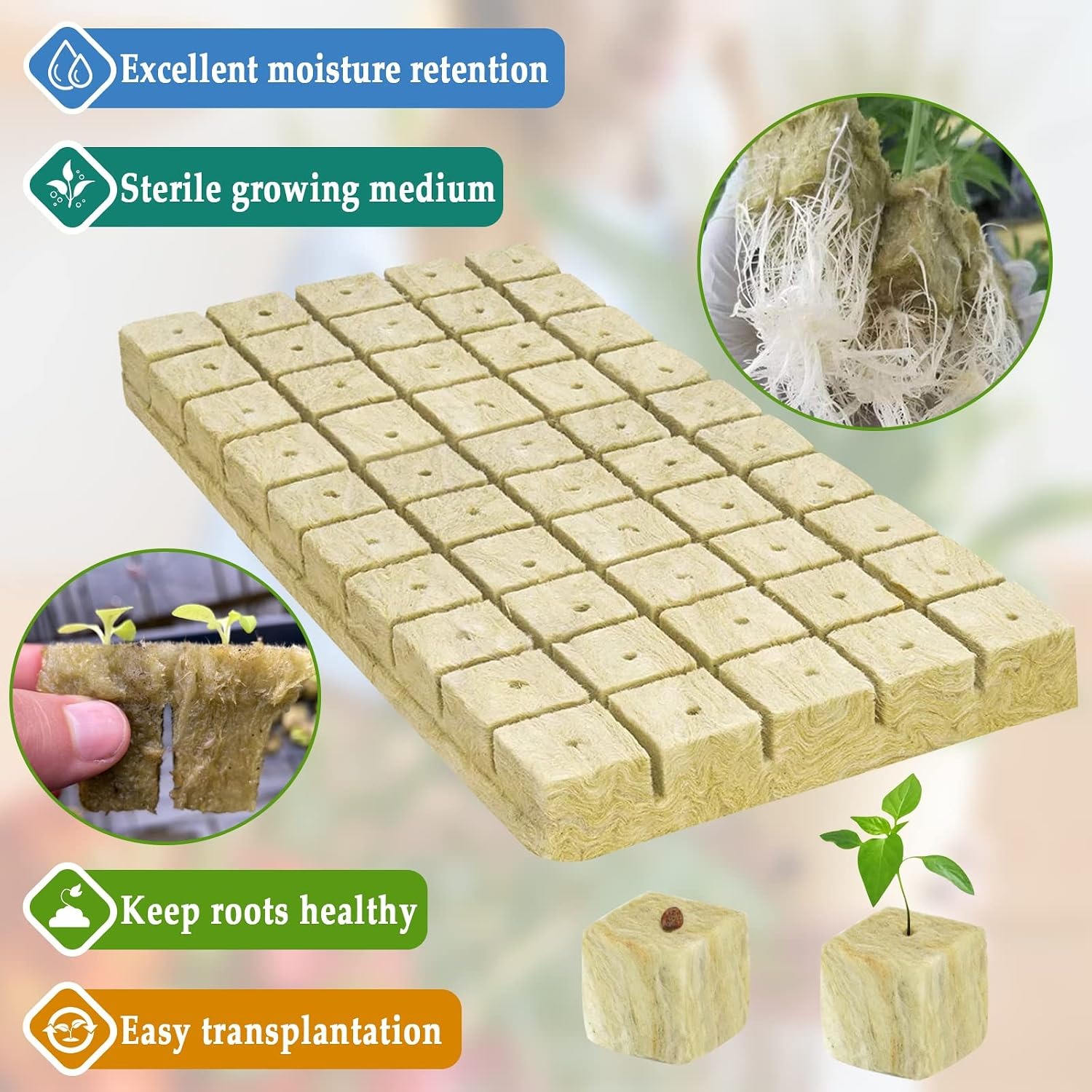
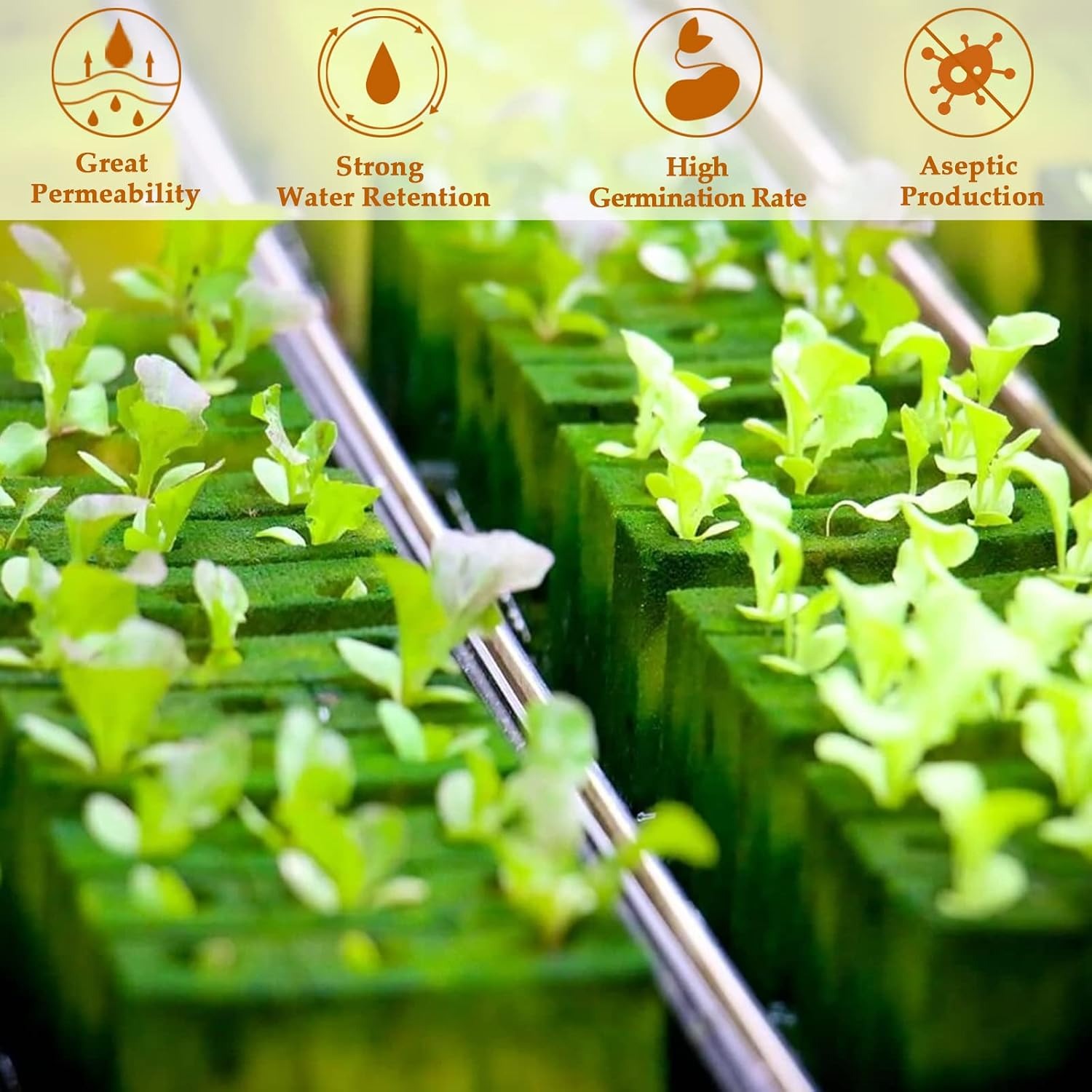
Rockwool cubes sidestep most of that. The spun fiber holds a thin film of water across a huge surface area while leaving the spaces between fibres open to air. Water and oxygen share the same cube. That is the whole trick, and it is why propagation benches in commercial nurseries have used this material for decades.
How a rockwool plug actually works
Think of each cube as thousands of fine mineral threads packed loosely together. Water clings to the threads. Air fills the gaps. When a root pushes into the cube it meets almost no resistance, so instead of circling or stalling it drives straight through and branches out.
The medium itself is inert. It brings nothing to the party nutritionally, which puts you fully in charge of feeding. For the first few days that does not matter at all, because a seed lives off its own reserves until the first true leaves appear. After that, a very dilute feed is all a seedling needs.
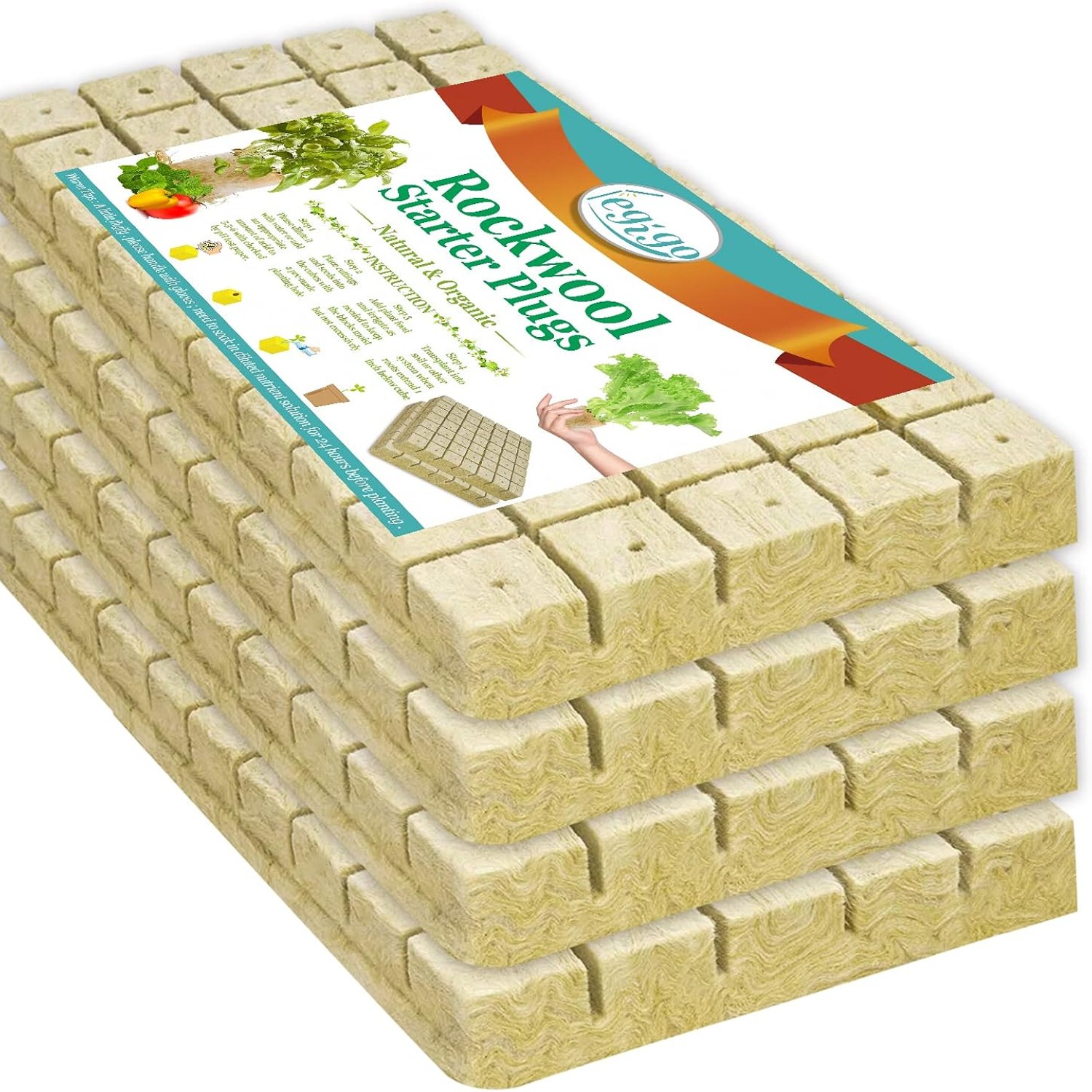
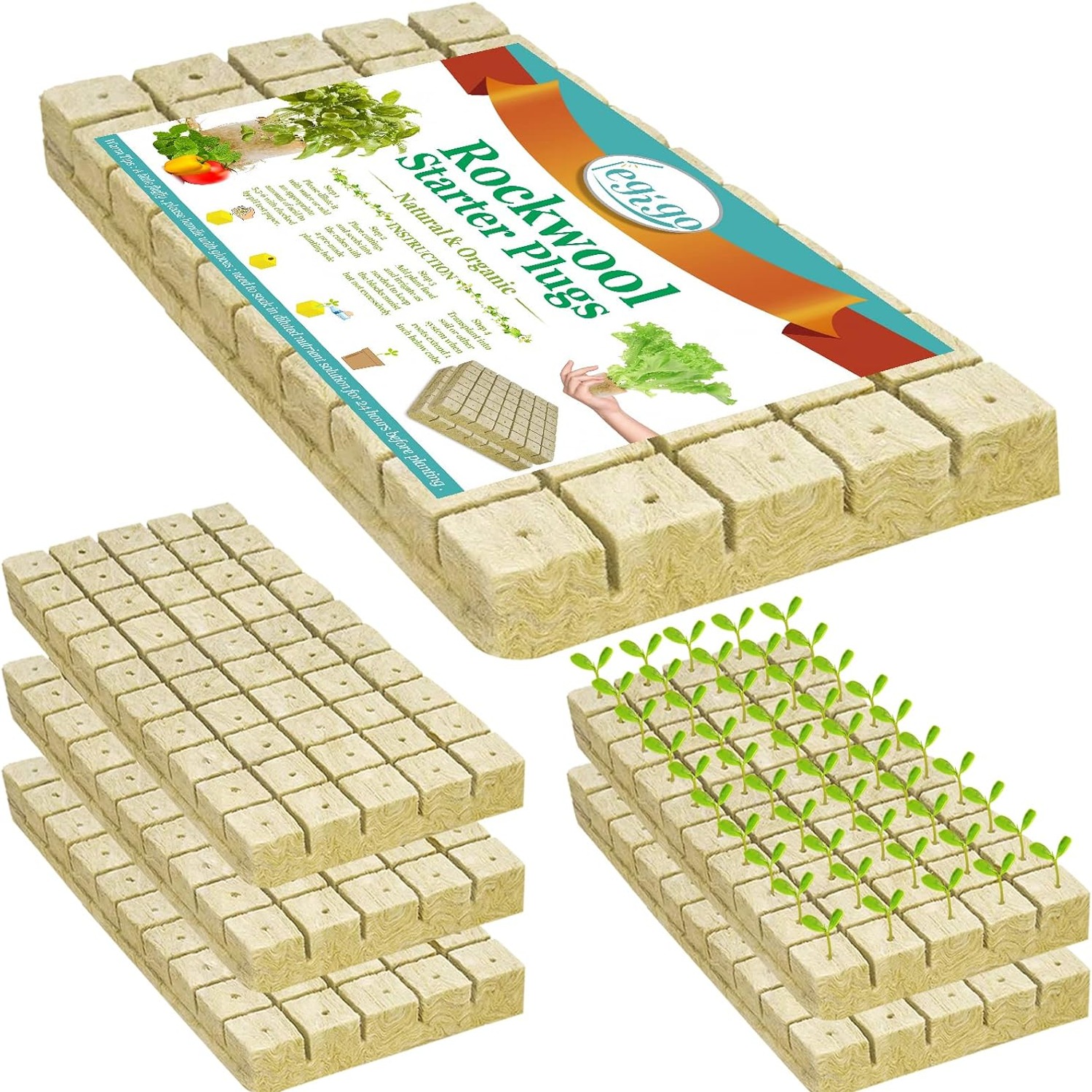
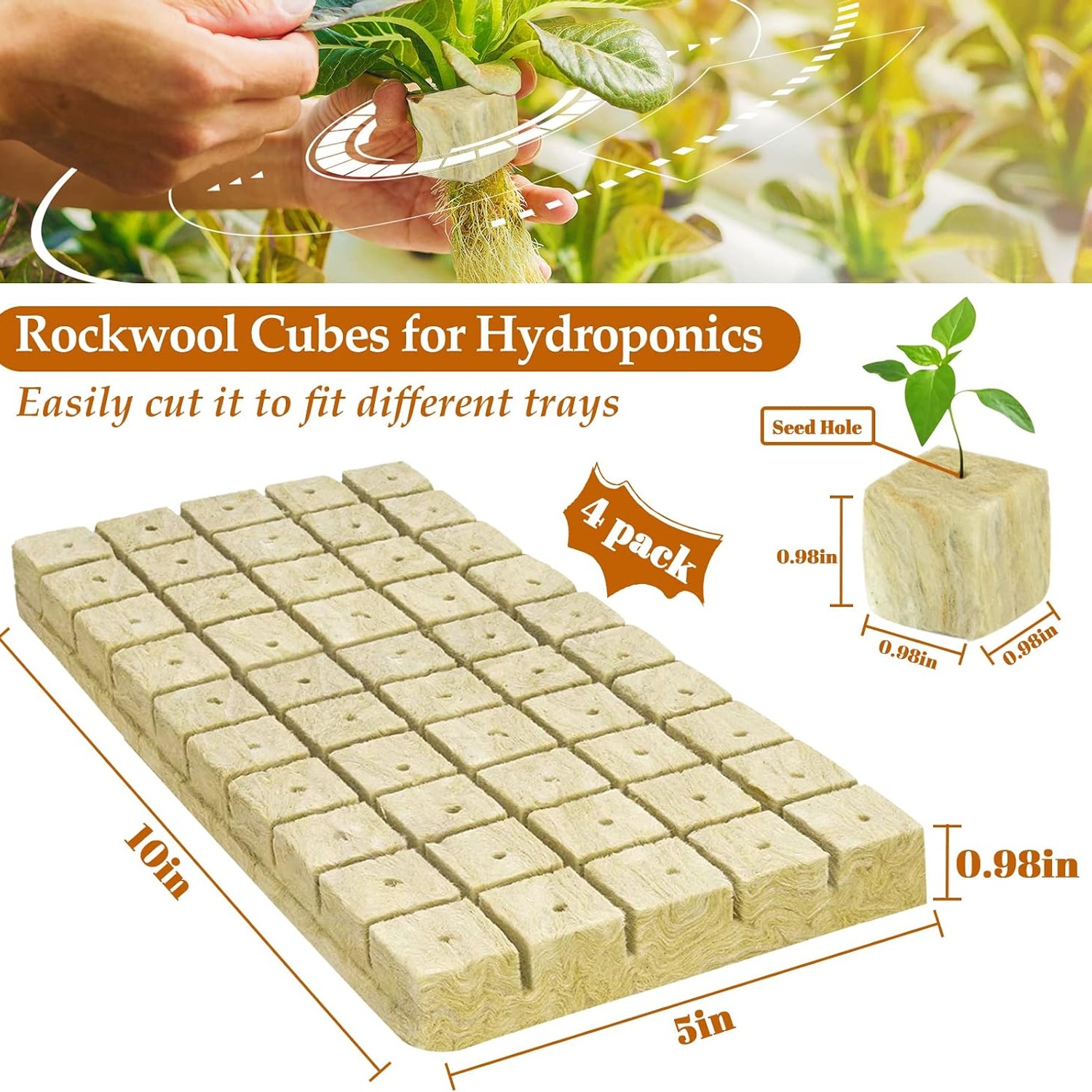
Each cube in this pack measures 1 inch on all sides, and the sheets come scored so you can break off one plug or a strip of twelve. The sheets are 9.84 by 5 by 1.97 inches, and there are four of them, 200 plugs in total.
Getting the cubes ready
Dry rockwool repels water, so the first step is always to wet it properly.
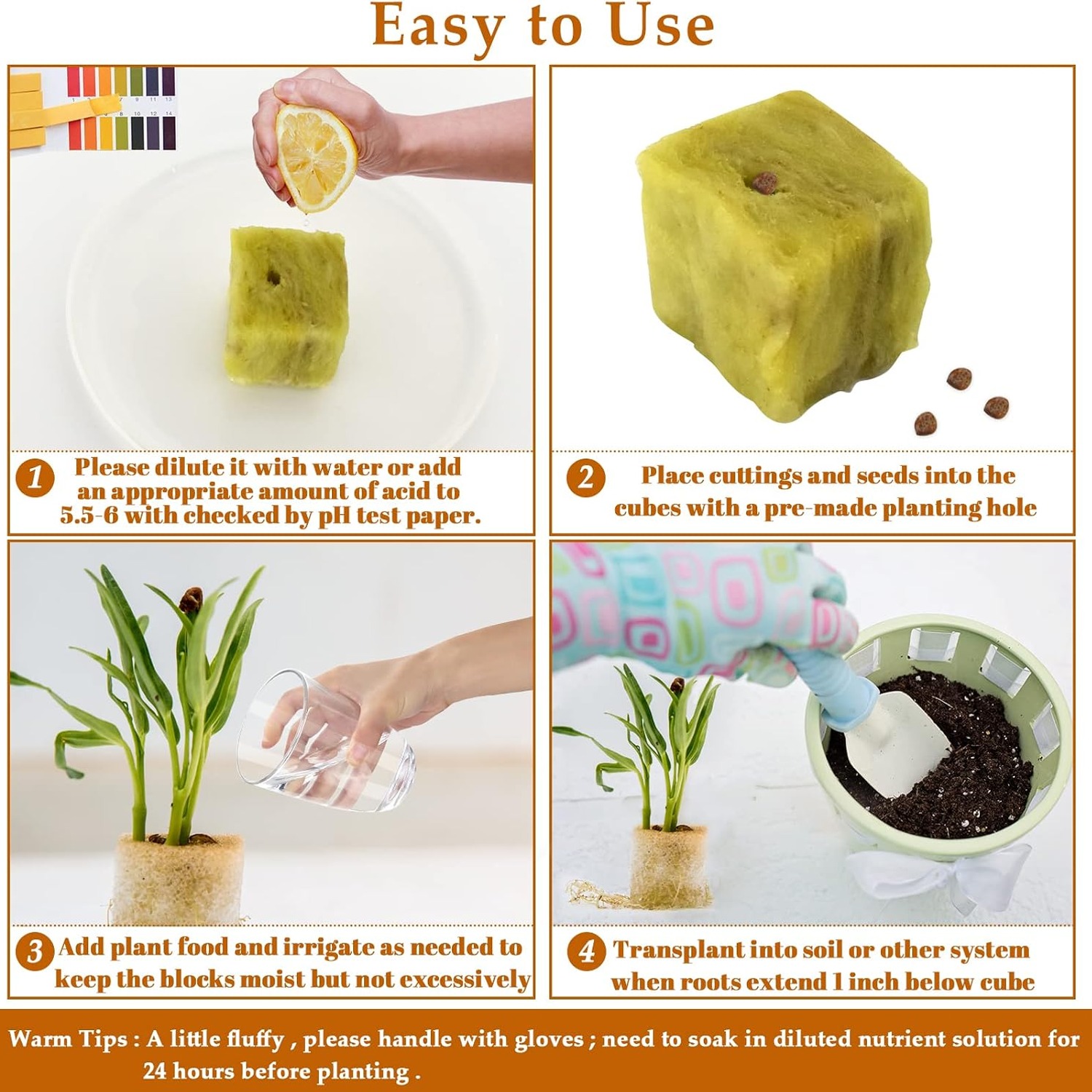
Fill a container with clean water and bring the pH down to roughly 5.5. A few drops of pH down solution or a pinch of citric acid will do it for a small batch. Drop the cubes in, let them take up water for a short soak, then lift them out and let the excess drain. Do not squeeze them. Squeezing collapses the fiber and you lose the air space you were trying to keep.
A properly prepared cube feels heavy and cool but does not drip when you pick it up. That is the target state, and it is the state you want to keep it in for the next week or two.
Skipping the pH step is the most common mistake. Fresh rockwool runs alkaline, and seedlings sitting in an alkaline root zone cannot take up iron and a handful of other nutrients properly. You see it as pale, slow growth that you then try to fix with more fertiliser, which makes it worse.
Sowing and the first week
Each cube comes with a small hole in the top. Drop one seed in for anything you plan to grow on as an individual plant, or two or three for clustered salad crops. Pinch the top of the hole gently closed so the seed sits in contact with damp fiber rather than air.
Put the cubes in a tray without drainage holes, or in a tray with holes sitting inside a solid base, so you can control how much water is available. A clear lid helps hold humidity for the first few days. Keep the tray somewhere warm. Most common vegetables germinate happily between about 65 and 75 degrees Fahrenheit, though peppers and eggplant like it warmer.
Once green appears, get the lid off or vented and the light on. Seedlings stretch fast in low light, and a leggy start never really recovers. Check the cubes daily from this point. Under lights in a dry room, a 1 inch plug can go from damp to dry inside twenty four hours.
Who these suit
Home growers running a windowsill or a small light shelf get the most obvious benefit, because the tidiness is a real advantage indoors. No bags of mix, no spilled compost, no fungus gnats hatching out of reused potting soil.
Hydroponic growers use these as a matter of course. A rooted 1 inch cube sits neatly inside a standard net pot, and most deep water culture, drip, and nutrient film systems are designed with that plug size in mind. Tower and vertical garden owners use the same cubes as starter plugs before the seedling goes into its cup.
Anyone growing crops that resent root disturbance should look at this seriously. Tomatoes, peppers, cucumbers, and most brassicas all check their growth when their roots are torn. With a cube, nothing tears. You lift the whole plug and set it down somewhere new.
Where rockwool is less useful is for root vegetables and anything you would normally sow directly into the ground. Carrots, parsnips, and radishes want to be sown where they will grow.
Choosing the right plug size
One inch is the workhorse size. It holds enough water to be forgiving for a week or more, it fits standard net pots, and it is small enough that you are not wasting medium on a lettuce.
Go bigger if you are holding plants for a long time before transplanting, or if you are rooting large cuttings. Many growers start in a 1 inch plug and then push that plug into a larger block later, which gives the roots a second stage without any transplant shock.
Go smaller only if you are running a very high density commercial grow bench and know exactly what you are doing. Small plugs dry out fast and punish any lapse in watering.
For most people, 200 one inch plugs covers a full season of succession sowing with room to spare.
Care, handling, and storage
Wear gloves if your skin reacts to mineral fiber, and wet the material before cutting or tearing it so you are not raising dust. Rinse your hands afterwards. None of this is complicated, it is just sensible handling of a fiber product.
Store the sheets you have not used in a sealed bag or a lidded box, somewhere dry and out of direct sun. Kept that way they will still be clean and usable next season.
Do not reuse plugs after a crop. Old roots break down inside the fiber, salts build up, and the structure is usually squashed. A fresh cube costs very little compared with losing a tray of seedlings.
Finally, when you plant a rooted cube into soil, bury the top edge. An exposed cube sticking above the surface acts like a wick, pulling moisture out of the root zone and drying the plug from the top down. Level or slightly below is right.
The short version
Rockwool solves the water and air problem that kills most seedlings. These Legigo cubes come as four sheets of 1 inch plugs, 200 in total, ready to separate as you need them. Soak them in pH adjusted water before use, sow one seed per cube, keep them damp rather than wet, and transplant the whole plug once roots show at the sides.
They work for seeds and for cuttings, indoors or out, in soil or in a hydroponic system. The pack is generous enough to carry a home grower through a full season, and the main thing it buys you is consistency. Every seedling gets the same medium, the same moisture, and the same clean move into its final home.