
The complete guide
Hydroponic Pods and Refill Kits, A Practical Buyer's Guide
The problem nobody mentions when you buy a countertop garden
The machine arrives, you plant the starter pods that came in the box, and six weeks later you are eating basil off your own kitchen counter. It feels great. Then the pods are done, the sponges are spent, and you discover the ongoing cost of the hobby is not the machine at all. It is the little plastic bits and the bottle of plant food.
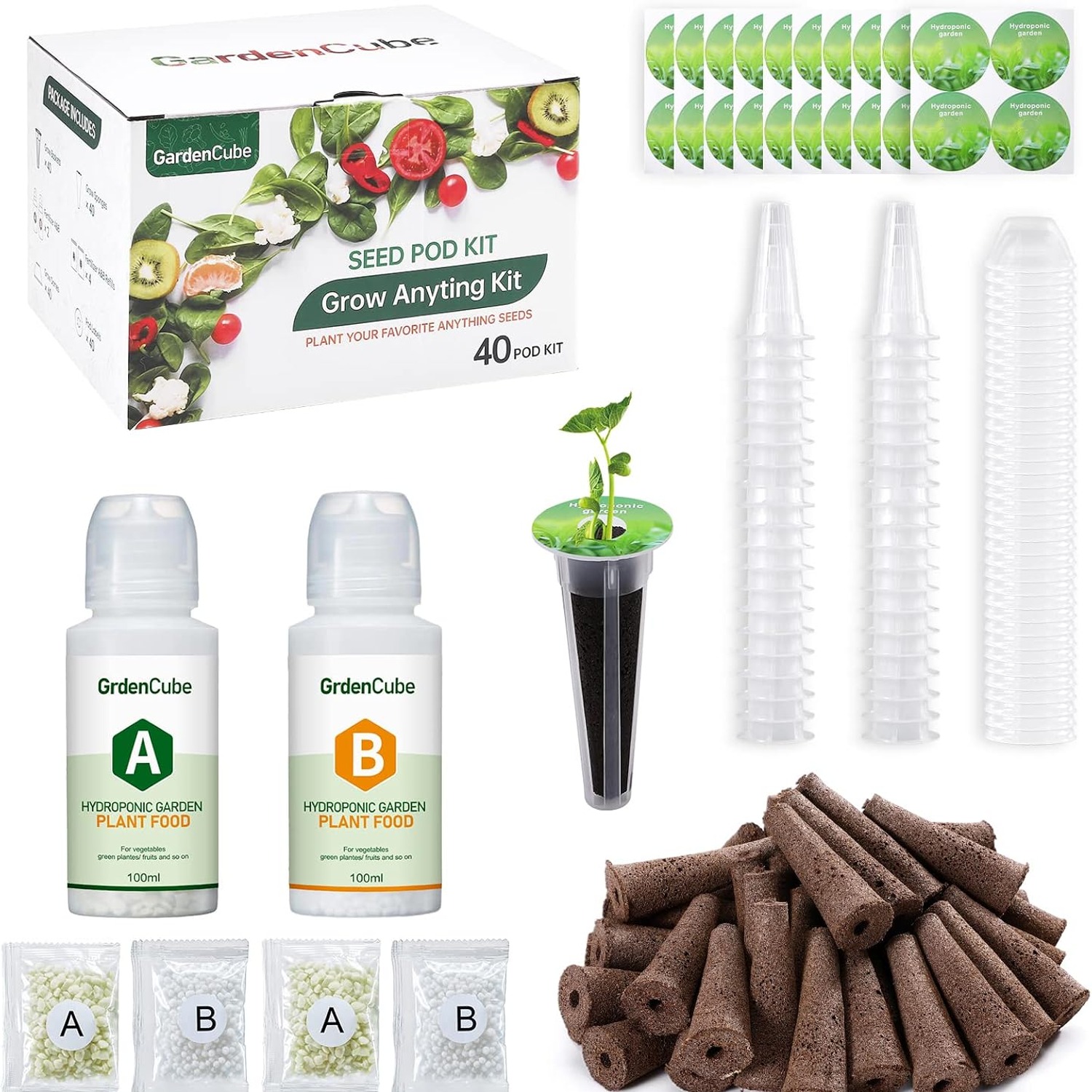
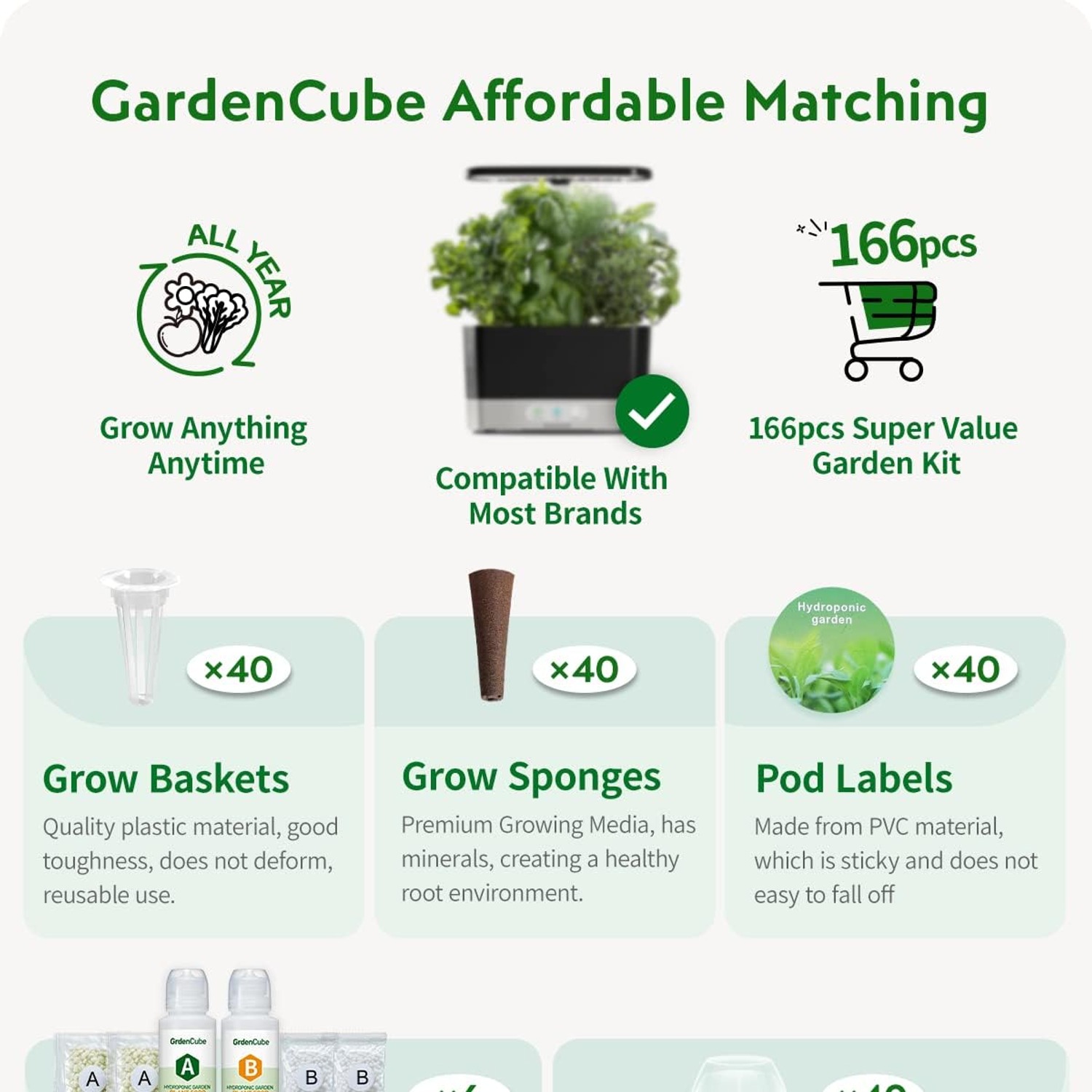
That is where a refill kit comes in. Instead of buying a pack of six pre-seeded pods every time you want to plant something, you buy the raw parts in bulk and seed them yourself. The 166-piece set here covers forty plantings. For most households running one countertop unit, that is a year or more of growing.
The other thing a refill kit fixes is choice. Branded pods come with the seeds already in them, which means you grow whatever the manufacturer decided to pack. If you want Thai basil instead of sweet basil, or a specific lettuce, or a flower that nobody sells as a pod, you are out of luck. With loose sponges you buy a seed packet for a couple of dollars and grow exactly what you want.
What each part of the kit actually does
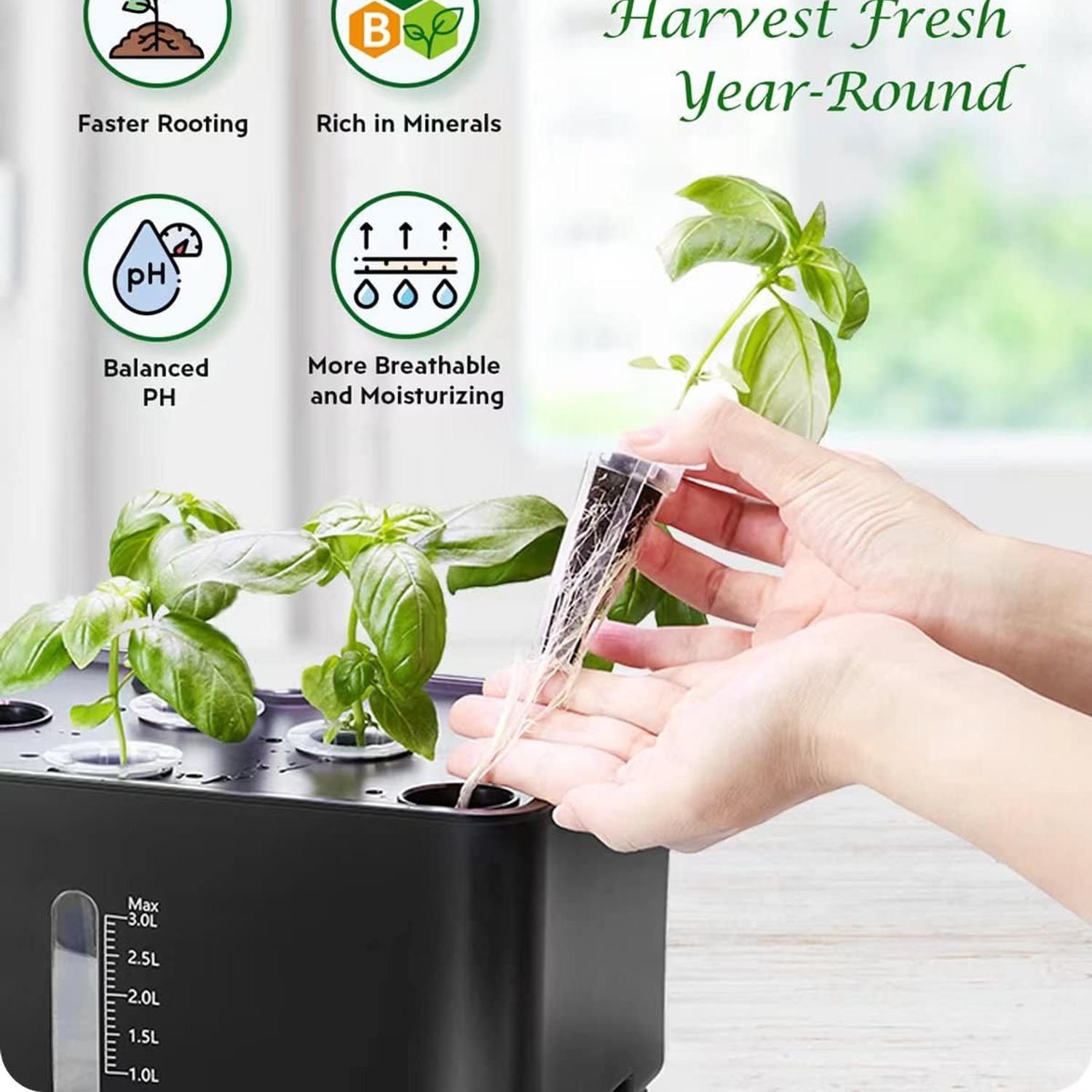
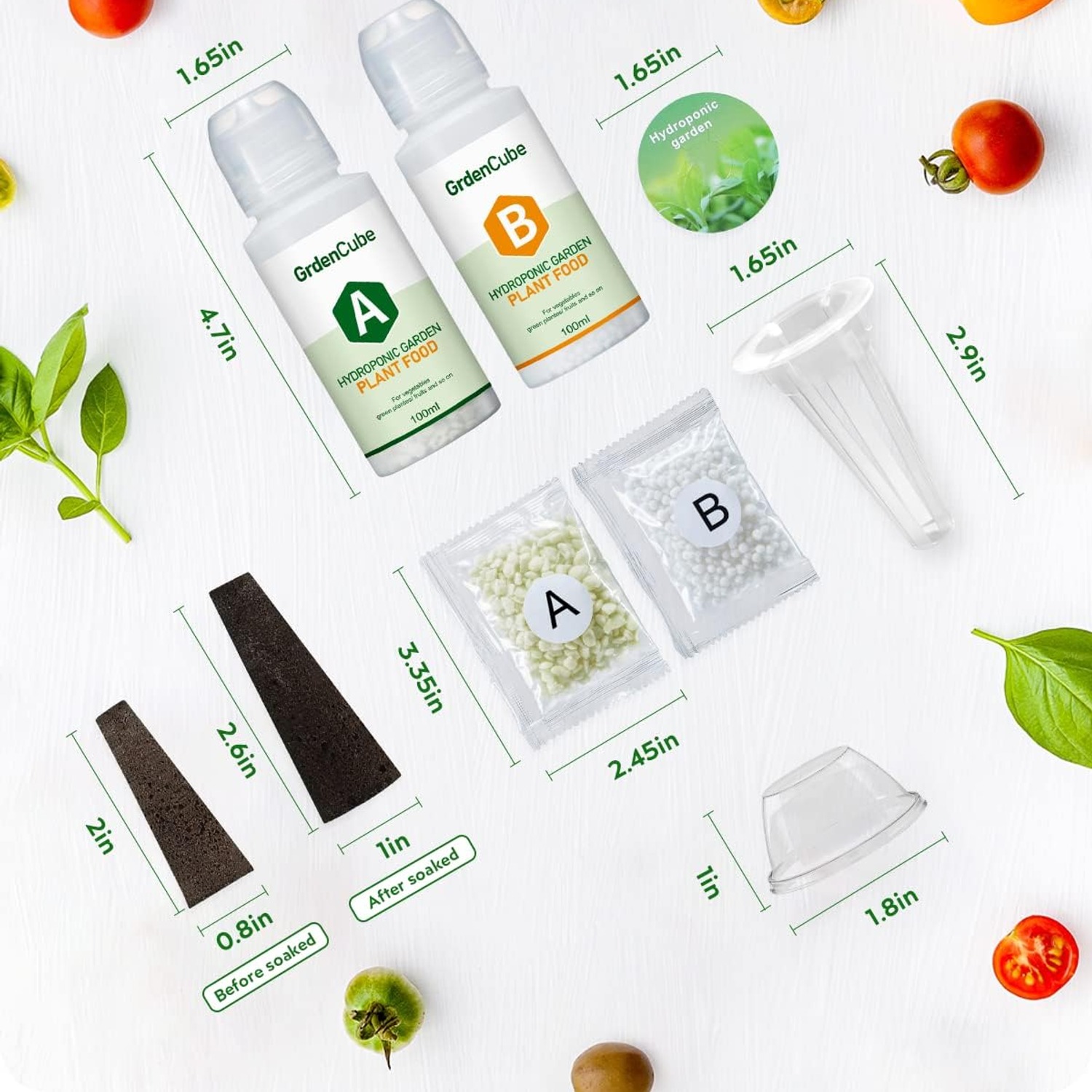
The grow sponge is the growing medium. It takes the place of soil. A seed goes into the slit at the top, the sponge holds moisture and air around it, and once germination happens the roots grow straight down into the nutrient water underneath. Sponges are the one part of the kit that gets used up, which is why there are forty of them.
The basket is the plastic cage that holds the sponge upright in the lid of your grower. It has slots so roots can escape into the tank. Baskets are reusable. Rinse them, dry them, use them again.
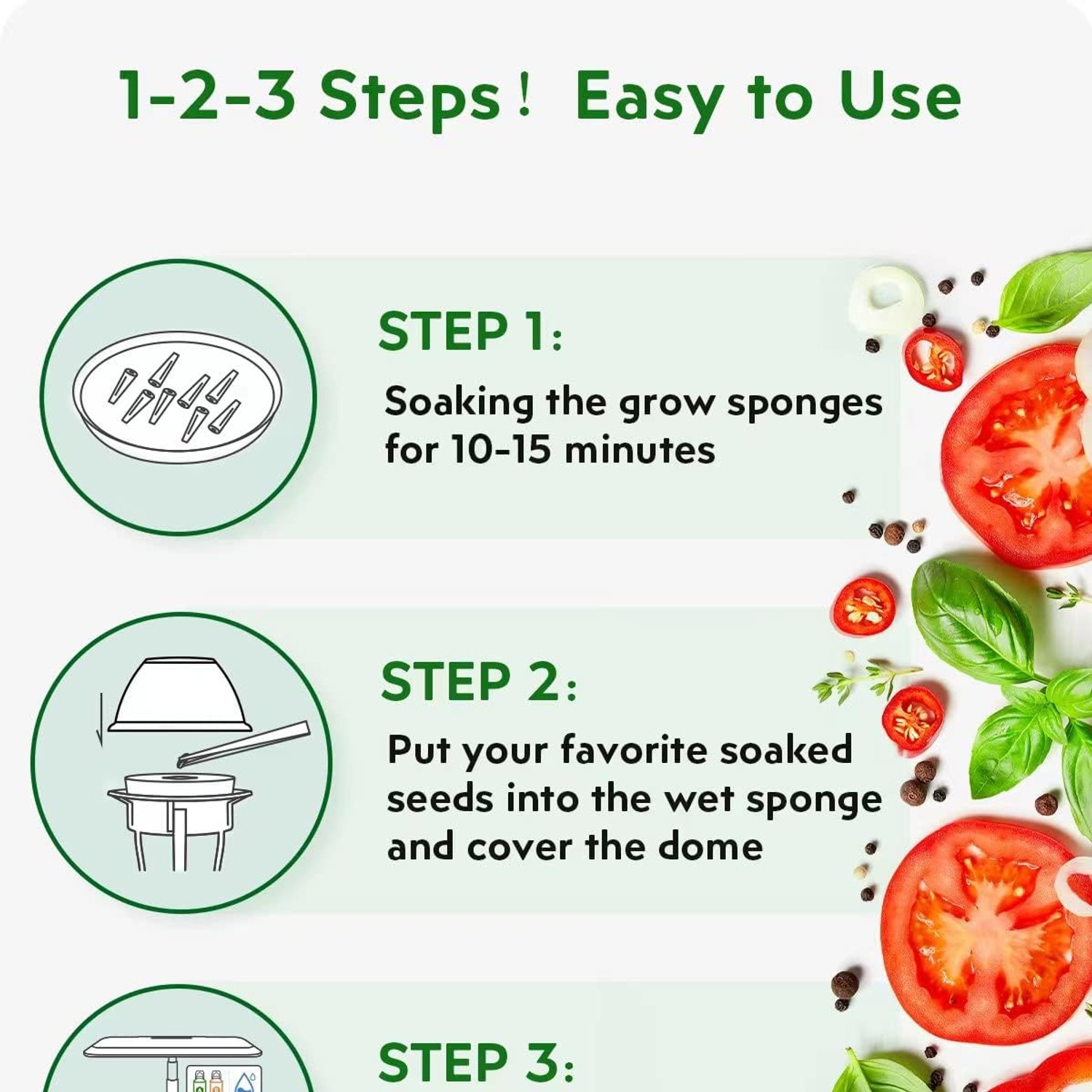
The dome goes over a newly planted pod. Its job is to keep humidity high during germination, when the sponge surface would otherwise dry out and the seed would stall. Take it off as soon as the seedling is tall enough to touch it. Leaving domes on too long produces pale, stretched plants that flop over later.
The labels sound trivial until you plant four herbs at once and they all come up looking like tiny green nothing. These are PVC with adhesive backing, which is the right material for a humid grow chamber. Paper labels turn to pulp.
The nutrients come as six 600ml bottles in a two-part A and B system, four of them refills. The split exists for chemistry reasons. Calcium and some of the other minerals will react and fall out of solution if they sit together in a concentrated bottle, so they are kept apart until they are diluted in your tank. You add them separately, never mixed neat.
The tweezers are for placing seeds. Anyone who has tried to drop a single lettuce seed into a sponge slit with their fingers will understand immediately.
Who this suits
If you own an AeroGarden or a similar countertop unit and you are tired of buying small, expensive pod packs, this is the obvious upgrade. The manufacturer states the kit works with AeroGarden units and with growing systems from other brands, so it is also a reasonable buy if you have more than one machine in the house.
It suits beginners too, oddly enough. A lot of people stall at the first refill because they do not know what to buy, how many to buy, or whether the nutrients they found online will work. One box with everything in it removes that decision entirely.
Keen gardeners use kits like this for a different reason. Starting seeds in sponges indoors under a light, then transplanting the rooted plugs into the garden when the weather turns, gives you a head start of several weeks. The whole sponge goes into the soil, so there is no root disturbance at transplant time. That is a real advantage with things like tomatoes and chili peppers.
It does not suit you if you want pre-seeded convenience and do not want to handle seeds at all. And it does not include a light or a pump, so it is an accessory set, not a complete growing machine.
How to choose a refill kit
Check basket fit first. This is the one thing that can go wrong. Countertop growers mostly use a standard basket diameter, but not all of them. Measure the opening in your grower's lid, or pull out an existing pod and measure that, before you order.
Count the plantings, not the pieces. A 166-piece headline number sounds impressive, but what matters is how many separate plants you can grow. Here that is forty, because there are forty sponges, forty baskets, forty domes and forty labels. A kit with 200 pieces but only twenty sponges would be worse value.
Look at how much nutrient you get. Plant food is the part people most often forget to reorder. Six 600ml bottles is a generous amount for a countertop tank, and having four of them as refills means you are not paying for packaging you already own.
Think about reuse. Baskets and domes that warp after two cycles are a false economy. These are described as moulded plastic with enough toughness to hold their shape and wash clean, which is what you want from the hardware side of a countertop garden refill.
Getting the best out of it
Soak sponges properly before planting. Damp all the way through, not just wet on the outside, then shake off the drips. A dry core is the most common reason a seed fails to come up.
Plant one or two seeds per sponge. If both sprout, snip the weaker one at the base with scissors instead of pulling it out, so you do not drag the keeper's roots along with it.
Use the domes, but take them off on time. The moment a seedling reaches the top of the dome, the dome has done its job.
Keep every hole in your grower lid filled, even if you only plant half of them. An open hole lets light into the tank and light plus nutrient water equals algae. A blank basket with no sponge is enough to block it.
Change the tank water every two to three weeks and top up with plain water in between. Dose nutrient according to the bottle and your grower's manual, and go light on seedlings. Young roots burn easily.
Care and storage
Rinse baskets and domes in warm water after each harvest and let them air dry before putting them away. If a basket has algae film on it, a quick scrub with a brush takes it off.
Keep unused sponges sealed in a bag. They are clean when they arrive and you want them to stay that way.
Store nutrient bottles upright with the caps tight, out of direct sun and away from frost. Both of those damage liquid feed over time. Keep them away from children and pets, and wash your hands after dosing.
The tweezers just need to be dried off so they do not corrode.
The short version
This is a bulk refill for countertop hydroponic growers. Forty sponges, forty baskets, forty domes, forty labels, six bottles of two-part nutrient and a pair of tweezers, for forty plantings total. The hardware washes and goes back in. The sponges are the only thing you use up.
It is compatible with AeroGarden style units and other common systems, which covers most of the machines sitting on kitchen counters. Measure your basket opening if your grower is unusual.
Buy it if you already own a countertop garden and want to stop paying premium prices for small pod packs, or if you want to choose your own seed varieties instead of growing whatever came in the branded pack. It is also one of the more useful gifts you can give someone who owns one of these machines, because they will absolutely run out of sponges eventually.