
The complete guide
The Practical Guide to Choosing a Countertop Hydroponics Growing System
The herb pot problem
Almost everyone has killed a grocery store basil plant. You buy it with good intentions, put it on the windowsill, and ten days later it is a stick in dry dirt. It is not a skill problem. Those plants are grown fast in a greenhouse, crammed into a tiny pot, and then asked to survive a kitchen with inconsistent light and no real root space.
Growing indoors has three things working against it. Light is weaker and shorter than plants want, especially from fall to spring. Watering is inconsistent because it relies on you remembering. And soil in a kitchen is just annoying, between the mess, the fungus gnats and the mystery of whether you have overwatered or underwatered.
A hydroponics growing system removes all three at once. The plant sits in water, so it cannot dry out between Tuesday and Friday. There is no soil, so no gnats and no spilled potting mix. And the light comes from an LED directly above the plant, on a schedule, regardless of what the weather is doing outside.
How this system works
The LETPOT LPH-SE holds twelve pods in a rectangular unit measuring 16 by 7 by 9.8 inches. Underneath those pods is a 5.5 liter tank. You fill it with water, add the two-part A&B nutrient solution supplied in the kit, and the pump circulates that water so the roots get a steady supply.
That circulation matters more than people expect. Roots need oxygen as well as food. Water that sits completely still goes stagnant and roots suffer. Moving water picks up oxygen and spreads nutrients evenly, which is why plants in a working hydroponic setup often take off faster than the same seed in a pot of soil.
Starting a plant is simple. A seed goes into a growing sponge, the sponge sits in a basket, and the basket drops into one of the twelve pods on the lid. Early on the root is short, so the sponge stays damp from the tank below. Once roots reach the water properly, growth picks up noticeably.
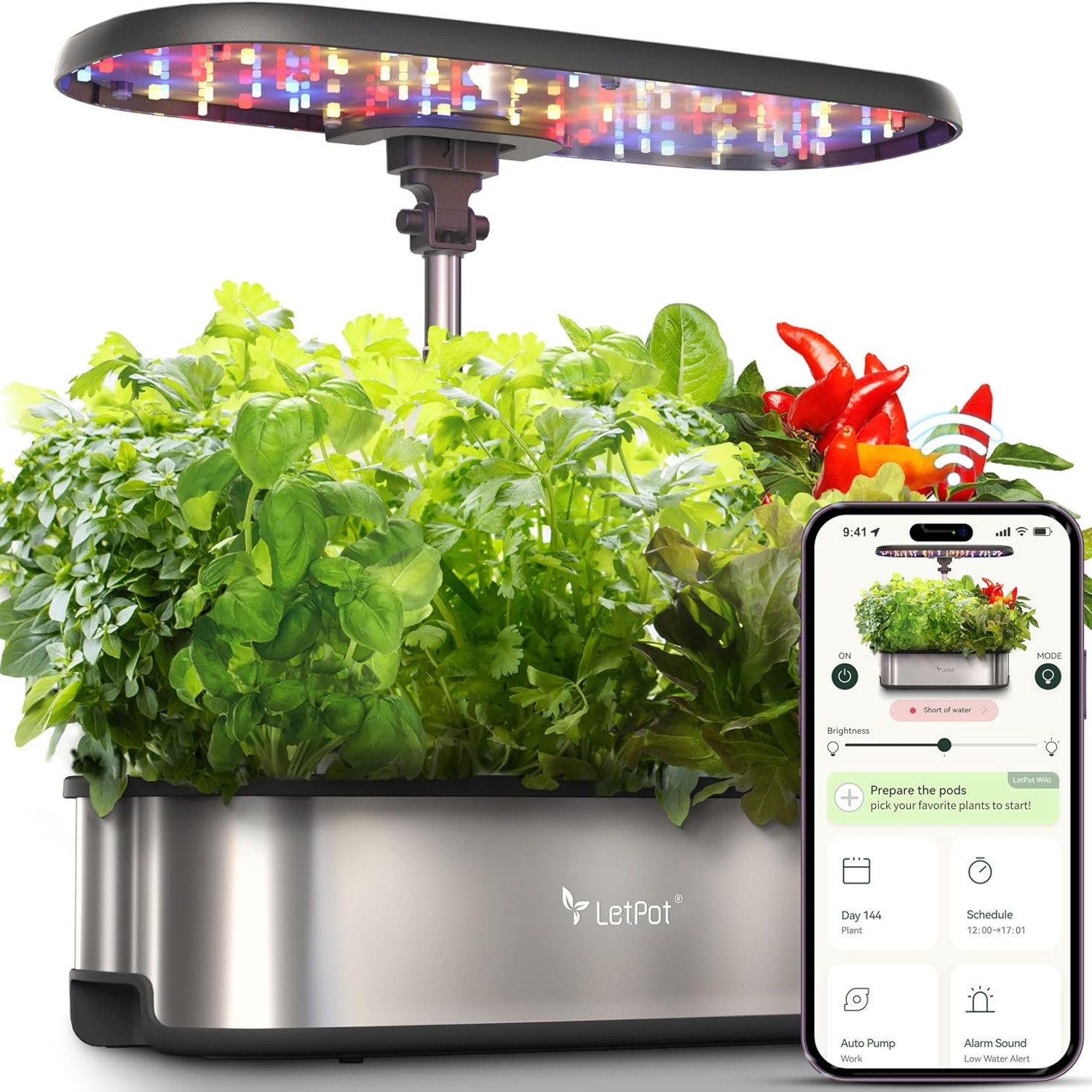
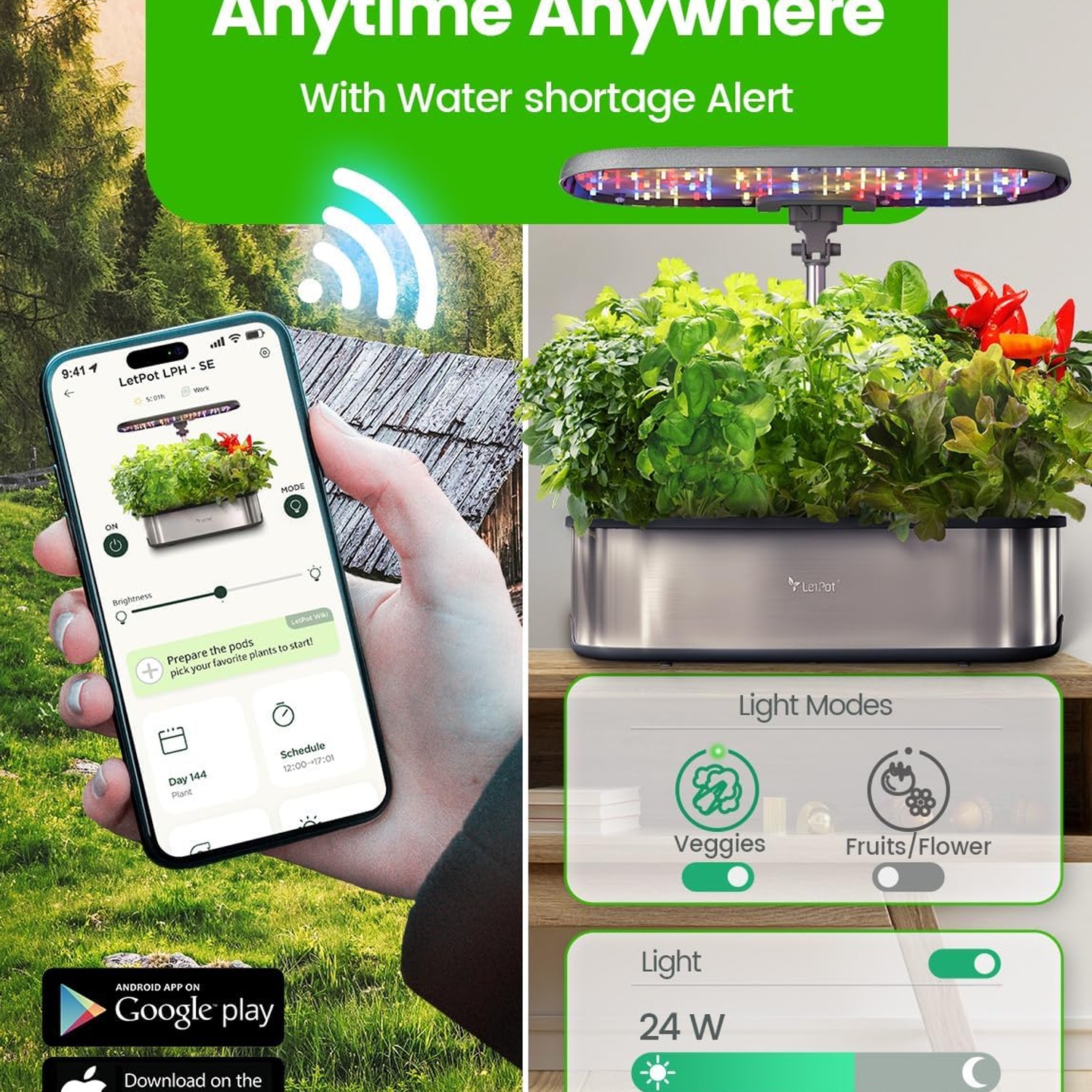
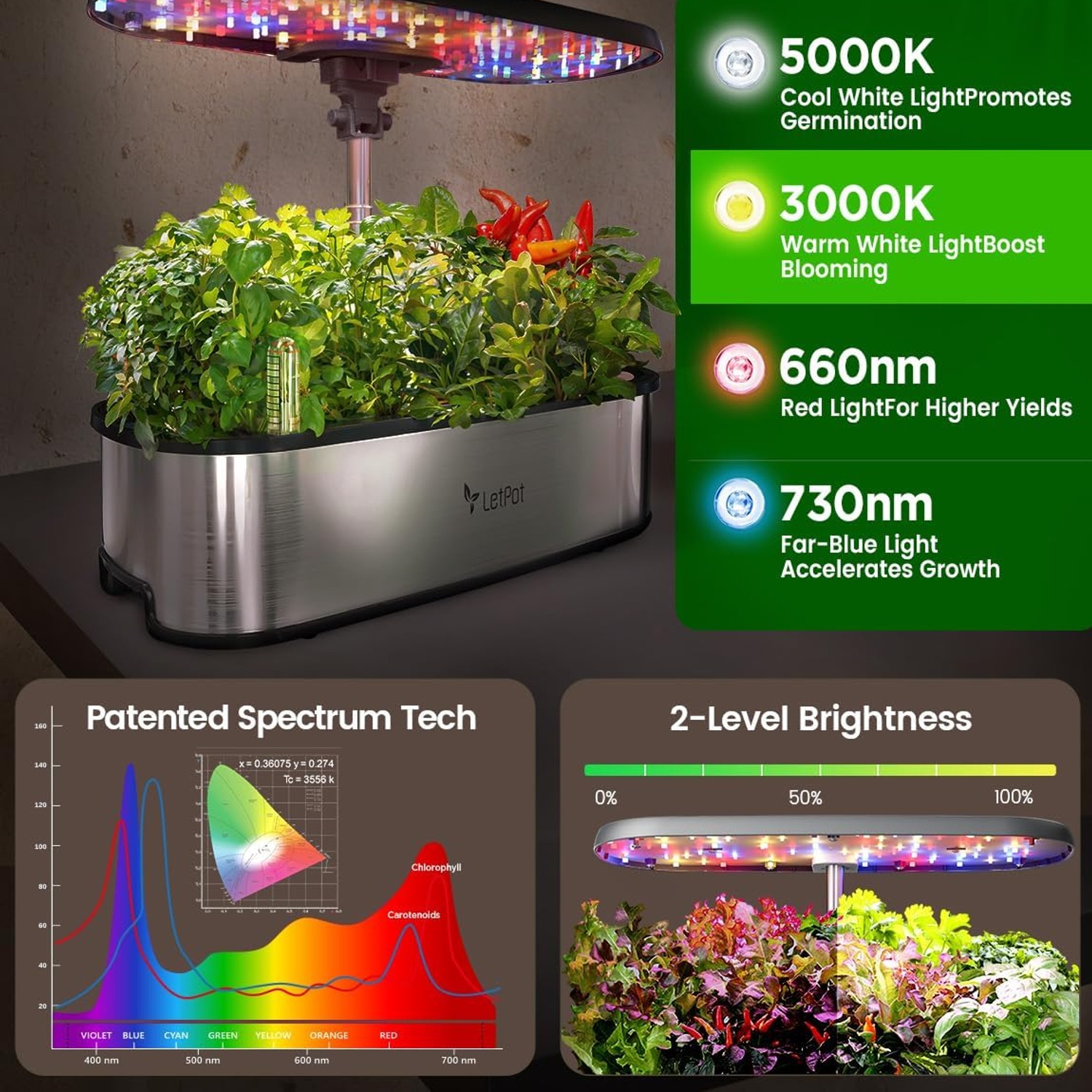
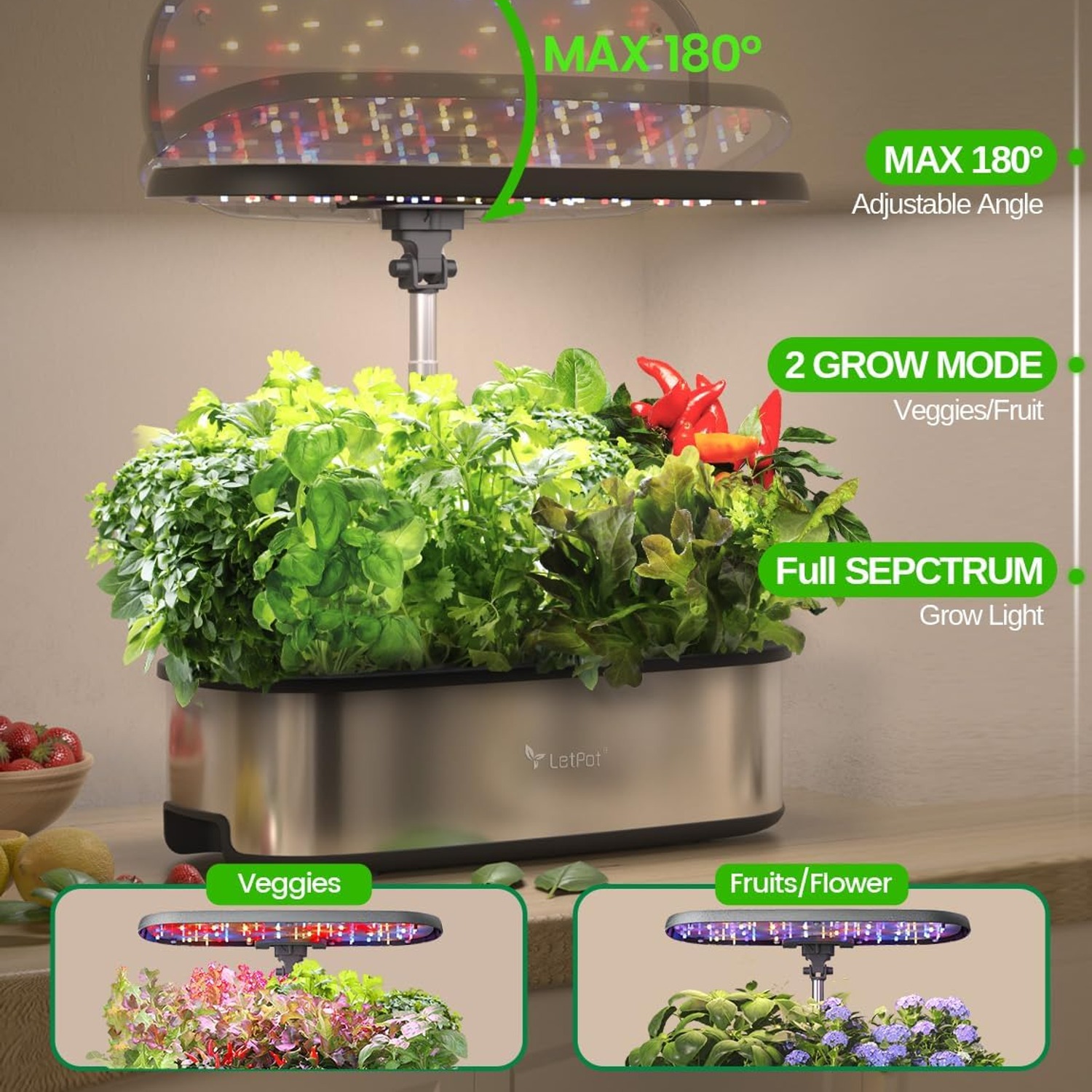
Above all this is a 24W full-spectrum LED bar. Full spectrum means the light includes the wavelengths plants actually use for photosynthesis, not just the ones that look bright to us. It runs on an automatic timer, so it comes on and goes off without you doing a thing.
The app is the real difference
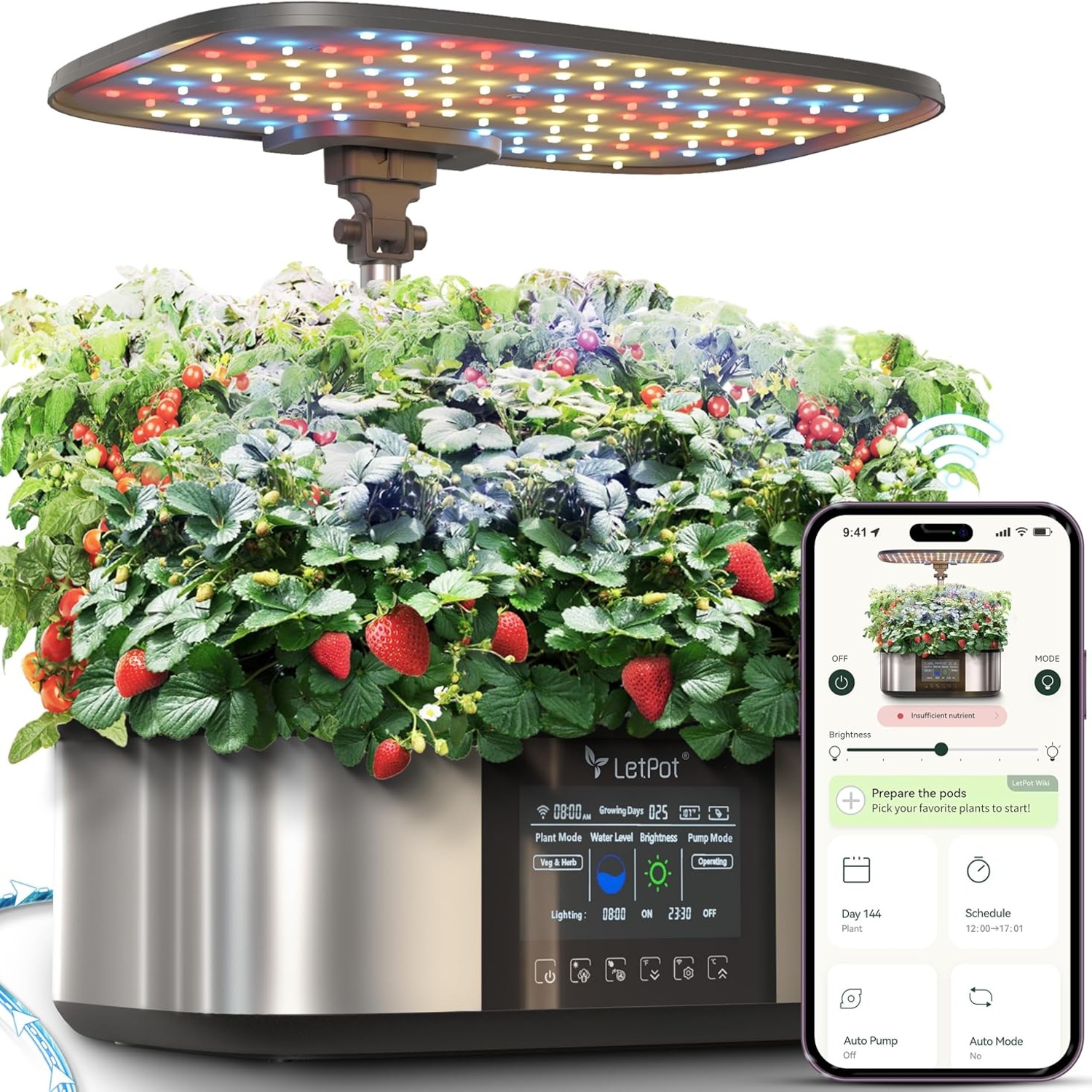
Plenty of indoor gardens have a light and a tank. What separates this one is the control. The LPH-SE is APP and WiFi controlled, which means you set the lighting schedule from your phone through the LetPot app.
In practice that is a small thing that changes how you use the product. If you decide the light coming on at 6am is too early because the unit is near a bedroom, you change it from the couch. If you are away for a few days, you can check the setup rather than wondering. For anyone hunting for the best app controlled grow light in a compact unit, this is the appeal, the scheduling lives in software rather than a dial you have to crouch down and squint at.
The unit also has touch pad control on the body itself, so you are not completely dependent on a phone for day-to-day use.
Who it suits
Renters get a lot out of a setup like this. No garden, no balcony, no soil, and the whole thing packs up and moves with you. Twelve pods of herbs on a counter is a genuine substitute for a herb patch you cannot have.
Cooks are the other obvious group. If you use cilantro, basil, mint or parsley regularly, buying them in plastic sleeves adds up and most of it goes to waste. Cutting what you need, when you need it, from a living plant is both cheaper over time and better tasting.
It also suits people who want the best indoor garden for small kitchens, since the narrow 7-inch depth means it can live against a backsplash without eating the counter. And it works well as a first project for kids, because the growth is quick enough to hold attention and there is no mud involved.
Who it suits less: anyone wanting to grow tomatoes, chili peppers or anything tall and heavy. Twelve pods in a 5.5 liter tank is built for compact leafy things. Fruiting plants need more root volume, more light and more support than a countertop unit provides.
How to choose between systems
If you are comparing hydroponic units, a few numbers tell you most of what you need to know.
Pod count. More pods means more plants, but it also means more water drawn down and more plants competing for the same light bar. Twelve is a comfortable middle. It gives you variety without needing to top up constantly.
Tank size. This decides how often you are refilling. A 5.5 liter tank on twelve pods is generous for seedlings and reasonable once the plants mature. Smaller tanks on similar pod counts mean more frequent attention.
Light wattage and spectrum. A 24W full-spectrum LED is in the right territory for leafy greens and herbs across a twelve-pod span. Wattage alone is not the whole story, but full spectrum is the thing to insist on. A narrow-spectrum light will grow something, just not well.
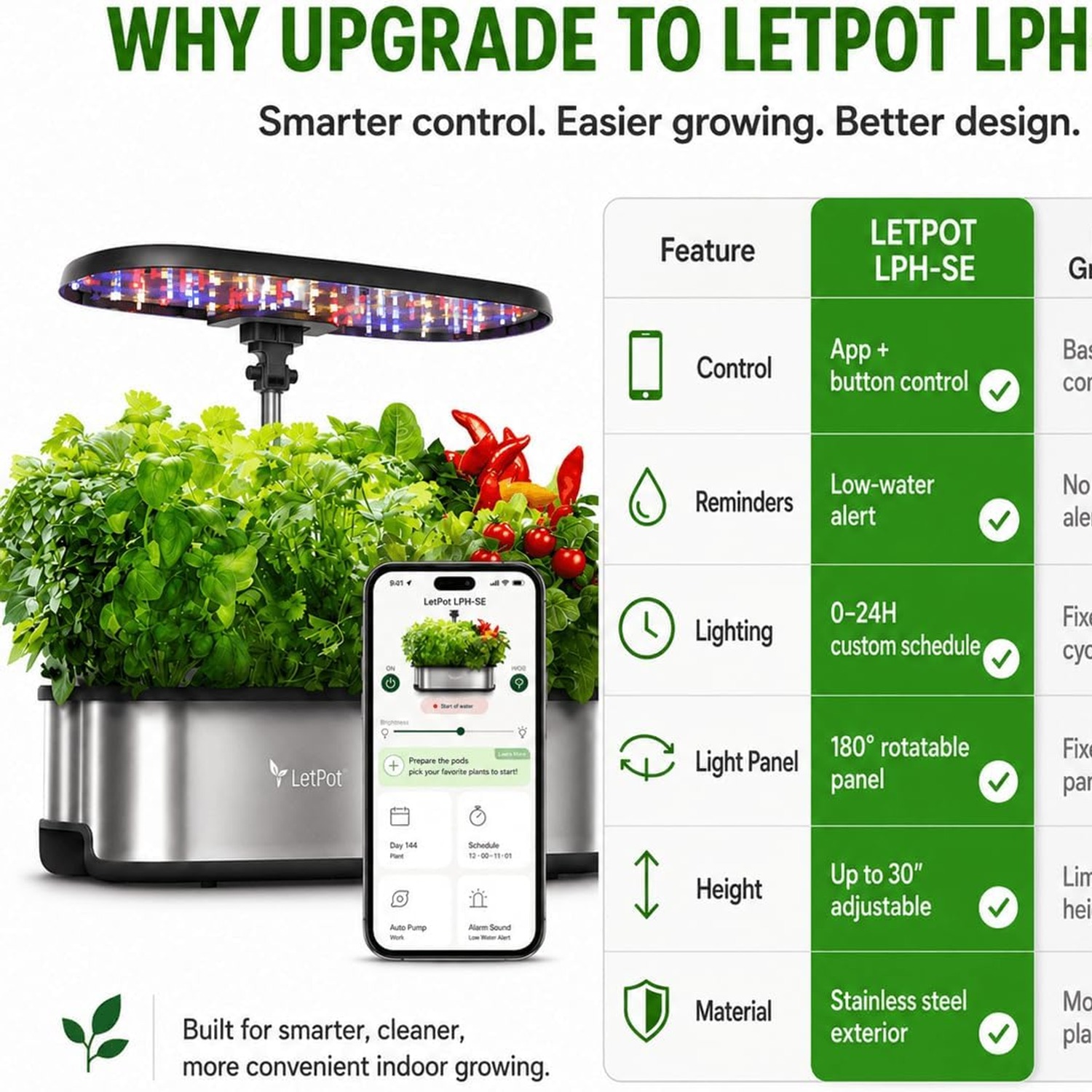
Control method. A basic timer works, but it means physically setting it. App and WiFi control means adjusting on the fly. If you want the best smart garden for kitchen counter use rather than a hobby rig in a garage, this is worth paying for.
Materials. Anything holding water full-time in a kitchen needs to cope with that. Stainless steel outside and ABS resin inside is the practical pairing here, easy to wipe and not bothered by constant damp.
Living with it
The daily routine is light. Check the water level, top up when it drops, and that is most of it. The A&B nutrients get mixed in when you refill or change the water, following the ratios on the bottles.
Between crops, give the tank a proper clean. Empty it, rinse it, wipe the inner wall with a cloth and warm water. Skip abrasive pads, both on the resin and the polished stainless. Unplug before cleaning. The sponges are one-use, since roots grow straight through them, but baskets, covers and pods rinse and go again.
One tip that saves trouble: keep the unit out of direct sunlight. It sounds backwards, but sun on a water tank encourages algae, and the LED is already handling the light. A shaded corner of the counter is the better spot.
Harvest regularly, too. Herbs respond to being cut by branching out. Letting basil run to flower gives you a tall, leggy plant and bitter leaves. Taking a little often keeps it bushy and productive.
The short version
The LETPOT LPH-SE is a twelve-pod, soil-free indoor garden with a 24W full-spectrum LED, a 5.5 liter circulating tank, and scheduling you control from your phone over WiFi. It ships with sponges, baskets, a seedling tray, a plant pot and A&B nutrients, so you can plant the day it arrives. Stainless steel and ABS resin construction keeps it easy to clean, and the 16 by 7 by 9.8 inch footprint fits most benches.
If you want fresh herbs and salad leaves year round without a garden, without soil, and without remembering to water, this is the kind of system that actually gets used rather than abandoned after a month.