
The complete guide
How to Choose a 4x4 Grow Tent (And Set It Up Properly)
The problem a grow tent actually solves
Growing plants indoors sounds simple until you try it in a spare room. You buy a good lamp, point it at your plants, and watch most of that light splash across the walls and the carpet. The room gets warm. Humidity climbs. The smell of damp soil drifts down the hall. Your partner starts making comments.
A grow tent fixes all of that at once by putting a boundary around the operation. Inside the boundary you control light, air and moisture. Outside the boundary, your house carries on as normal. That is the whole idea, and it is why a tent is usually the first real upgrade a home grower makes.
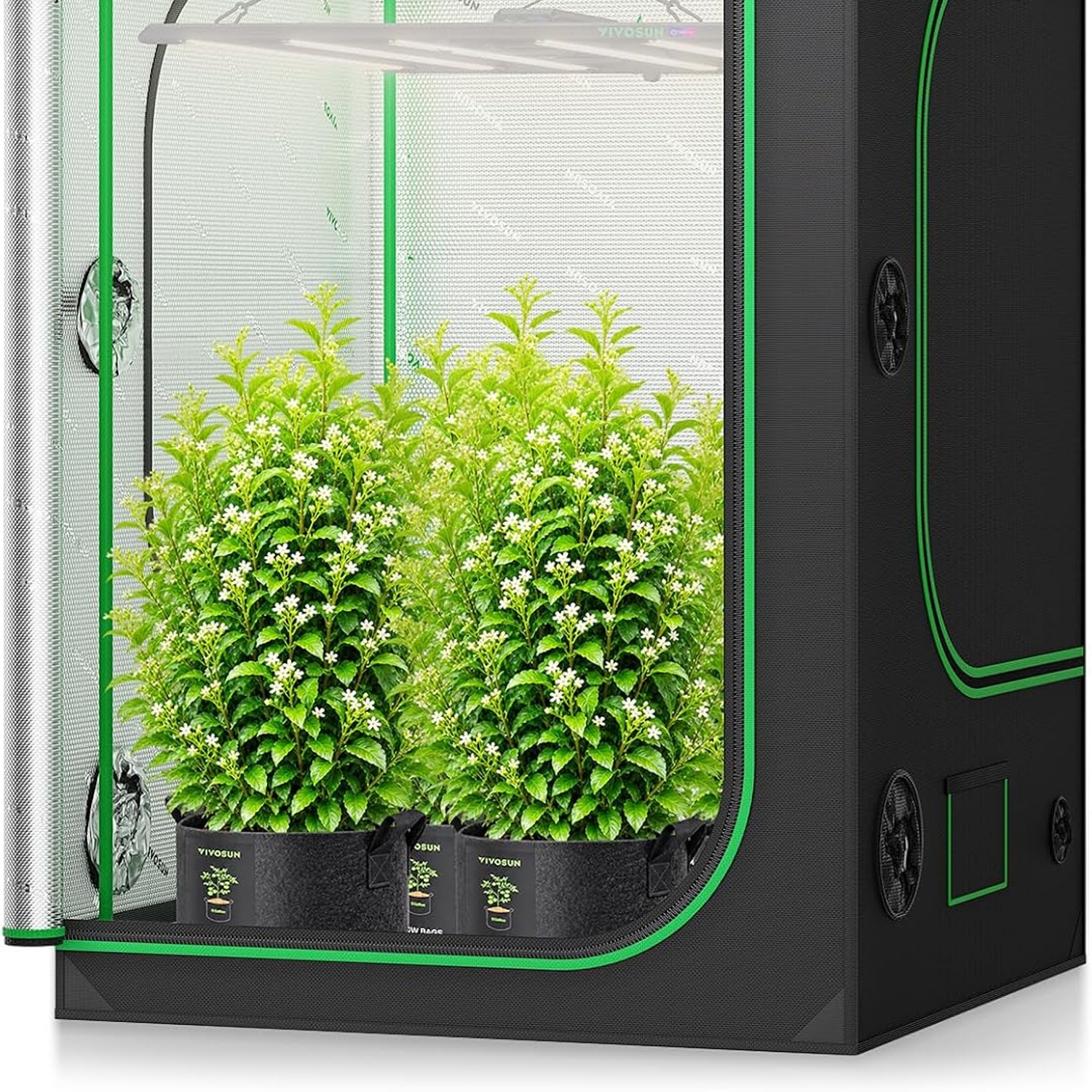
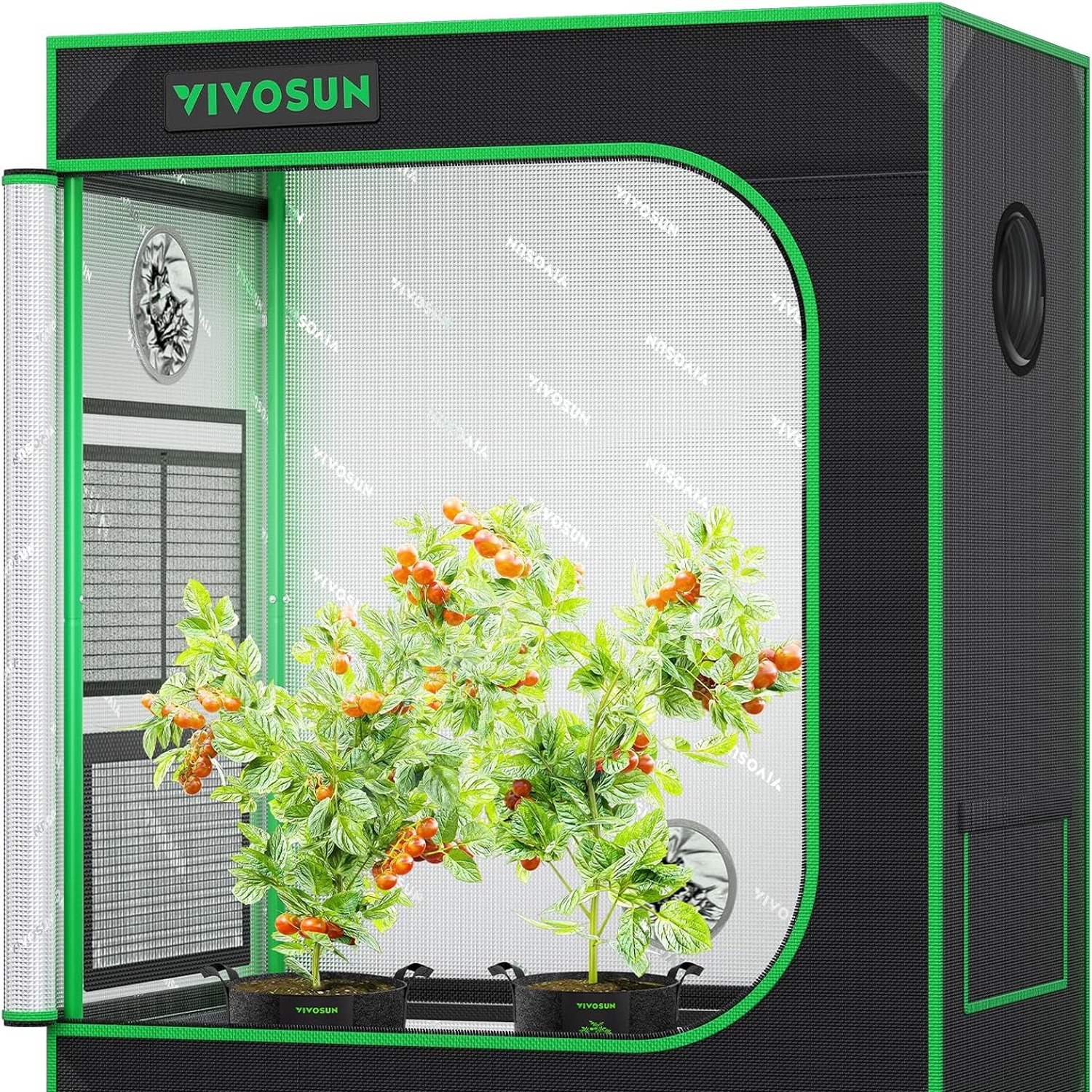
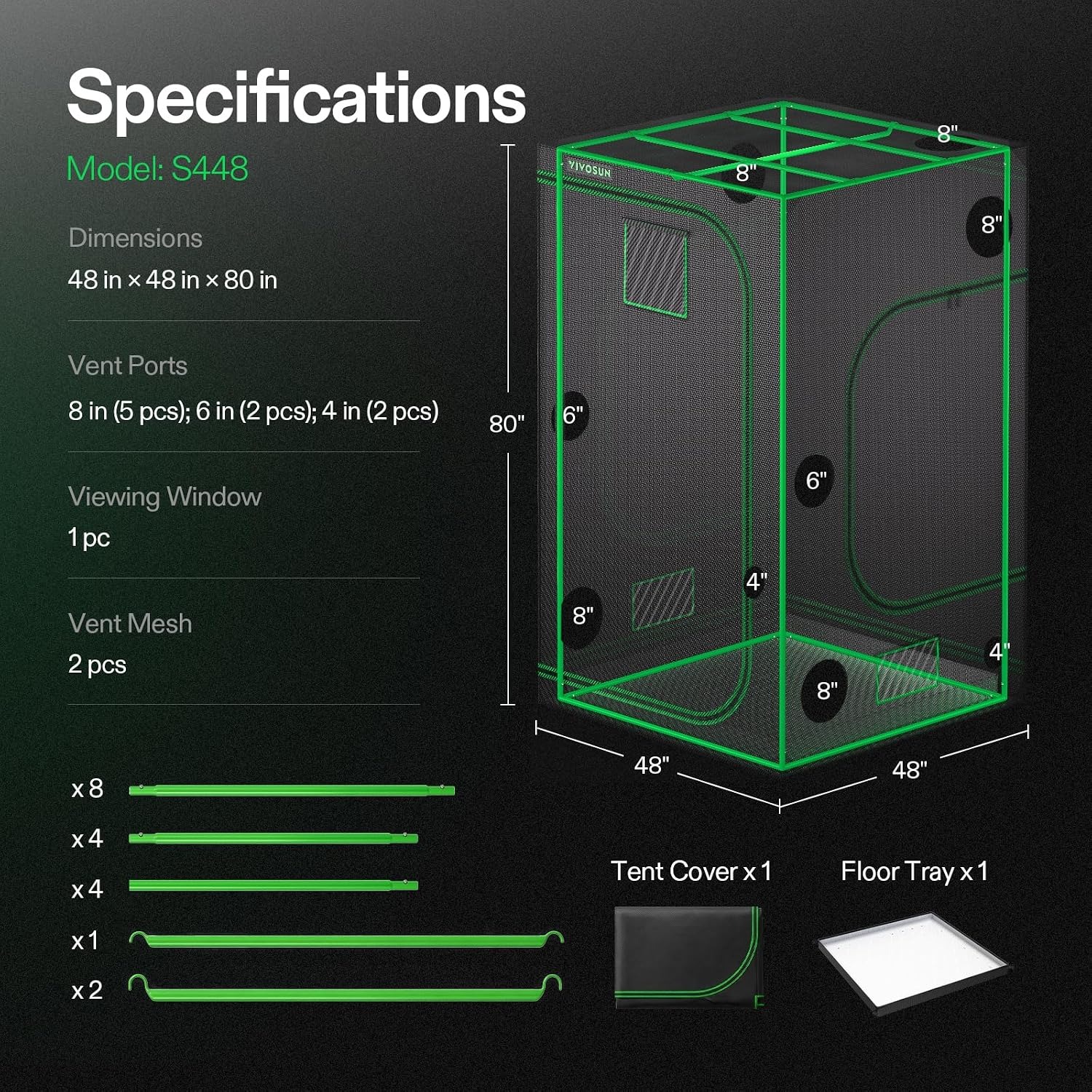
This VIVOSUN S448 is a 48 by 48 by 80 inch tent, which the industry calls a 4x4. It is the most popular size for a reason, and we will get to that.
How a grow tent works
Three things are happening in the fabric.
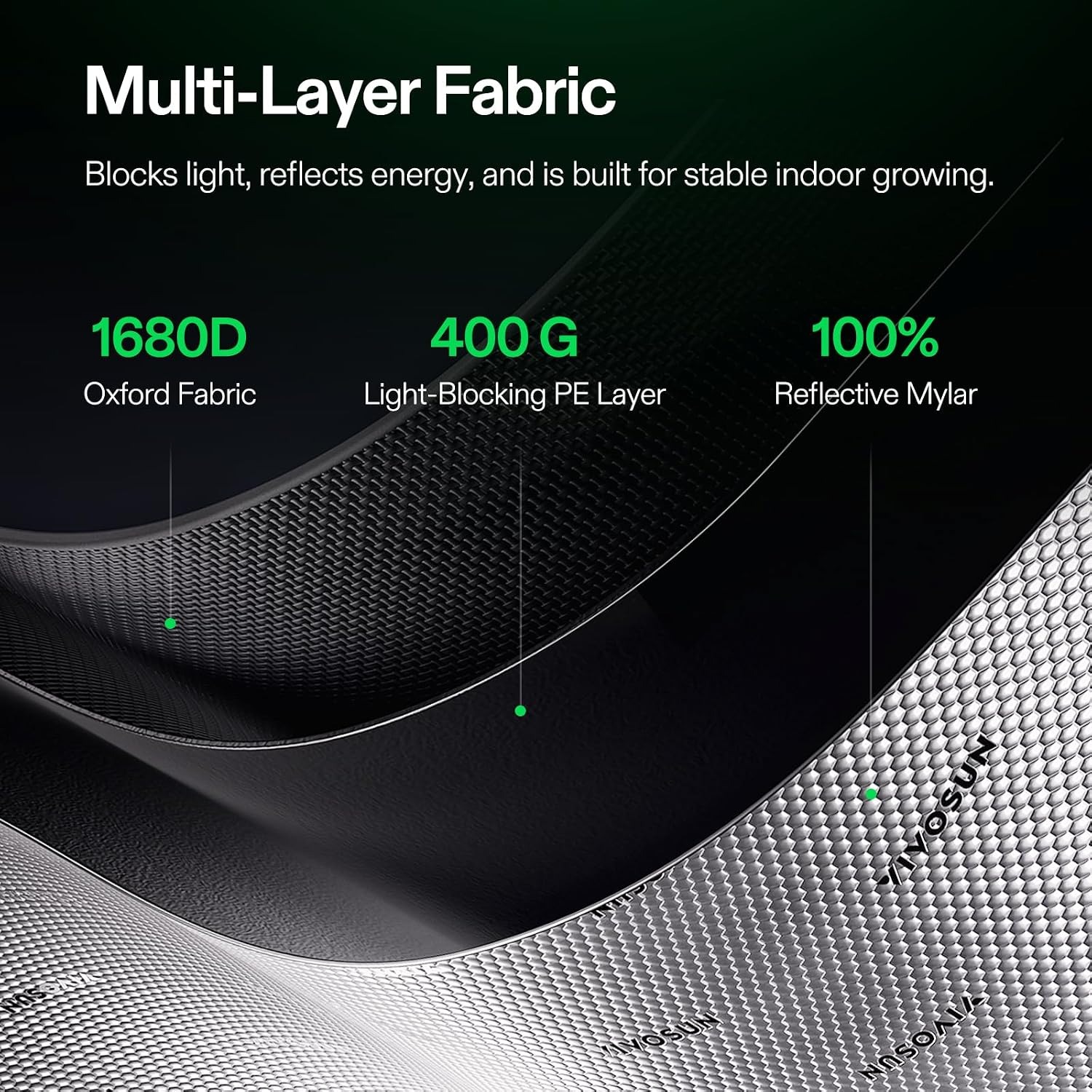
The outside is a dense black canvas with a reinforced inner layer. Its job is to be opaque. Light does not get out, and light from the room does not get in. That second part matters more than people expect, because many plants respond to uninterrupted dark periods. The zipper seam is the weak point in any tent, which is why this one has a black lining behind the teeth.
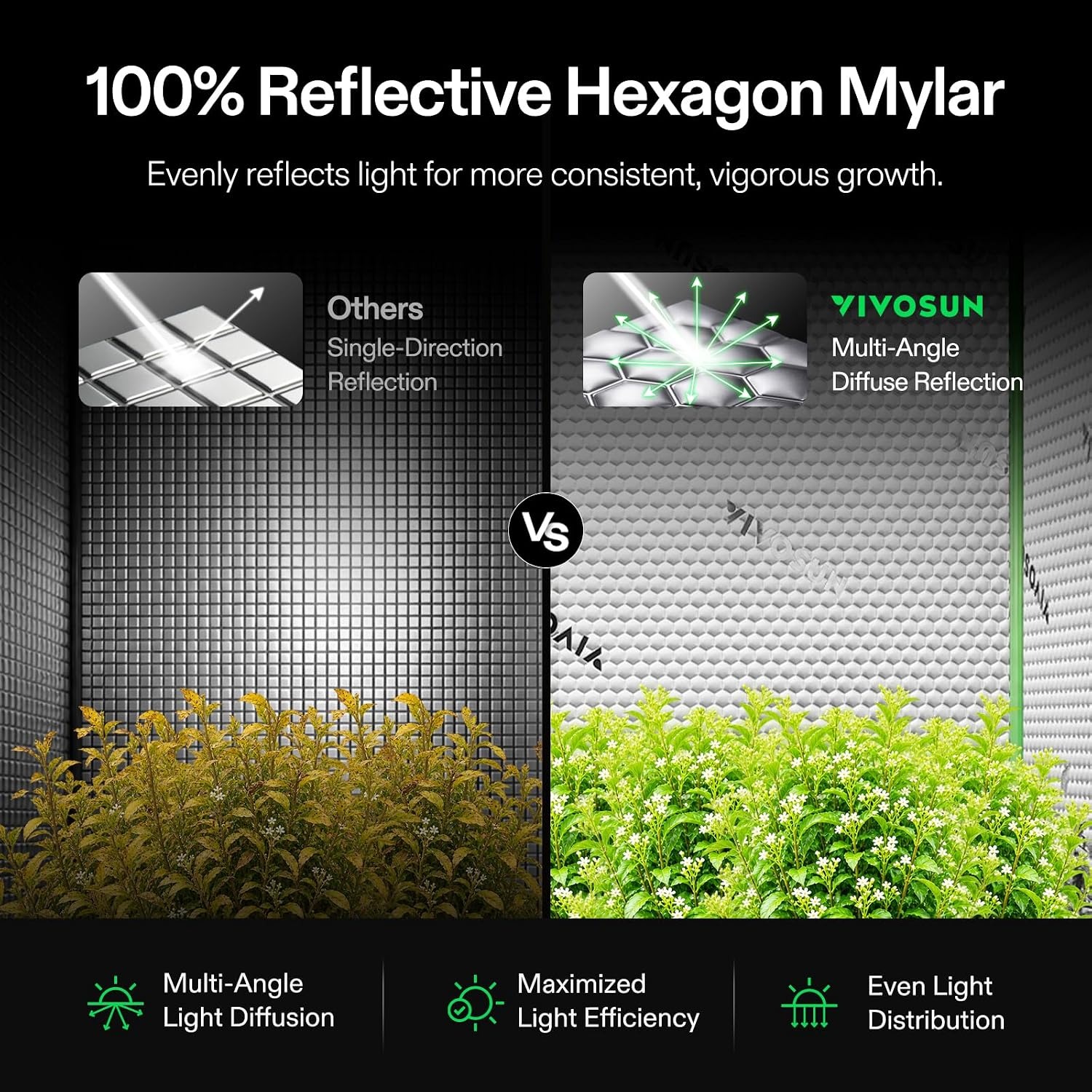
The inside is 100% reflective mylar. Its job is the opposite. Any light that misses the leaves and hits a wall gets thrown back into the canopy. Over a full grow that reflected light adds up, and it is the difference between a lamp lighting your plants and a lamp lighting your garage.
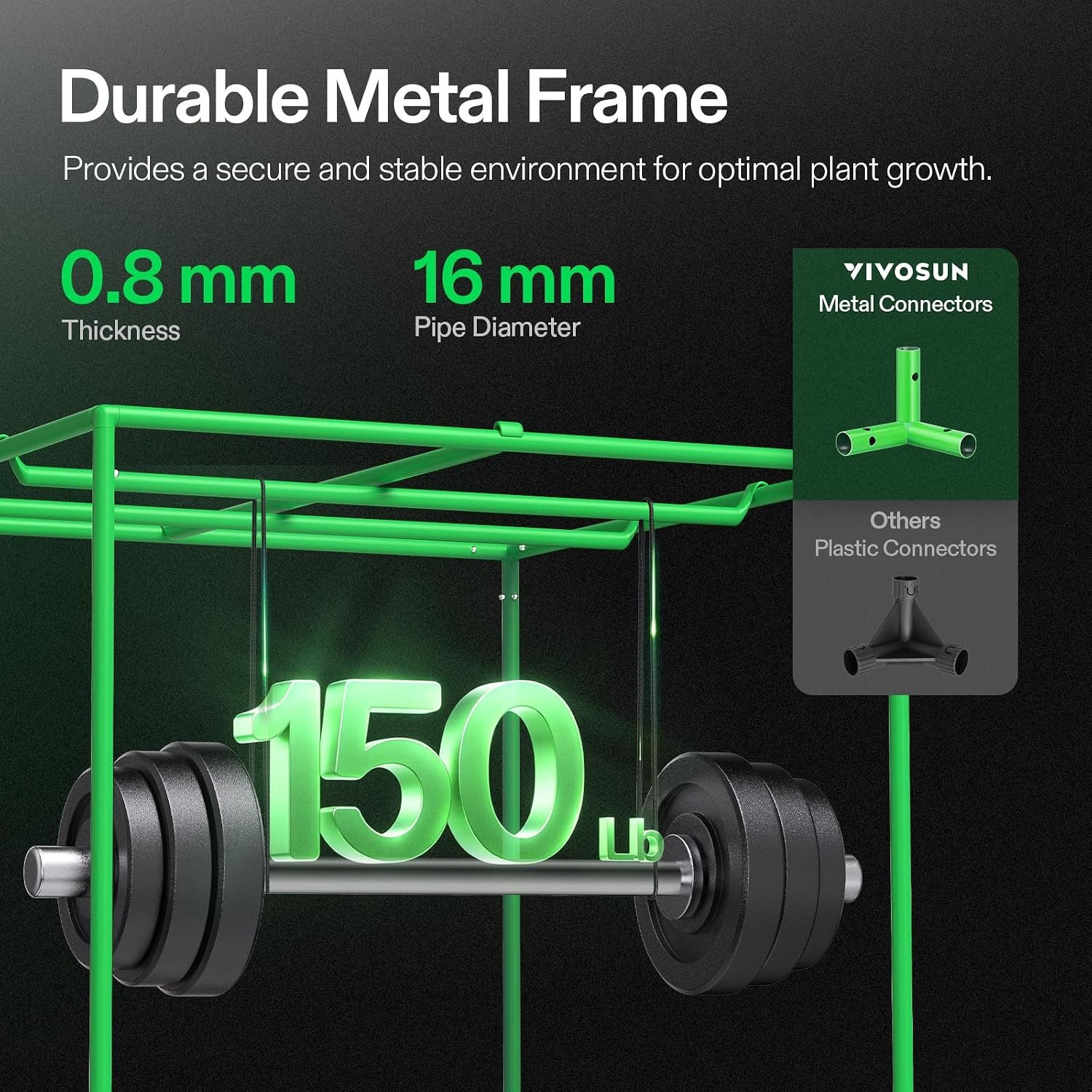
The frame is metal poles with corner connectors that push together by hand. The top bar is rated to 100 lbs. That rating is what lets you hang a light, a carbon filter and an inline fan from the ceiling of the tent rather than balancing them on crates. Hanging straps are included so you can raise the lamp as plants stretch.
Then there are the openings. Several ports for ducting, lamp cables and power cords, placed at different heights so you can draw cool air in low and push warm air out high. Cinch them closed around your ducting and the tent stays light tight.
Who a 4x4 suits
A 4x4 is the sweet spot for home growers. It holds enough plants to be worth the effort, around four in five-gallon pots or six in three-gallon pots, and it still fits in a spare bedroom, a garage bay or a wide closet. A 2x2 is fine for a couple of herbs but you outgrow it quickly. A 5x5 or a 4x8 needs serious space, serious airflow and a bigger power budget.
The 80 inch height is the other reason this size is popular. Once you hang a filter and a fan from the top bar and leave room for the light to sit above the canopy, you still have workable growing height underneath. Shorter tents force you to crop and train plants earlier than you might want to.
It suits beginners too. Tool-free assembly, printed instructions and a viewing window all cut down the number of ways to get it wrong. If you are hunting for the best grow tent for beginners, the features that matter are the ones that make daily work easy, not the ones that sound impressive in a spec list.
Choosing: what to actually look at
Footprint versus your room. Tape a four foot square on the floor before you order. Then add about a foot of clearance on the sides where you will stand and reach. If the tape square means you cannot open your wardrobe or get to the laundry, it is the wrong size for that room.
Ceiling height. Eighty inches of tent needs more than eighty inches of room. You want space to lift poles during assembly and to run ducting off the top. Eight foot ceilings are comfortable. Lower than that, measure carefully.
Frame load rating. The 100 lb top bar rating here covers a typical light, filter and fan combination. If you plan to hang heavy gear or multiple lamps, check your total before you commit. A sagging top bar is a miserable thing to fix mid-grow.
Access. Multiple doors matter more than you think. Being able to reach a back plant without crawling past the front ones saves damaged stems and a lot of swearing. Smooth zippers matter for the same reason, since you will open this tent several times a day.
Floor protection. A removable mylar tray is the difference between a spill being a two minute rinse and a spill being a carpet problem. It also catches dropped medium and makes the end-of-grow cleanup far less painful.
Ports and placement. Count them and look at where they sit. Low intake, high exhaust is the pattern you want. Spare ports for cords mean you are not forcing a power lead through a duct opening.
Setting it up without the headaches
Build the frame flat on the floor first. Lay the poles out, match them to the diagram and push the corner connectors together. They will feel loose until the last piece goes in, then everything tightens up.
Stand the frame up and check it is square before you put the canvas on. A twisted frame makes the zippers fight you for the life of the tent.
Slide the canvas over the top and work it down the sides, lining the door up with the direction you want to face. Zip everything closed slowly on the first pass. Fabric likes to bunch at the corners and forcing a zipper through a fold is how zippers die.
Hang your gear from the top bars with the included straps. Filter first, then fan, then light, since the filter is heaviest and you want it on the strongest point. Run your ducting out through the upper ports and your power out through a lower one.
Do a light check. Close the tent, turn the room lights off, turn the grow light on and look for glowing seams from outside. Then do it in reverse, sit inside with the room lights on and look for pinholes. Tape anything you find.
Care and maintenance
Keep the mylar clean. A damp cloth and mild soap is all it needs, but dull, dusty mylar reflects noticeably less light than clean mylar. Wipe it down between grows.
Lift the floor tray out to clean it rather than trying to scrub inside the tent. Rinse it in a laundry tub or outside, dry it, slide it back.
Zippers want two things: no grit, and no yanking. Brush soil off the teeth and pull slowly around the curve of a corner. A failed zipper on a light-tight tent is a real problem, and it is almost always preventable.
Check the frame joints every month or so, especially if you have added gear. Connectors can work loose under vibration from a fan.
If you pack the tent away, make sure it is bone dry first and fold it loosely. Tight creases in mylar eventually crack and leave dull lines.
The short version
A 4x4 grow tent gives you a small, controlled room inside a room. This one is 48 by 48 by 80 inches, black on the outside and fully reflective on the inside, with a metal frame, a 100 lb top bar, heavy-duty zippers with light-blocking lining, a clear viewing window, multiple doors and ports, hanging straps and a removable mylar floor tray.
It does not include a light or a fan, and that is normal. Buy those to match what you are growing.
Before you order, tape a four foot square on your floor and measure your ceiling. If both check out, this is a straightforward, well-featured tent that will handle a serious home grow without asking much of you beyond a bit of care.