
The complete guide
Feeding an Indoor Hydroponic Garden, A Practical Buyer's Guide
The problem with growing in water
An indoor hydroponic garden is a lovely thing right up until week five, when the basil stalls, the lettuce goes pale, and you start wondering what you did wrong. Usually the answer is nothing. You just ran out of food.
Outdoors, a plant sits in soil. Soil is a storehouse. It holds minerals, it holds organic matter breaking down slowly, and it holds a whole population of microbes releasing nutrients over months. A plant in the ground can coast for a while on what is already there.
A plant in a countertop garden has none of that. Its roots sit in plain water with a pump pushing it around. Whatever that plant needs has to be dissolved in that water by you. When the water runs low on nutrients, the plant has nowhere else to go, and you see it in the leaves within days.
That is the gap a liquid plant food fills. It is not a tonic or a booster. It is the actual meal.
How a liquid feed works in a reservoir
The idea is simple. You add a measured amount of concentrate to the water in your tank, the pump circulates it, and the roots absorb what they need as the water passes by. There is no waiting for anything to break down. The nutrients are already in a form the plant can take up.
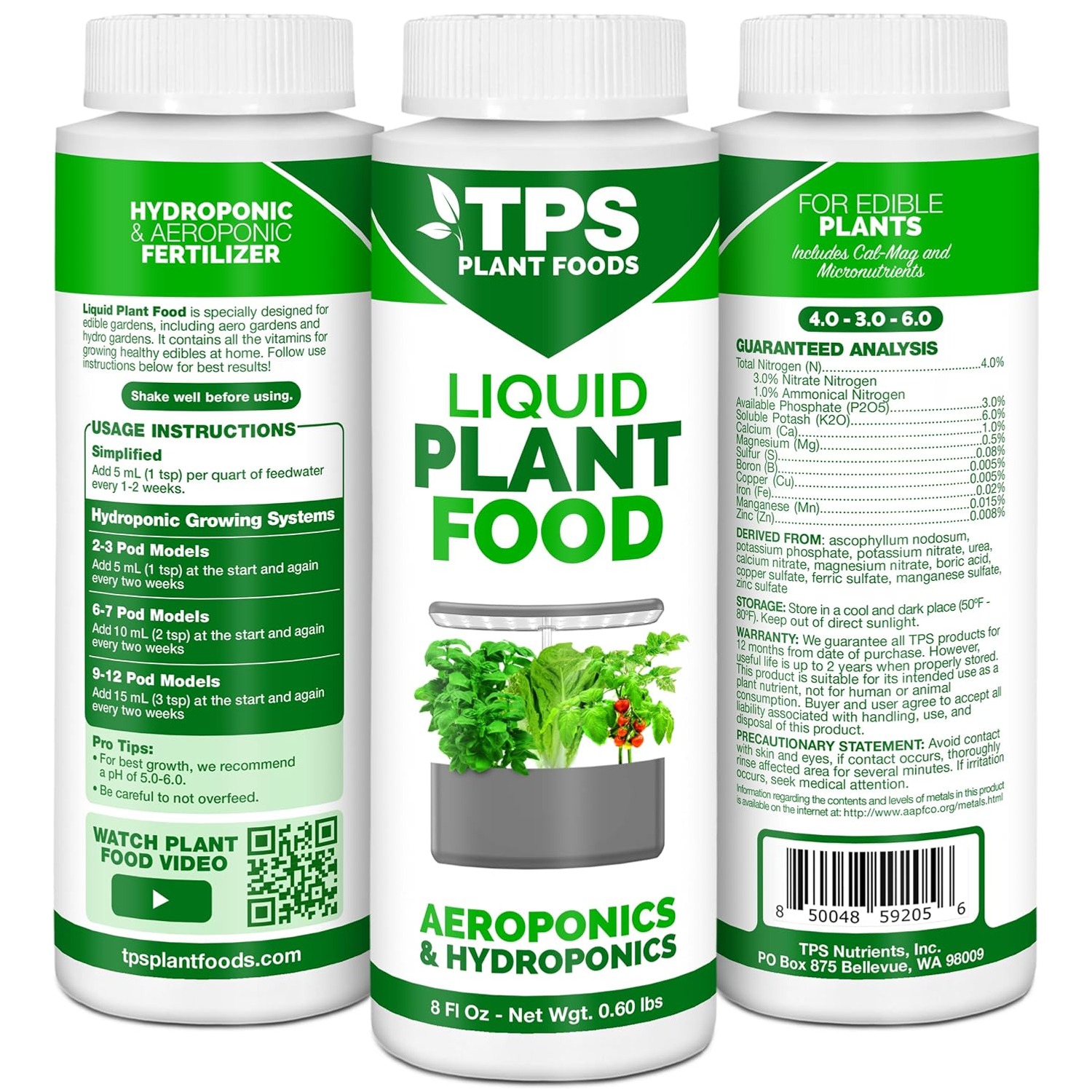
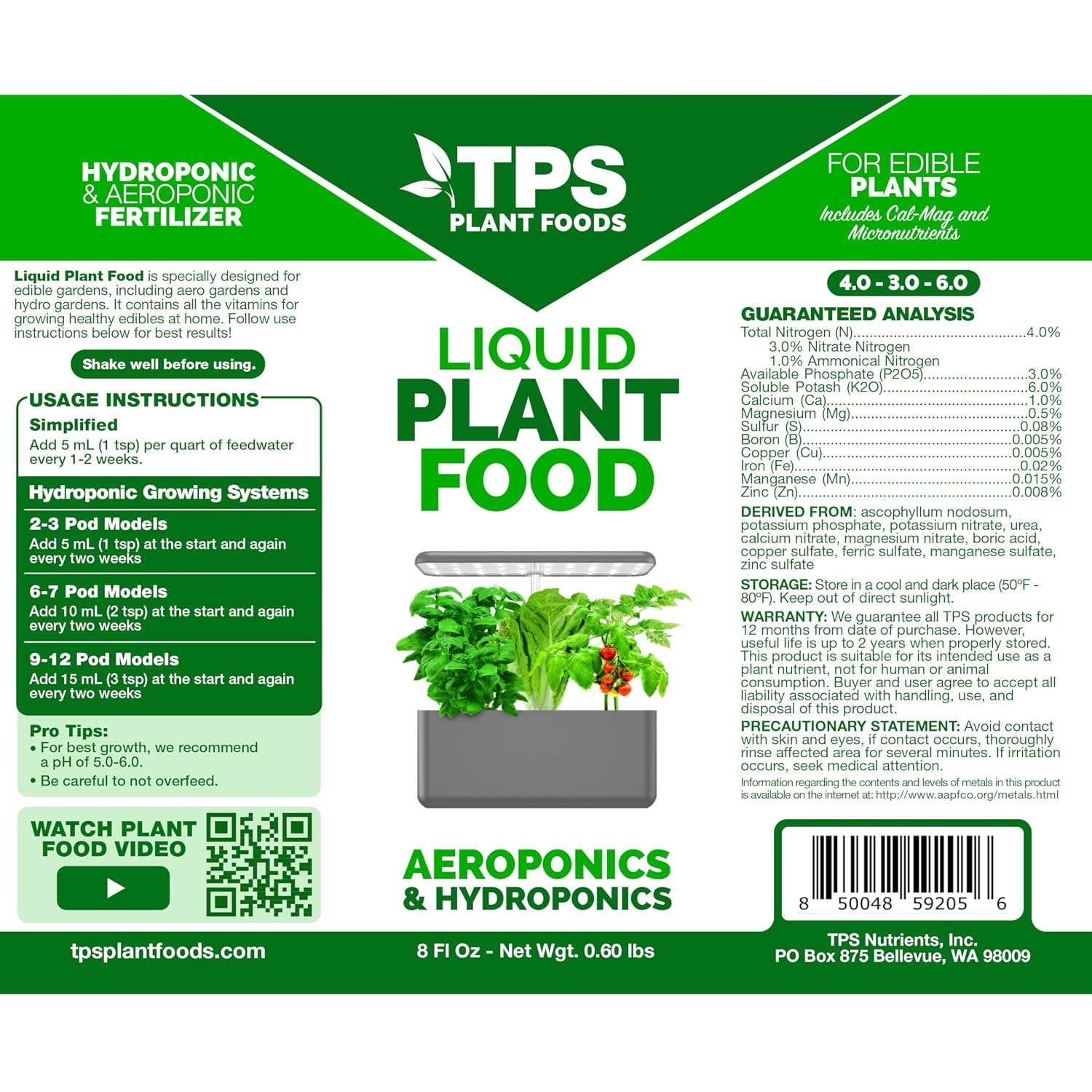
This product uses a stated ratio of one teaspoon per gallon of water. That figure matters more than it looks. A fixed, memorable ratio means you can feed at the same time you refill, without a scale, a chart, or a calculator. For a kitchen counter garden that you walk past twice a day, the routine you will actually keep is the one that takes thirty seconds.
Being a liquid helps too. Powdered nutrients work perfectly well, but they need dissolving properly or you get grit in the bottom of the tank and uneven strength in the water. A liquid concentrate blends straight in.
The listed uses here are plant growth and root development. Those two go together. Roots are the plant's intake system, and a weak root mass puts a ceiling on everything above it. You can have a perfect lamp running twelve hours a day and still get skinny plants if the roots cannot keep up. Feeding the water feeds the roots, and the roots do the rest.
Who this suits
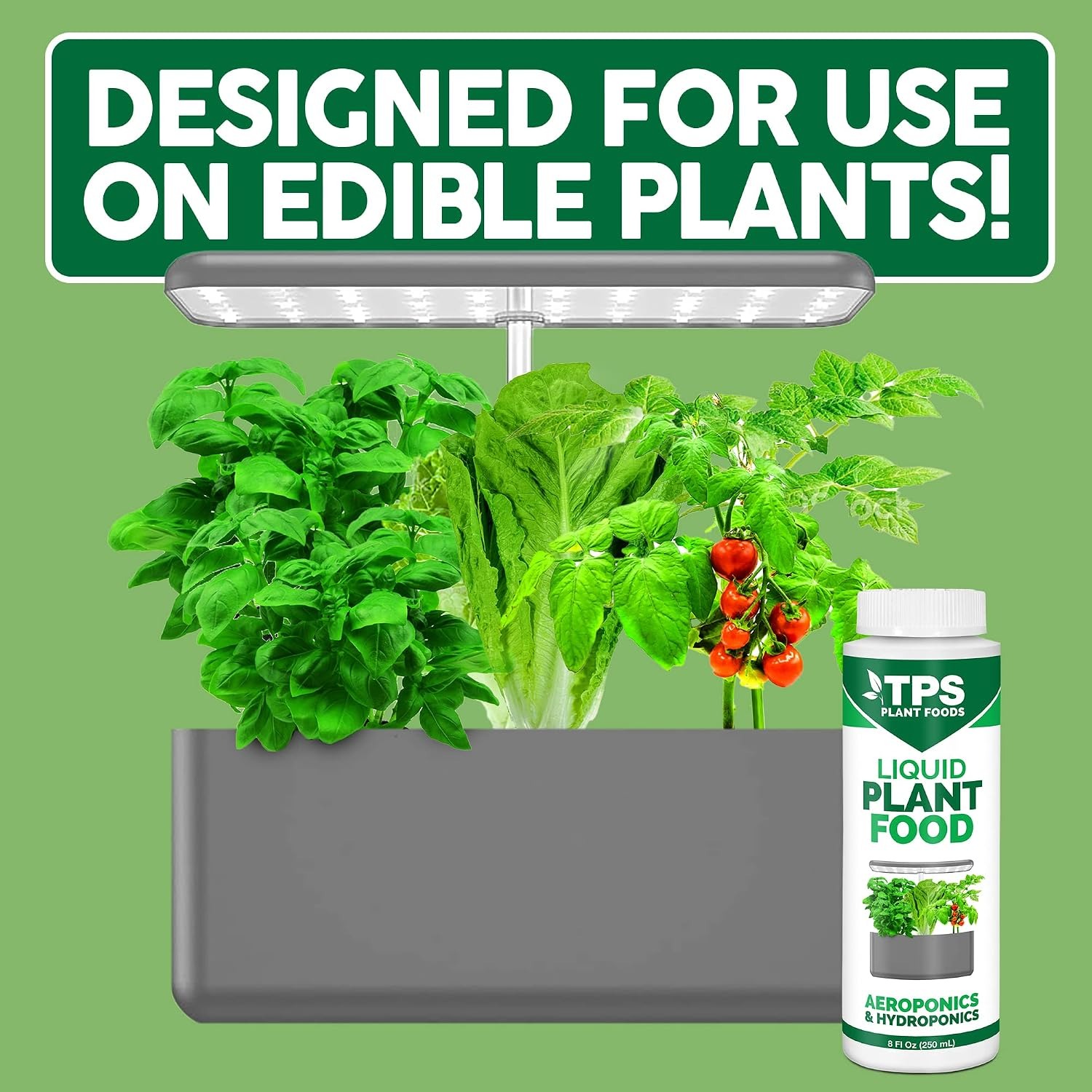
The target species listed are herbs and vegetables, which lines up neatly with what most people actually grow indoors.
Herbs are the big one. Basil, parsley, mint, cilantro, chives and thyme all do well in a water based unit, and they all get cut constantly. Every harvest is a demand on the plant to regrow. A herb you snip twice a week is working far harder than a decorative plant sitting in a corner, and it needs feeding to match.
Leafy greens are the other common crop. Lettuce, arugula, spinach and baby kale grow fast and are largely made of leaf, which makes them hungry for nitrogen. Small fruiting plants like chili peppers and cherry tomatoes also show up in countertop gardens, though they take longer and need more light.
If you are growing in soil pots on a windowsill, this is probably not your product. A soil feed is designed around a medium that already holds minerals. If your plants sit in water, this is squarely aimed at you.
How to choose a plant food for an indoor garden
A few things actually matter, and plenty do not.
Match the format to your system. Water based units want something that dissolves cleanly. A liquid concentrate is the least fussy option for a reservoir.
Look at the dosing. A single clear ratio beats a complicated chart for a home grower. Multi part systems with separate grow and bloom bottles give you more control, and that is genuinely useful if you are running a serious setup. For a counter with six pods of herbs, it is a lot of effort for little gain. This one is a single bottle with one ratio.
Check it is meant for edibles. If you plan to eat the harvest, use something designed for herbs and vegetables. That is what this is formulated for.
Think about bottle size against your tank. Coverage here is rated medium, and the bottle holds 8 fluid ounces. At a teaspoon per gallon that is a decent run of feeds for a small unit, and a shorter run for a large one. If you have a big tank or multiple gardens, plan on buying more often.
Ignore anything that promises miracles. A plant food gives a plant raw materials. It does not fix bad light, a dead pump, or a tank that has not been cleaned since February.
Building a feeding routine that sticks
Here is what works for most people.
Top up the water whenever the level drops noticeably, and add feed at the stated rate for the amount of water you are adding. Not the tank size, the water you are pouring in. That keeps the concentration roughly steady instead of creeping up.
Every week or two, do a full change. Drain the tank, rinse it out, refill with fresh water, and dose for the full volume. This clears out salt buildup and anything that has gone stale. Plants respond to a fresh tank noticeably, and it takes five minutes.
Watch the leaves rather than the calendar. Pale new growth and slow regrowth after a cut usually mean the tank needs refreshing. Browning or curling leaf edges can point the other way, towards too much. If you suspect overfeeding, run a cycle on plain water and then go back to the normal rate.
And keep the measuring honest. A kitchen teaspoon is fine. Eyeballing a glug from the bottle is how people end up overfeeding without realizing.
Storage and handling
Keep the cap on tight and the bottle upright, somewhere cool and dark. Under the counter or in a cabinet is ideal. Direct sunlight on a bottle of concentrate is not doing it any favours.
Shake before each use so everything is evenly distributed. Measure with a clean spoon, and rinse it afterwards rather than leaving residue to dry on. Wipe any spills on the unit straight away, since dried nutrient can mark surfaces.
Store it out of reach of children and pets, and wash your hands after handling. Wash your harvest before eating, the same as you would with produce from a garden bed.
A note on what we know and what we do not
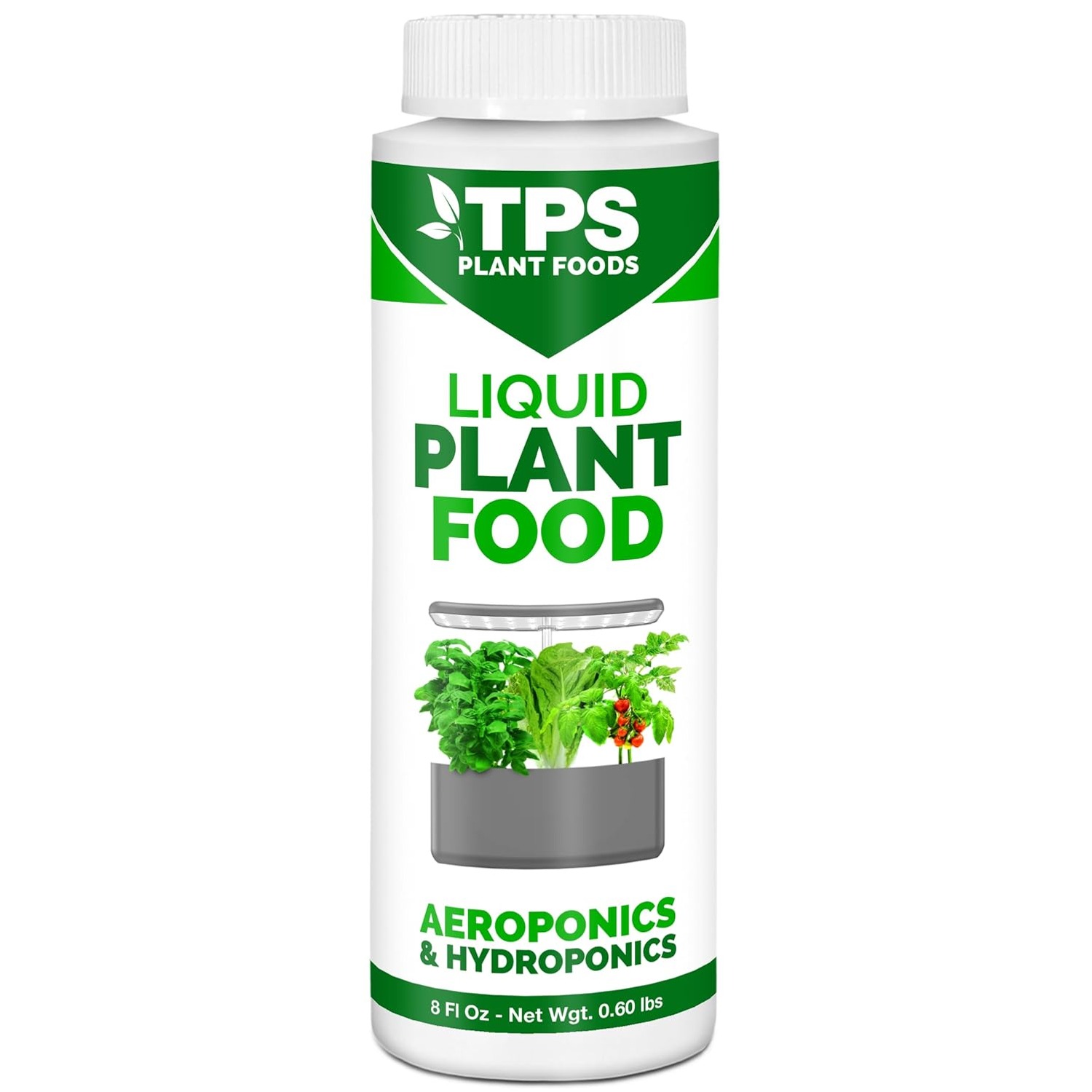
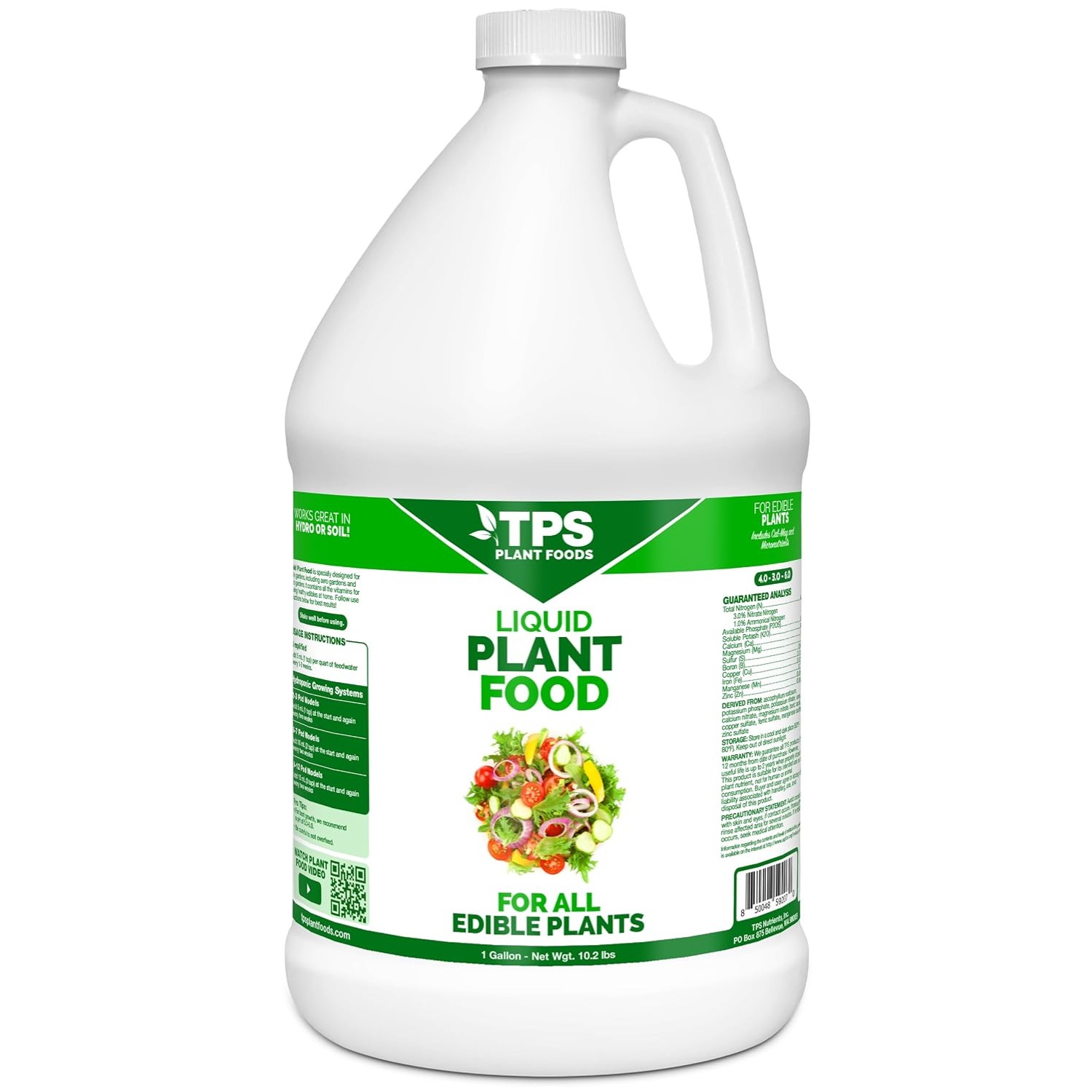
Worth being straight about this. The record for this product confirms the brand as TPS Nutrients, the part number as LIQUIDPF8OZ, the volume as 8 fluid ounces, the mixing ratio as one teaspoon per gallon, and the target species as herbs and vegetables.
The exact nutrient analysis, the country of origin, and the pack dimensions are not specified in the information we have. The bottle label will carry the guaranteed analysis and origin details required where it is sold. If you keep records of your feed figures, check the label when it arrives rather than relying on anything we have guessed.
The short version
Hydroponic plants eat what you put in the water, and nothing else. When a countertop garden stalls, a missed feed is the usual culprit.
This is a single bottle liquid feed, 8 fluid ounces, mixed at one teaspoon per gallon, aimed at herbs and vegetables in AeroGarden style units. The appeal is that it is simple enough to actually use, which matters more than any spec sheet when you are topping up a tank on a Tuesday morning.
Feed when you refill, change the water every week or two, keep the light running, and the garden keeps producing.