
The complete guide
Indoor Hydroponics Made Simple, A Buyer's Guide to 12 Pod Growing Systems
The problem with growing herbs indoors
Almost everyone has tried it. You buy a pot of grocery store basil, put it on the windowsill, and two weeks later it is a stick. The usual diagnosis is "I killed it," but that is rarely the real story.
Grocery store herb pots are grown fast under commercial lights, crammed with more seedlings than the pot can support, and then handed to you for a kitchen that gets four hours of weak light through a pane of glass. The plant was never going to make it. Add central heating that drops the humidity, a counter that sits in shade after midday, and a watering schedule based on remembering, and you have a plant on a countdown.
A hydroponic growing system solves this by taking the two variables that matter most, light and water, and handling them properly. The light comes from an LED directly above the plant rather than slanting through a window. The water sits in a reservoir below the roots, circulating so it stays oxygenated. You are no longer asking a plant to survive your house. You are giving it conditions it actually likes.
How a 12 pod system works
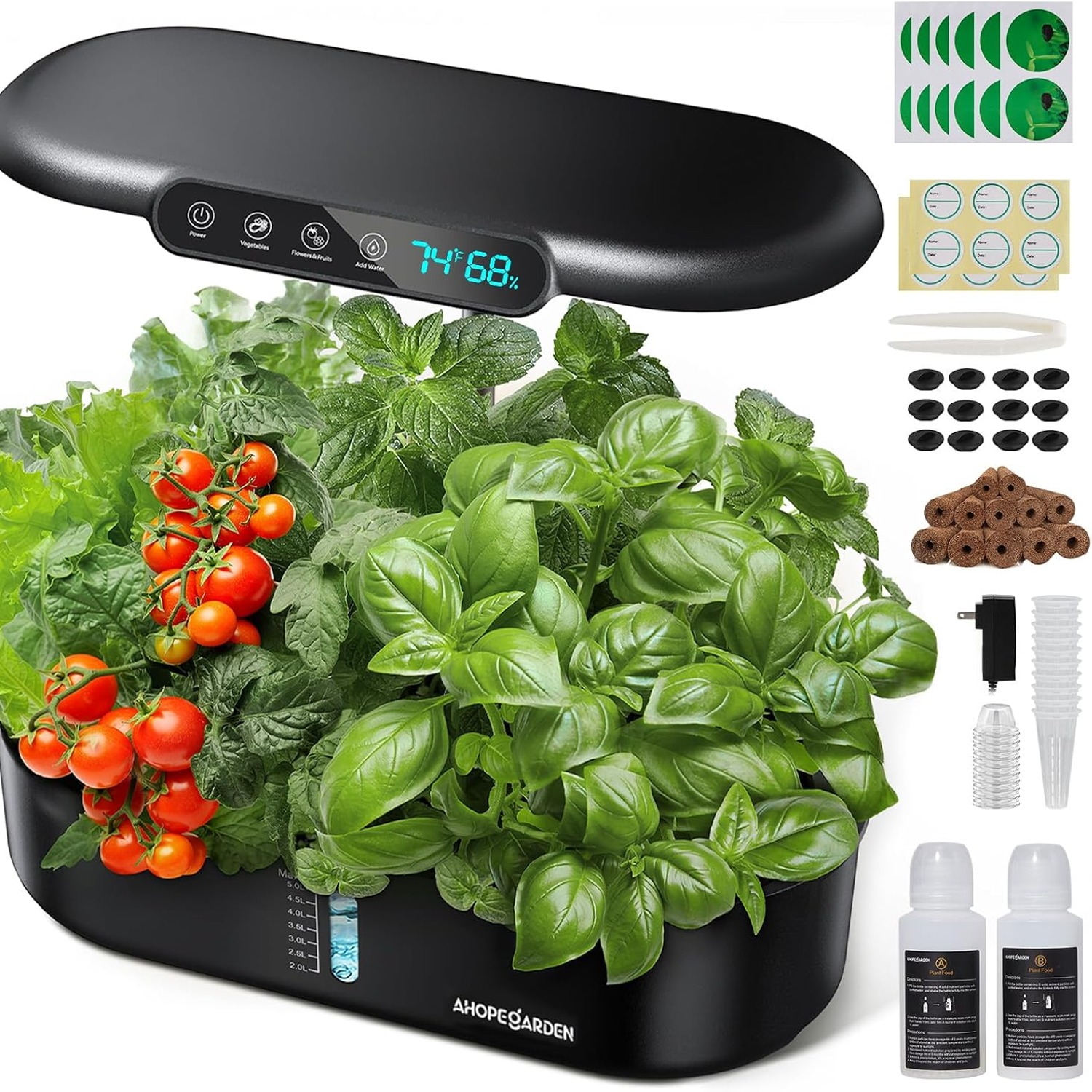
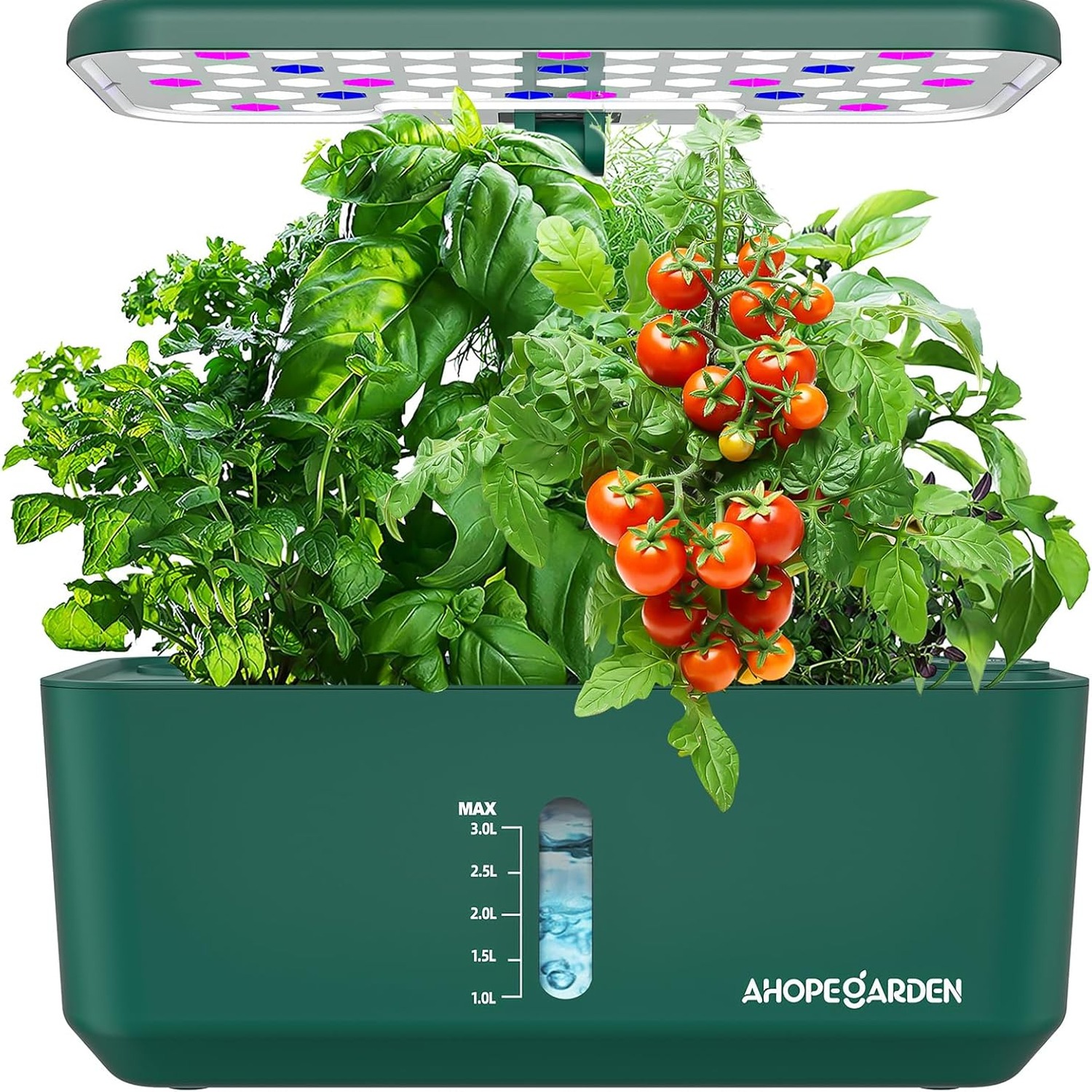
The layout is simple once you have seen it. A tank holds the water, in this case 5 liters. A grow deck sits on top with twelve openings. Each opening holds a pod, and each pod holds a grow sponge with a seed in it.
The seed germinates in the sponge. As roots develop, they push down through the sponge and into the water below. From that point on the plant is drinking and feeding continuously, which is why hydroponic growth is usually faster than soil growth. There is no drying out and no waiting for a watering can.
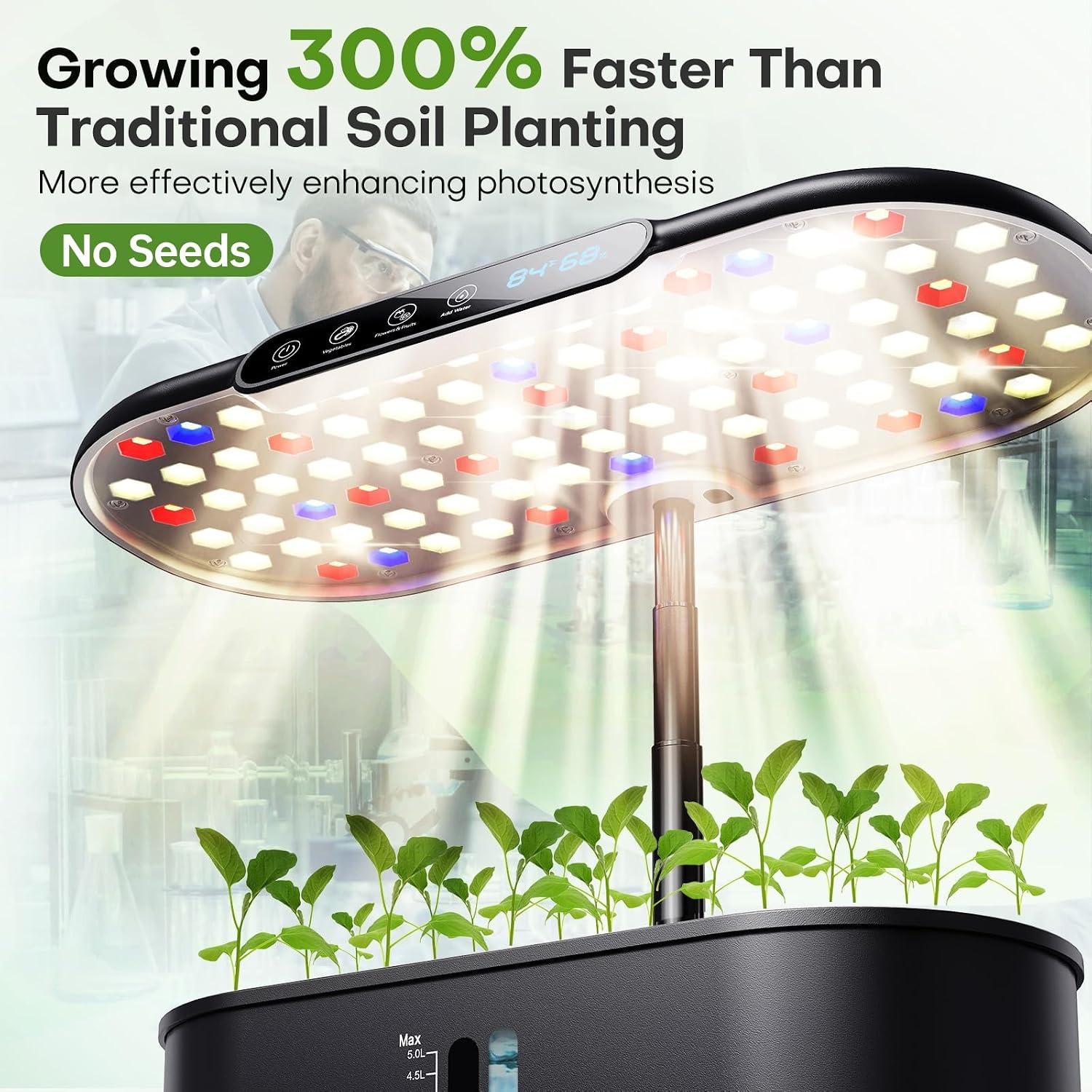
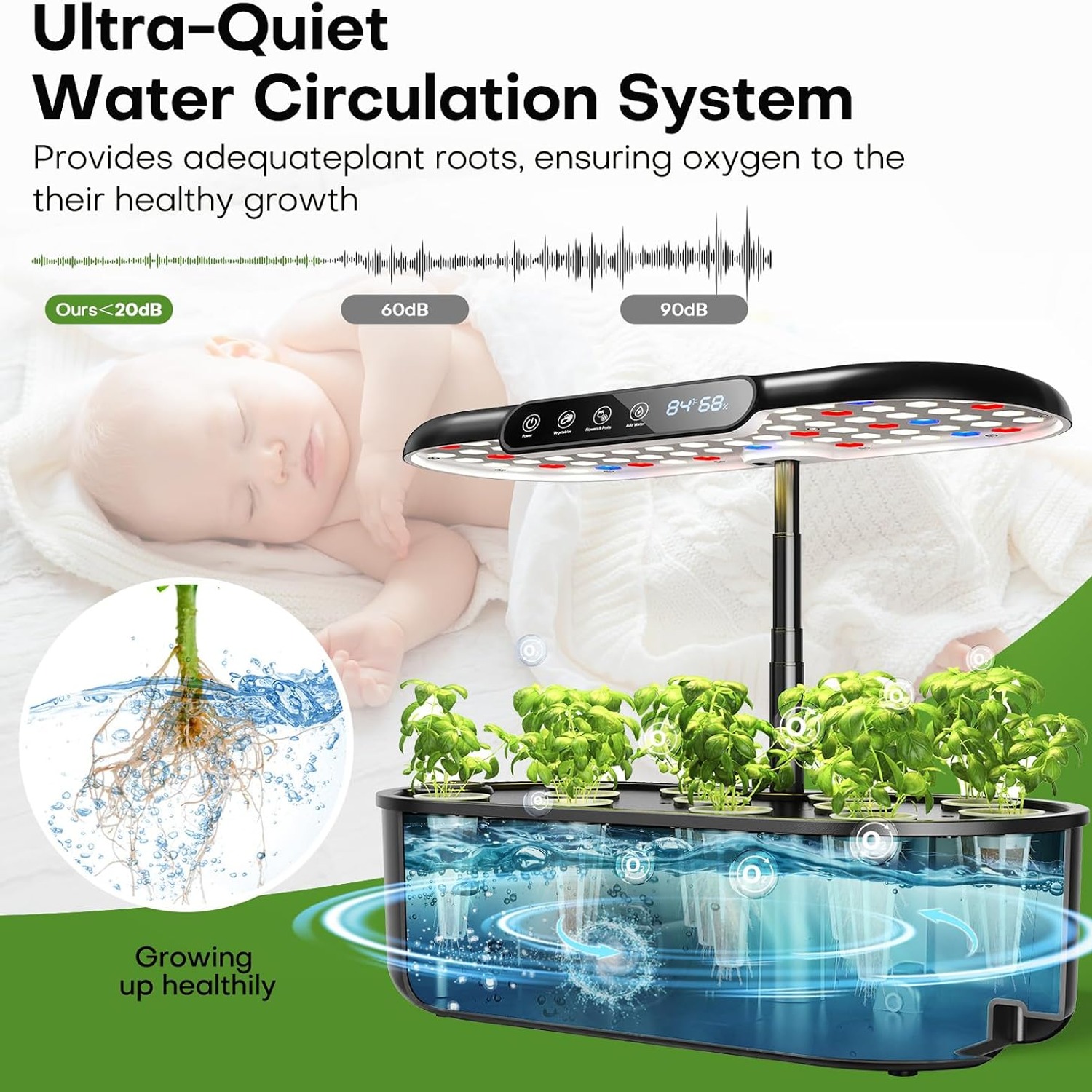
The circulation system moves the water so it does not go stagnant. Still water loses oxygen, and roots sitting in oxygen-poor water struggle. On this unit the circulation runs below 20 decibels, quiet enough that it will not bother you in a kitchen. Overhead, a full-spectrum LED on an adjustable post provides the light. The post extends up to 17.32 inches, which matters more than it sounds. Seedlings want the light close. A mature basil plant wants it higher. Being able to move it means one unit handles the whole growth cycle.
What the display actually tells you
Plenty of indoor gardens have a light and a tank. Fewer have an LCD reading out temperature and humidity, and it is a genuinely useful addition.
Here is why. When an indoor plant stalls, people usually reach for more nutrient. Nine times out of ten the problem is environmental. A kitchen that sits at 30 percent humidity in winter will have plants losing water through their leaves faster than the roots can replace it. A spot near a back door in a cold month can swing ten degrees between afternoon and midnight.
With a readout on the front of the unit, you stop guessing. If the humidity reads very low, you know to move the system away from a heating vent or group it with other plants. If the temperature is dropping overnight, you know to shift it off the draughty side of the room. It turns vague frustration into a decision you can make.
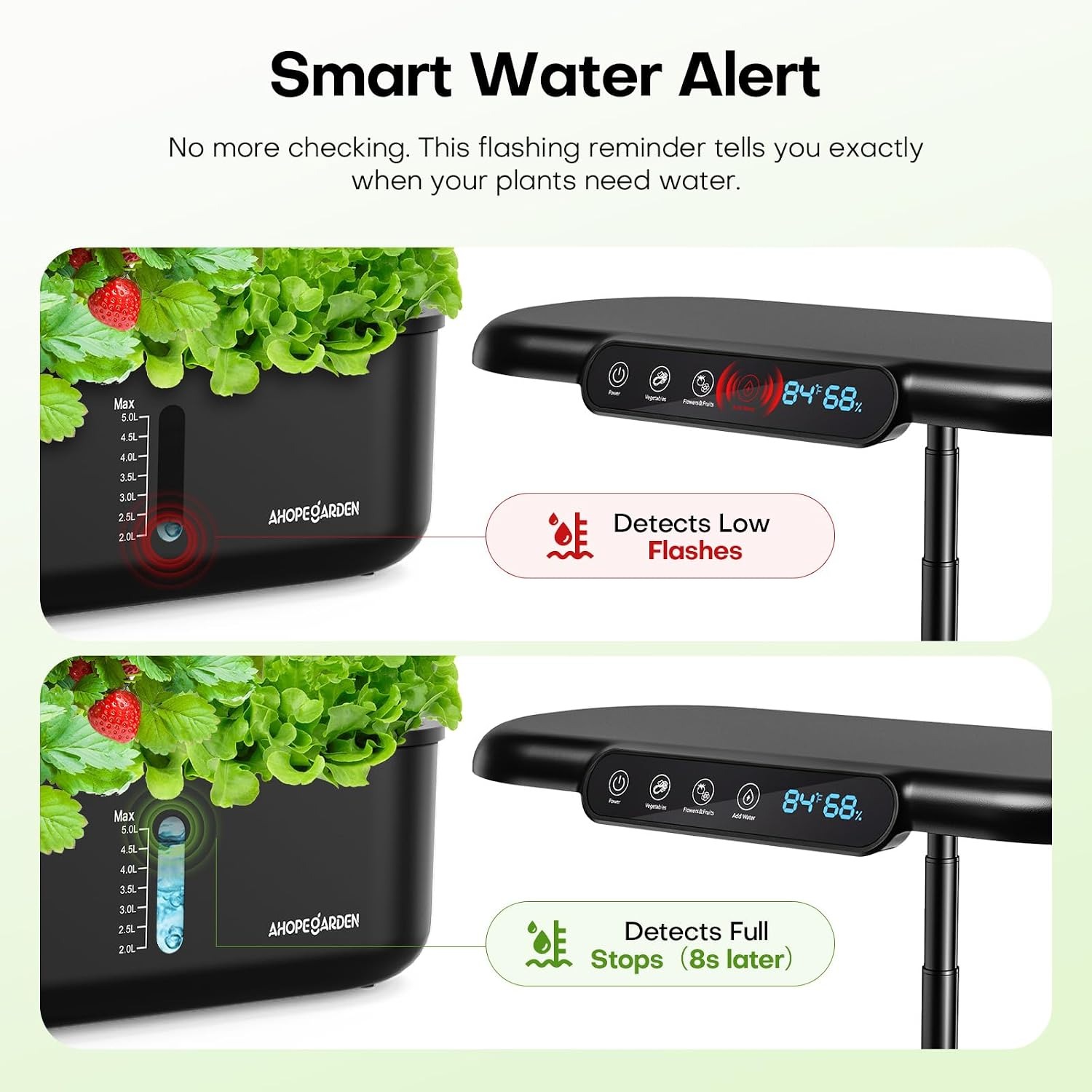
The low water alert works the same way. Once the 5 liter tank drops below one liter, a flashing indicator tells you to refill. There is also a level window, so a quick glance tells you where things stand. You do not have to lift a deck full of plants to check.
Choosing light modes and plants
The two modes on this unit are not a gimmick. Plants need different light spectrums at different stages.
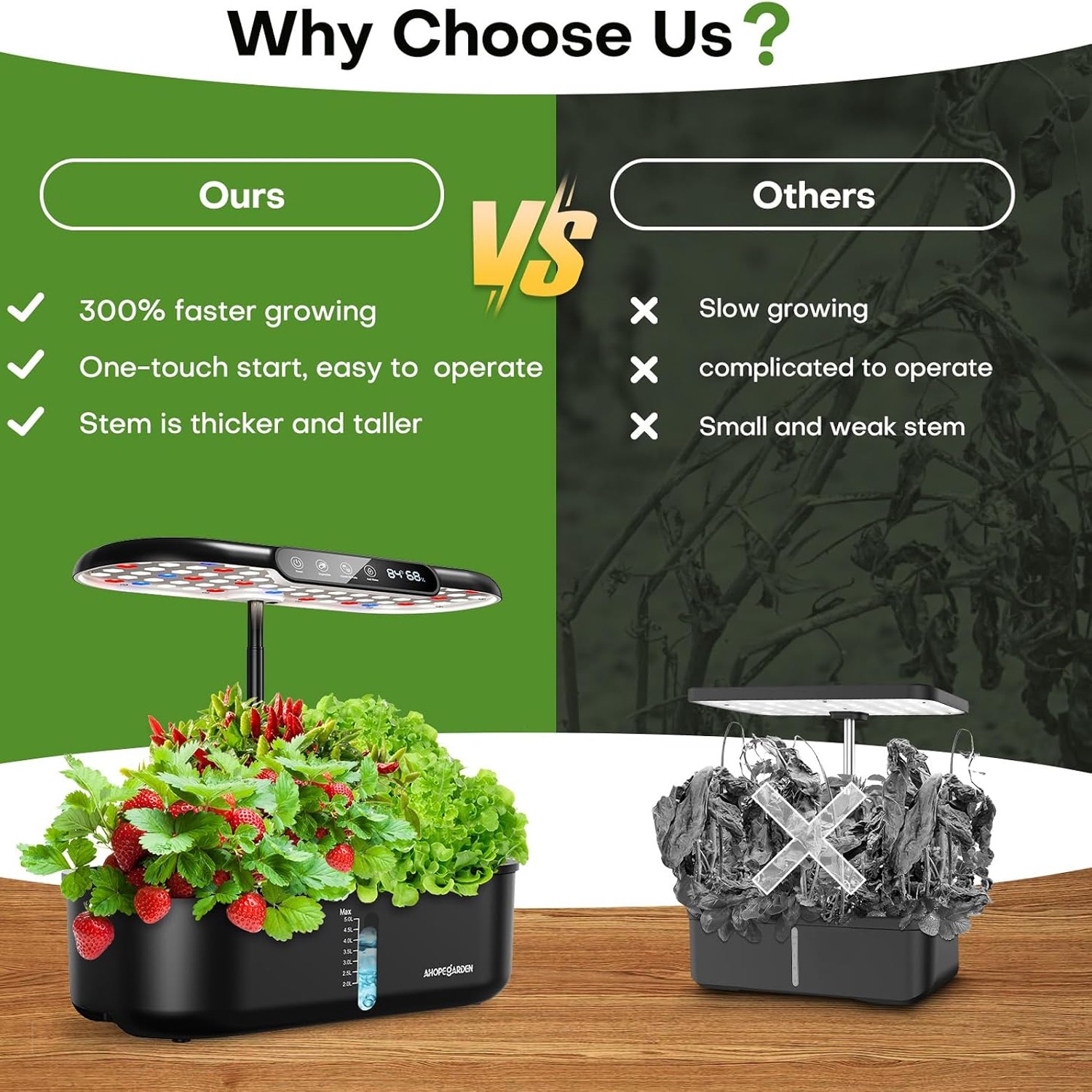
Leafy crops want light that promotes leaf growth. Vegetable mode is tuned for that, and it is the one you will use for lettuce, spinach, bok choy, basil, mint, cilantro and thyme. These are also the crops that give you the fastest reward. Leafy greens usually mature in four weeks to 35 days, and many herbs can be picked lightly before then.
Fruiting plants work differently. They need to flower before they fruit, and that calls for a different spectrum. Fruit and flower mode covers tomatoes and strawberries. Be realistic about scale here. With a light post topping out at 17.32 inches, compact and dwarf varieties are the sensible choice. A full-size indeterminate tomato will outgrow the space long before it is useful.
If you are new to this, start with the crops you actually eat. Twelve pods of exotic greens you have never cooked with is a waste of a good system. Four lettuce, four basil, two mint and two cilantro is a mix most kitchens will use weekly.
Who it suits
Renters and apartment dwellers get the most from a system like this. No garden bed, no balcony, no soil, no mess. It sits on a counter and runs.
People with poor natural light benefit too. North-facing kitchens in the southern hemisphere, first floor flats, rooms with deep eaves. The LED removes the window from the equation entirely.
It also suits anyone who cooks and resents paying for a grocery store bunch of cilantro, using a third of it, and throwing the rest out limp a week later. Cutting what you need, when you need it, changes how often you reach for fresh herbs.
Less suited: anyone wanting to grow at volume. Twelve plants is a steady supply of herbs and salad for a household, not a crop. If you want trays of microgreens or a dozen tomato plants, you are looking at a larger unit.
Setting it up
Assembly takes a few minutes and needs no tools. Unpack the unit and pull out the protective foam. Press the base of the light post and extend it to the height you want, which for seedlings means low. Lift the accessories out of the water tank. Then place the grow deck on the tank, lining up the alignment marks so it seats properly.
From there, put your seeds into the grow sponges, slot the sponges into the pods, fill the tank with water to the 5 liter mark, add nutrient solution, and select the light mode that matches what you planted. That is the whole process.
Expect a few days before germination. Do not panic in week one. Seeds are slower than the internet suggests, and the first visible growth often appears between day three and day seven depending on the crop.
Keeping it running
Maintenance is light. Top the tank back up to 5 liters when the alert flashes, adding nutrient in proportion to the water you add. The maker's advice is that the water does not need a full change during a grow.
Between crops, unplug the unit and give it a clean. Rinse pods and baskets in warm water, wipe the deck and housing with a damp cloth, and let everything dry before you replant. Keep the LED panel free of dust, since a dusty panel delivers less light than a clean one. Do not submerge the base, light post or power connection.
One practical note on power. This unit is rated for 100 to 120 volts at 60 hertz. If your mains supply is different, a plug adapter alone will not do the job, and you will need a proper voltage converter.
The short version
If you want fresh herbs and salad leaves indoors, without soil, without a garden and without remembering to water, this does the job. Twelve pods, a 5 liter tank, two light modes and a light that rises as the plants do.
The temperature and humidity readout is the thing that lifts it above simpler kits. Indoor growing problems are usually environmental, and seeing the numbers lets you fix the cause instead of guessing. Pair that with the low water alert and you have a system that tells you what it needs rather than waiting for you to notice.
Start with crops you eat, keep the light low over seedlings, and check back in four weeks.