Hydroponics Company
Company
Shop By Category
T&Cs
Shop Online
  • Clear materials and product specifications
  • Free tracked USA-wide delivery over $75
  • 14-day returns

LED Grow Light Bulb | Full Spectrum Grow Light | E26 Plant Light Bulb

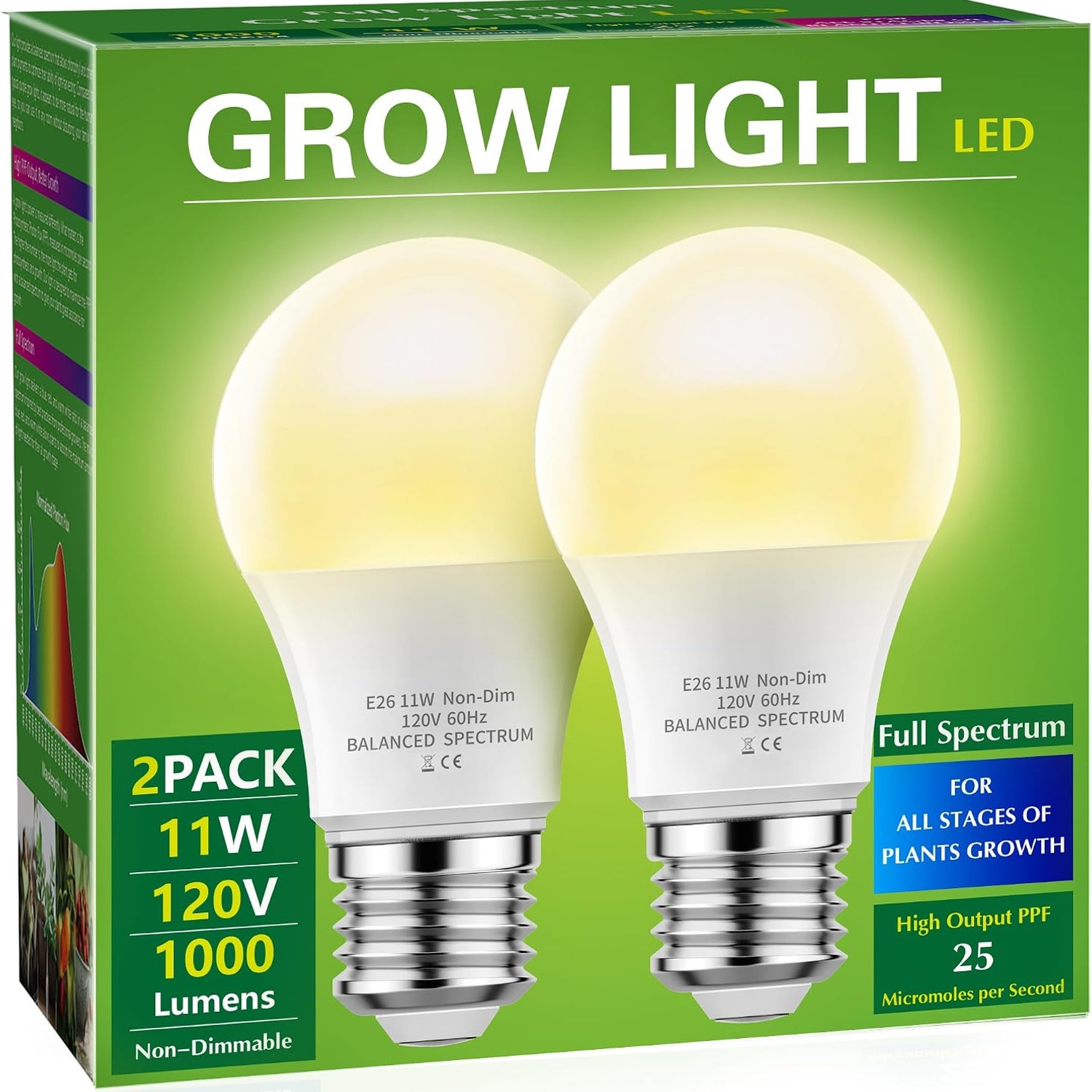
Briignite Full Spectrum LED Grow Light Bulbs A19 E26 (2 Pack)

$17.99 $21.99 Save $4
  • Full Spectrum Light
  • Fits Normal Lamps
  • 11 Watts Only
  • 30,000 Hour Life

Price: $17.99 $21.99

  • Free tracked USA-wide delivery on orders $75+, otherwise a flat $9.95
  • Pay by card or PayPal, handled by the payment provider
  • 14 days to change your mind, plus your statutory rights
Product specifications
Light TypeLED
Additional FeaturesFull Spectrum
Wattage12 watts
Power Consumption11 watts
Light Source Wattage11 watts
Incandescent Equivalent60 watts
Bulb ShapeA19
Bulb BaseE26
Light Output1000 lumens
White Brightness1000 lumens
Light ColorWarm White
Color Temperature3500 Kelvin
Color Rendering Index90
Beam Angle180 degrees
Voltage230 volts
Power SourceAC
Operating Life30,000 hours
Control MethodApp
Controller TypePush Button
Indoor or OutdoorIndoor
Specific UsePlant Growing
ShapeParabolic Aluminized Reflector (PAR)
Material TypeAluminum, Plastic
Included ComponentsBulb included
Package Quantity2
Unit Count2 Count
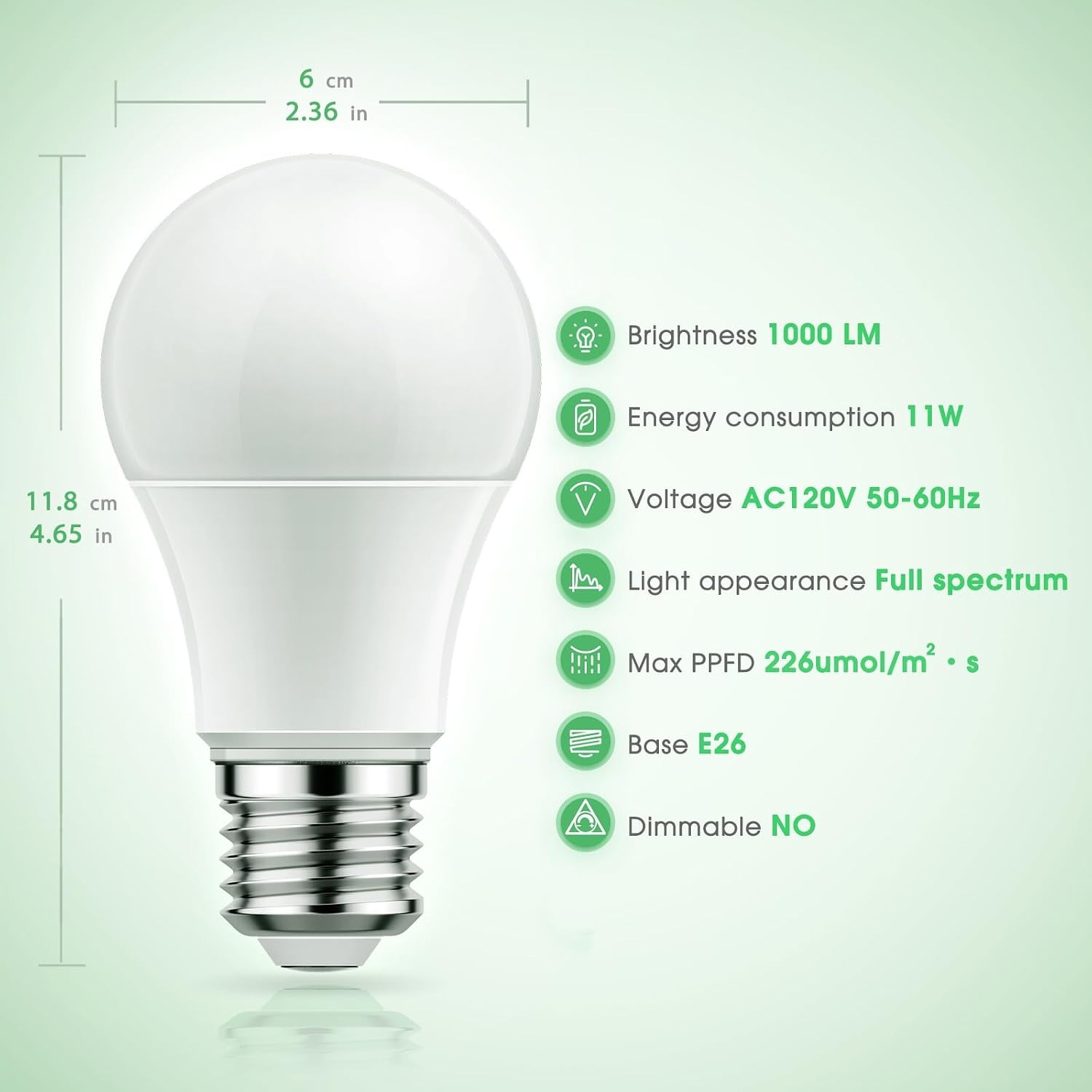
Item Dimensions (W x H)2.36"W x 4.65"H
Item Weight5.67 g
BrandBriignite
Model NameA19
Model NumberA60 LED Light/ LED Lampe
Manufacturer Part NumberBRGL03W11E26-2
UPC713929565030
Weight5.67 g
Shipping & returns

Tracked delivery anywhere in the USA. It is free on orders of $75 or more, and a flat $9.95 below that.

If it is not right for you, send it back within 14 days of delivery in resaleable condition and we refund the price you paid, including standard delivery. That is a voluntary policy we offer on top of your legal rights. You cover the cost of returning it unless the item is faulty.

If it arrives faulty, damaged or not as described, we put it right at no cost to you under the consumer protection law of your state and the Federal Trade Commission Act, return postage included.

Shipping details · Refunds and returns

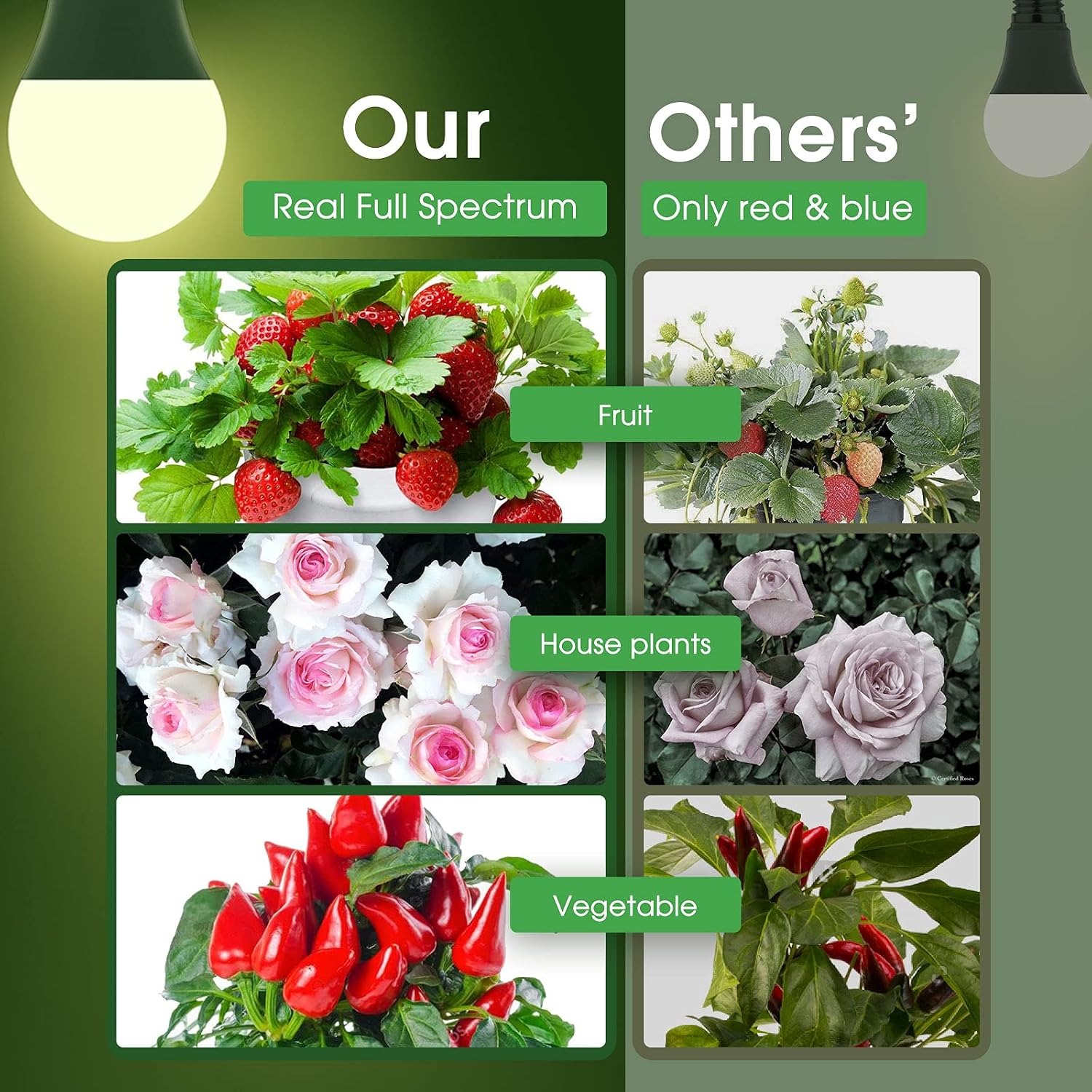
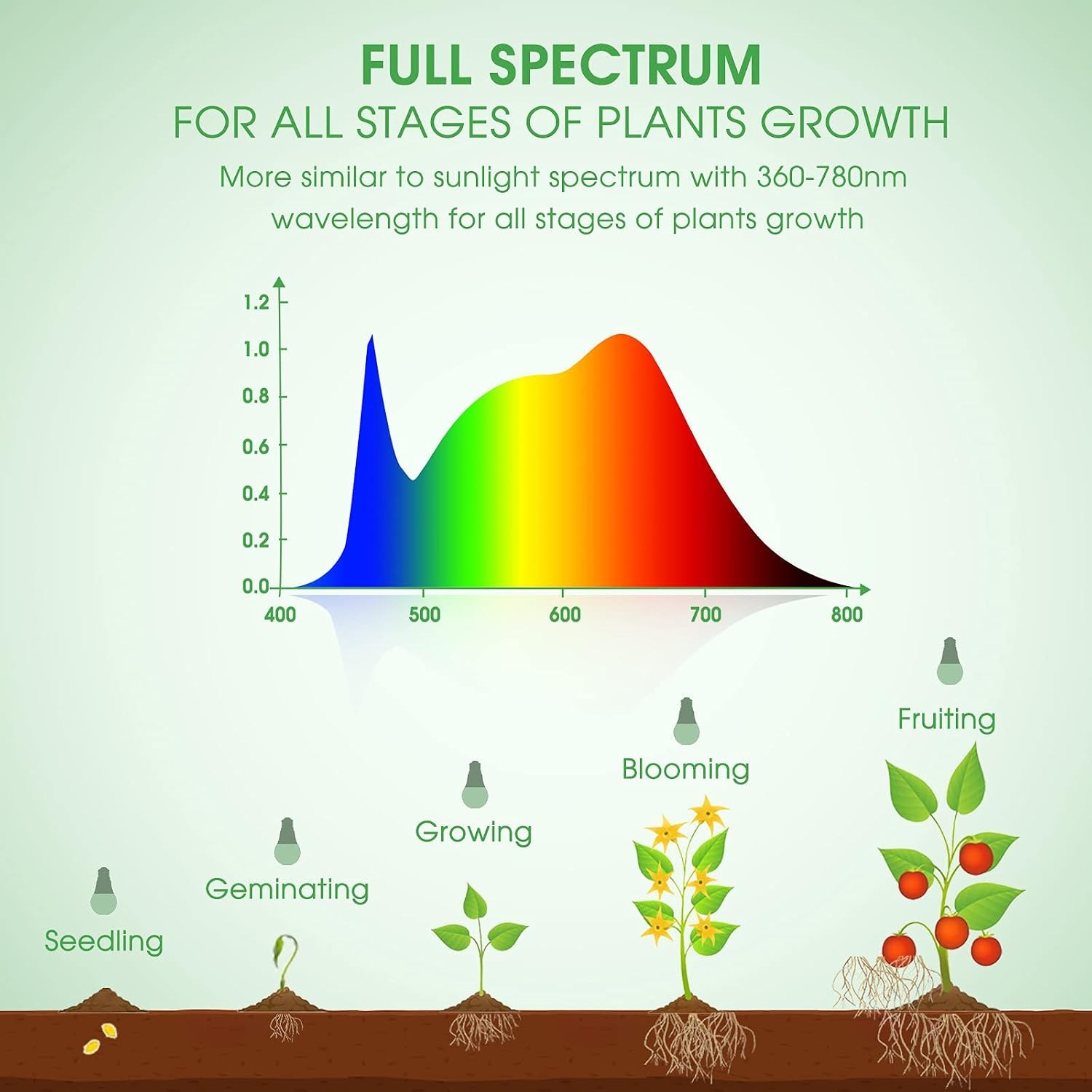
Full Spectrum LightA broad spectrum output with a CRI of 90 for natural looking plant color.
Fits Normal LampsStandard E26 base and A19 shape, so no special fixture is needed.
11 Watts OnlyProduces 1000 lumens while drawing just 11 watts from the socket.
30,000 Hour LifeRated for 30,000 hours of use, so one pair lasts many seasons.

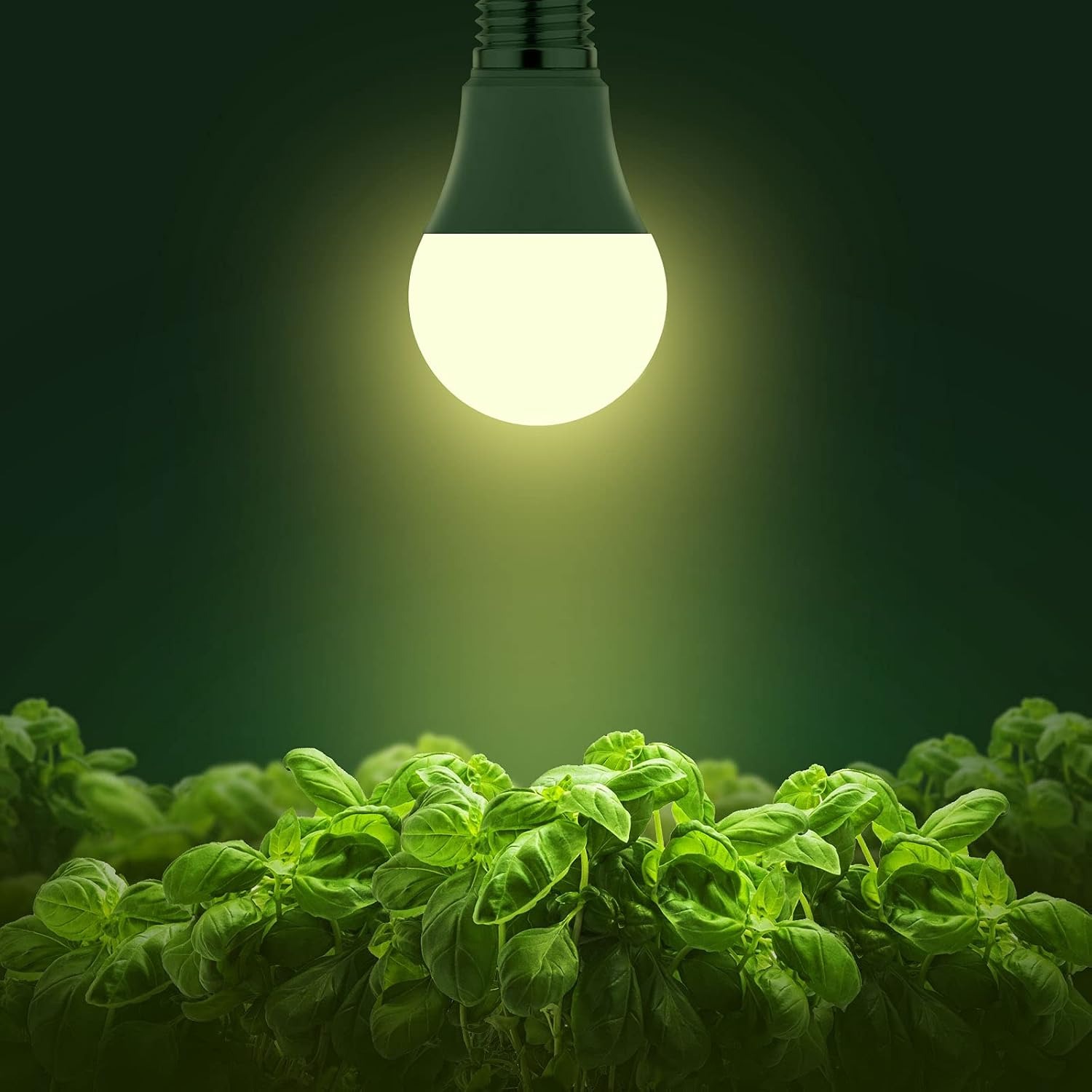
Give your houseplants the steady, sun-like light they are missing with a full spectrum grow light that screws into a lamp you already own.

Two A19 bulbs with an E26 base, 1000 lumens each, a warm 3500K color and a CRI of 90, drawing just 11 watts while covering a wide 180 degree spread.

This two pack of A19 LED grow light bulbs turns an ordinary lamp into a plant light without buying a new fixture.

Each bulb puts out 1000 lumens of full spectrum light at a warm 3500K, so it looks like normal room lighting rather than harsh purple.

The 180 degree beam angle spreads light sideways as well as down, which suits a cluster of pots on a shelf or sill.

At 11 watts of draw per bulb, running two of them for a long day costs very little.

An aluminum and plastic body helps move heat away from the diodes, and the bulbs are rated for 30,000 hours.

Briignite Full Spectrum LED Grow Light Bulbs A19 E26 (2 Pack)

Most indoor plants are not starving for water or food. They are starving for light. A window that feels bright to you can deliver a tiny fraction of what the same plant would get outside, and the gap widens in winter when the sun sits low and the days run short. These Briignite A19 bulbs are a simple fix for that gap. They screw into an E26 socket you already have, in a desk lamp, a clip lamp, a floor lamp or a track head, and they push out 1000 lumens of full spectrum light aimed at plants rather than at your eyes.

Briignite Full Spectrum LED Grow Light Bulbs A19 E26 (2 Pack)

The spectrum is the part that matters. A standard household bulb is tuned to look pleasant, not to drive photosynthesis. These bulbs carry a full spectrum output with a color rendering index of 90, which means leaf greens, stem reds and flower colors read true instead of washing out. The color temperature is 3500K, a warm white, so the light sits comfortably in a living room. There is no violet glow washing across the wall and no need to hide the setup in a spare room.

Briignite Full Spectrum LED Grow Light Bulbs A19 E26 (2 Pack)

Efficiency is the quiet benefit. Each bulb draws 11 watts and is rated as a 60 watt incandescent equivalent, so two of them running a long daily cycle add very little to a power bill. Lower wattage also means lower heat at the diode, and the housing combines aluminum with plastic to carry that heat away. Less heat near the lamp head means you can place the bulb closer to foliage than you could with an old filament or halogen fixture, without scorching the top leaves.

Briignite Full Spectrum LED Grow Light Bulbs A19 E26 (2 Pack)

The 180 degree beam angle changes how you can position things. A narrow spot throws a tight circle and leaves everything outside it in shade. A wide spread covers a group of pots from one point, which is useful on a shelf, a plant stand, a kitchen counter or a seedling tray. Point one bulb down from above a cluster, or run two from either side of a larger specimen, and you get even coverage rather than one bright spot and a lot of stretching.

Briignite Full Spectrum LED Grow Light Bulbs A19 E26 (2 Pack)

You get two bulbs in the pack, each rated for 30,000 hours of operation. Run them twelve hours a day and that is a very long service life. The listing also notes app control and a push button controller type as the recorded control method, though the finer detail of that function is not specified in this record, so treat the bulbs as a straightforward screw-in light unless your fixture adds its own switching or timer.

Not sure yet? That is fine.

A growing system has to fit your space and what you want to grow, and you cannot always judge that from a photograph. If it is not right for you, send it back within 14 days of delivery in resaleable condition and we refund the price you paid, including standard delivery. That is a voluntary policy we offer on top of your legal rights.

If it turns up faulty, damaged or not as described, that is on us. The consumer protection law of your state covers you, and we pay the return postage. Read the full detail on our refunds and returns page, or ask us anything before you order.

Frequently Asked Questions

What exactly is in the pack?

Two A19 LED grow light bulbs with E26 bases. The listing notes bulb included as the component, so there is no lamp, socket adaptor or cord supplied. You screw them into fixtures you already have.

Will these fit my lamp?

They use an E26 base, which is the standard medium screw socket used across North America and in many table lamps sold elsewhere. If your lamp takes a normal screw-in household bulb of that size, these will thread straight in. Check the socket marking if you are unsure.

What does full spectrum actually mean here?

It means the bulb emits across a broad range of wavelengths rather than a couple of narrow bands. Plants use more than one part of the spectrum through their life cycle, so a broad output supports leafy growth and flowering alike. The best full spectrum grow light is one that covers that range while still looking normal in a room.

Is the light purple like other grow lights?

No. These run at 3500 Kelvin, a warm white, so they look like a regular warm household bulb. Purple light comes from fixtures using only red and blue diodes. These are a better fit for a living space.

How bright is 1000 lumens in practice?

It is roughly what you would expect from a 60 watt incandescent bulb, which is bright enough to light a small plant group from close range. Lumens measure brightness to the human eye rather than plant usable light, so distance matters more than the raw number. Keep the bulb within reach of the canopy for best effect.

How much power does it use?

Each bulb draws 11 watts. Two bulbs running twelve hours a day is a modest amount of electricity, which is why people looking for the best energy efficient grow light tend to start with LED bulbs rather than older tube or filament setups.

How far from the plant should I put it?

Start around 20 to 30 centimeter above the leaves and watch the plant for a week. If foliage looks bleached or edges curl, raise the lamp. If stems stretch and lean, lower it or move the lamp closer.

How many hours a day should I run it?

Twelve to sixteen hours suits most leafy houseplants and herbs. Seedlings often do well at the higher end. Plants also need a dark period, so avoid running the light around the clock.

Do I need a timer?

A plug-in timer is not required but it helps a lot. Consistent on and off times give the plant a steady rhythm and stop you forgetting the lamp overnight. Any basic mechanical or digital timer works with these bulbs.

Can I use these for seedlings?

Yes. Seedlings mainly need steady light close overhead to stop them stretching. Place the lamp above the tray and raise it as the plants grow. Many gardeners rate a wide beam bulb as the best grow light for seedlings because it covers the whole tray from one point.

Will they work for herbs on a kitchen counter?

They are well suited to it. Basil, mint, parsley and chives all respond to extra light and the warm white color does not look out of place in a kitchen. Clip or desk lamps make it easy to aim the best grow light for herbs where you need it.

What about tomatoes, peppers or fruiting plants?

A single bulb can support a small plant but fruiting crops want far more light than leafy greens. For those, use several bulbs, keep them close, and run long days. Expect modest yields compared with outdoor growing.

Do they get hot?

They run cooler than an incandescent of similar brightness. The housing uses aluminum and plastic to move heat away from the diodes. The bulb will still feel warm during use, so let it cool before you handle it.

Can I use them in an enclosed fixture?

It is better not to. Enclosed globes trap heat around the bulb, which shortens LED life. Pick an open shade, a clip lamp, or a track head so air can move around the housing.

What is the beam angle and why does it matter?

The beam angle is 180 degrees, which is a wide spread. Narrow beams concentrate light into a small circle. A wide beam lights a group of pots from a single point, which is handy on a shelf or a windowsill.

What does a CRI of 90 mean for me?

Color rendering index describes how accurately colors appear under the light. At 90, leaves, flowers and soil look close to how they do in daylight. It also means the room does not take on an odd cast when the lamp is on.

How long will the bulbs last?

They are rated for 30,000 hours of operation. At twelve hours a day that is several years of use. Actual life depends on fixture ventilation, switching frequency and supply voltage.

What voltage do they run on?

The listing specifies 230 volts AC. Check that against your mains supply and your fixture rating before use, and do not run the bulb on a supply it is not rated for.

Are these dimmable?

Dimmability is not specified in this record. Unless a bulb is marked dimmable, assume it is not and avoid using it on a dimmer switch, which can cause flicker or early failure.

What is the app control mentioned in the specs?

The listing records the control method as app with a push button controller type. The detail behind that function is not described in the source record, so plan on using the bulb as a standard screw-in light and add your own smart plug if you want scheduling.

Can I use them outdoors or in a greenhouse?

They are listed for indoor use. A dry, covered greenhouse bench might be acceptable with a suitable fixture, but do not expose the bulb to rain, spray or condensation.

Will they help over winter?

That is one of their best uses. Short days and low sun angles leave most houseplants short on light from late fall onward. Running a lamp for a long daily cycle through the cold months keeps growth steady instead of leggy.

How many bulbs do I need?

One bulb suits a single small to medium plant or a tight cluster. For a shelf of pots or a seedling tray, two spread across the span works better. The best indoor plant light setup usually means more fixtures at lower wattage rather than one bright point.

Can I mix these with my normal room lighting?

Yes. At 3500K warm white they blend with most household bulbs. You can run one in a floor lamp beside a plant and it simply reads as lamp light.

How do I clean them?

Turn the lamp off and let the bulb cool, then wipe the lens with a dry or lightly damp soft cloth. Dust on the lens cuts output surprisingly fast. Keep moisture away from the base and socket.

Can the bulbs be used upside down or sideways?

Yes, they work in any orientation. Just make sure the fixture is rated for that position and that air can still circulate around the housing.

What size are the bulbs?

Item dimensions are listed as 2.36 inches wide by 4.65 inches high, which is close to a standard household bulb footprint. Measure your shade if clearance is tight.

How are they delivered?

They ship to your delivery address in protective packaging. Tracking details are sent once the order leaves the warehouse. Inspect the glass and base on arrival and keep the packaging until you have tested both bulbs.

Do they make a good gift for a plant person?

They do, especially for someone with a dim flat or a north facing room. The two pack means they can light two spots at once, and the warm white color means the gift does not come with a purple glow attached.

What if they are not right for my setup?

Contact us with your order number and tell us what happened, whether that is a socket mismatch, a fault, or simply the wrong fit for your space. We will walk you through the returns process for unused items in their original packaging and sort out a replacement or refund.

Choosing an LED Grow Light Bulb for Indoor Plants

6 min read Hydroponics Company

The problem is almost always light

Ask anyone whose houseplants look sad and they will usually blame water. They water more, then less, then switch pots, then try a new fertiliser. Nine times out of ten the real issue is sitting in plain sight. The plant is not getting enough light.

Human eyes are terrible at judging brightness. We adapt so smoothly that a room feeling "nice and bright" can be delivering a small fraction of outdoor light. Step outside on a cloudy day and you are standing in light many times stronger than the brightest corner of your living room. A plant that evolved under a forest canopy still wants far more than a sofa-side table gives it.

You see the symptoms before you see the cause. Stems reach toward the window and go thin and floppy. The gaps between leaves get longer. New growth comes out smaller and paler than the old growth. Lower leaves yellow and drop. Herbs that were lush when you brought them home turn spindly in a two weeks.

A grow light bulb solves this without renovating anything. You put it in a lamp you already own, aim it at the plant, and the plant gets a long, steady day regardless of the weather.

How a grow light bulb works

Plants run on photosynthesis, which uses light energy to build sugars. They are most responsive to red and blue wavelengths, but they also use the parts in between. Older grow lights leaned hard on just red and blue diodes, which is why so many of them glow violet. That approach works, but it makes a room look like a nightclub.

A full spectrum bulb takes a different path. It emits across a broad range so the output covers what the plant needs while still reading as white light to you. These Briignite bulbs sit at 3500 Kelvin, a warm white, with a color rendering index of 90. In plain terms, they light the room in a way you would not think twice about, and your plants still get a useful spread of wavelengths.

The other half of the equation is delivery. Each bulb gives 1000 lumens over a 180 degree beam angle. Lumens are a human measure, not a plant measure, so do not treat the number as a growth rating. What matters more is distance. Light falls off quickly as it travels, so a bulb thirty centimeter from a leaf delivers vastly more usable energy than the same bulb two meters away. Getting the lamp close is the single biggest improvement most people can make.

Power draw is 11 watts per bulb, listed as a 60 watt incandescent equivalent. That efficiency has a second benefit beyond the bill. Less waste energy means less heat, so you can bring the bulb nearer the canopy than you ever could with a filament lamp. The housing pairs aluminum with plastic to move heat away from the diodes, which supports the 30,000 hour rated life.

Who this suits

If you keep plants in an apartment with one usable window, these are an easy win. Pothos, philodendron, monstera, calathea and ferns all grow better with a few extra hours of light each day, and a single bulb in a floor lamp can cover a decent cluster.

Seed starters benefit even more. Seedlings stretch toward whatever light they can find, and a windowsill in late winter makes them long and weak before you ever get them outside. A lamp held close above the tray keeps them compact. The wide beam here helps, because one bulb can reach across a whole tray rather than lighting one corner.

Kitchen herb growers are the third group. Basil in particular is a light hog and will sulk in anything dim. A clip lamp over the counter with one of these bulbs in it keeps a pot productive for months instead of weeks.

This is not a commercial setup. If you want heavy fruiting crops or a dense indoor grow, you need far more light than two household bulbs provide. Think of these as a top-up for ordinary indoor plants, not a replacement for a dedicated panel.

How to choose and set up

Start with the socket. These use an E26 base, the standard medium screw fitting. Look at the lamp you plan to use and check it takes a normal screw-in bulb. If your fixture uses a bayonet or a small screw base, you need an adaptor or a different lamp.

Next, think about the fixture style. Open shades, clip lamps, gooseneck desk lamps and track heads all work well because air can move around the bulb. Fully enclosed globes trap heat, and trapped heat is the main thing that shortens LED life. If your only option is enclosed, pick a different fixture for this job.

Then plan your positions. One bulb covers a single plant or a tight group. Two bulbs spaced along a shelf cover a wider run with fewer shadows. Aim from above where you can, since light coming down matches how plants grew in the wild and keeps growth upright rather than leaning.

Set a schedule and stick with it. Twelve to sixteen hours a day covers most houseplants and herbs. Plants need darkness too, so do not leave the lamp on permanently. A cheap plug-in timer removes the decision entirely and keeps the rhythm consistent, which plants respond to more than you might expect.

Finally, watch the plant for the first two weeks and adjust. Bleached patches or crisping leaf edges mean the bulb is too close. Stretching stems and small new leaves mean it is too far or not on long enough. Plants give clear feedback if you look.

Living with them day to day

Maintenance is minimal. The main job is keeping the lens clean. Dust builds up on any light fitting and a dusty lens can cut output noticeably over a few months. Switch the lamp off, let the bulb cool, and wipe it with a dry or barely damp soft cloth. Keep water away from the base.

Handle the bulb by the base rather than the lens when you are fitting it, and never force a bulb into a socket that resists. Let it cool fully before unscrewing, since LED housings hold warmth for a while after switch-off.

Pay attention to the electrical side too. The bulbs are listed at 230 volts AC, so confirm that matches your supply and your fixture rating before you fit them. Dimmability is not stated in the product record, so avoid dimmer circuits unless you can confirm compatibility.

One habit worth building: rotate your plants a quarter turn every week or two. Even with a wide beam, the side facing the lamp will grow faster. A regular turn keeps the shape even and stops the plant leaning permanently.

The short version

Indoor plants fail from lack of light far more often than anything else, and a grow light bulb is the cheapest fix available. This two pack gives you a pair of A19 bulbs with a standard E26 base, 1000 lumens each, full spectrum output at a warm 3500K with a CRI of 90, a wide 180 degree spread, 11 watts of draw and a 30,000 hour rating.

Put one in a lamp you already own, get it close to the leaves, run it twelve to sixteen hours a day on a timer, and watch what happens over a month. For most people that is the difference between a plant hanging on and a plant actually growing.

Browse the shop

Not sure how many bulbs you need?

Tell us what you are growing and how much shelf space you have, and we will suggest a sensible setup.

Ask us a question

Page summary

Briignite A19 LED grow light bulbs, sold as a two pack, with an E26 base that fits standard household sockets. Each bulb produces 1000 lumens of full spectrum warm white light at 3500 Kelvin with a color rendering index of 90 and a 180 degree beam angle. Power consumption is 11 watts per bulb, listed as a 60 watt incandescent equivalent, running on AC at 230 volts. Rated operating life is 30,000 hours. The body uses aluminum and plastic, in a parabolic aluminized reflector shape, measuring 2.36 inches wide by 4.65 inches high. Intended for indoor plant growing. Control method is listed as app with a push button controller type. Country of origin, color and overall package dimensions are not specified in this record.