
The complete guide
Net Cups Explained, A Practical Buyer's Guide to Hydroponic Growing
The problem with growing in a plain pot
Anyone who has killed a basil plant knows the feeling. You water it, the soil holds the water, and a week later the roots are brown and the leaves are limp. It looks like thirst. It is usually drowning.
Roots need oxygen. In a solid pot, water fills every gap between soil particles and pushes the air out. The plant sits in a wet sponge with nowhere to breathe. Growers call it wet feet, and it is one of the most common reasons houseplants and herbs fail indoors.
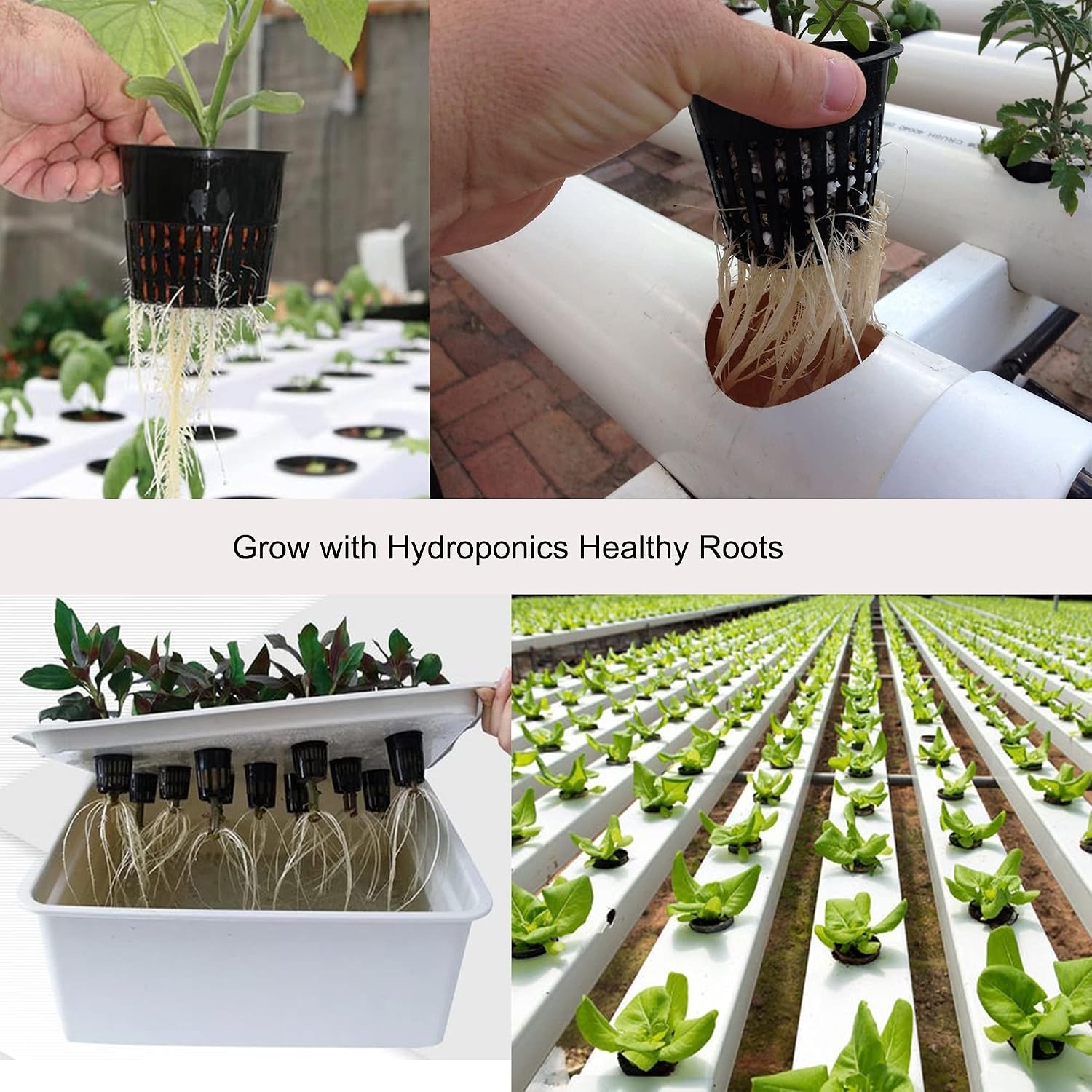
A net cup fixes that in a blunt, obvious way. The sides and base are cut into open slots, so water drains straight through and air moves in. Roots do not just sit inside, they grow out through the mesh and into whatever sits below, be that nutrient solution, a bucket reservoir or a fish tank. The plant gets water on demand and air at the same time, which is the whole trick behind hydroponics.
How these net cups work
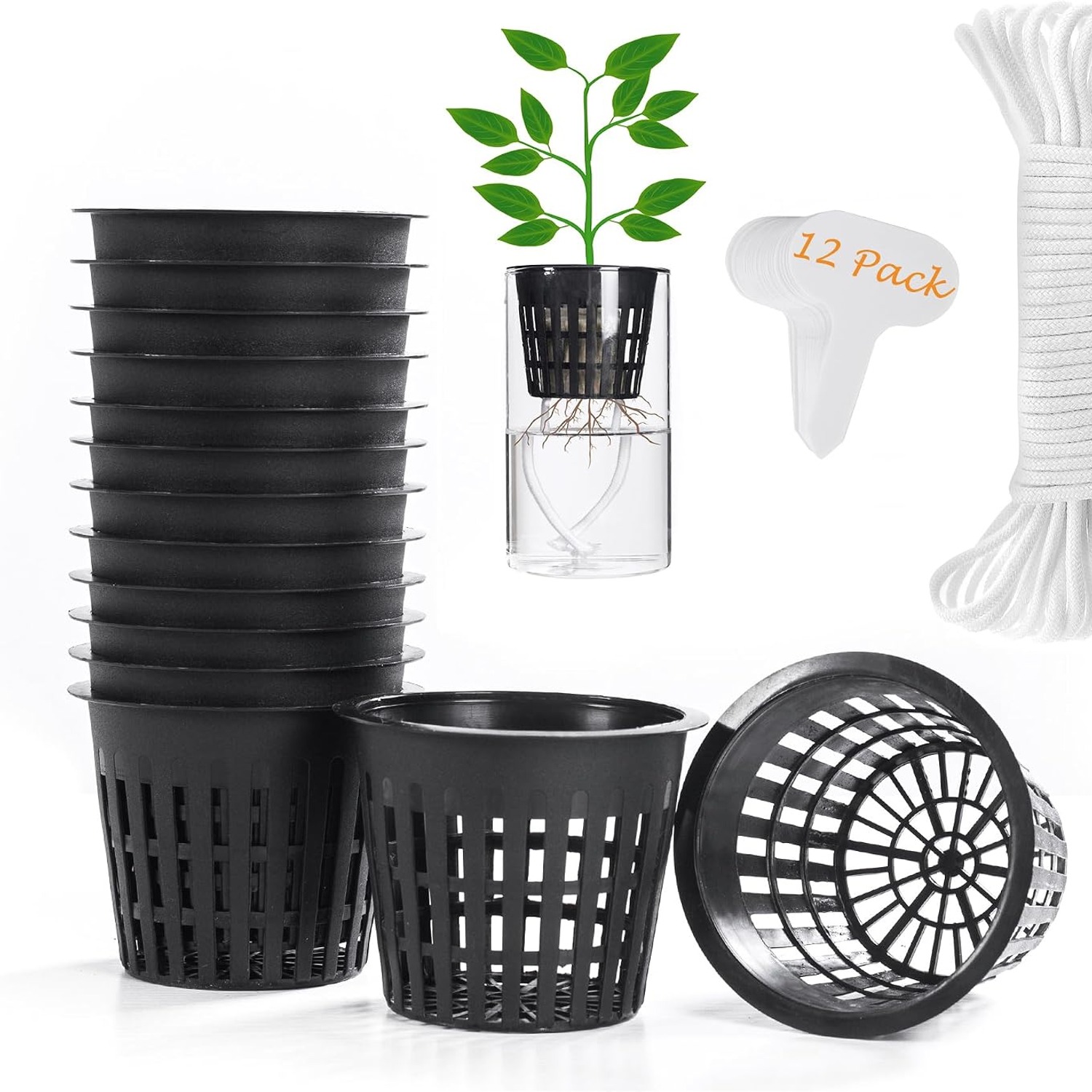
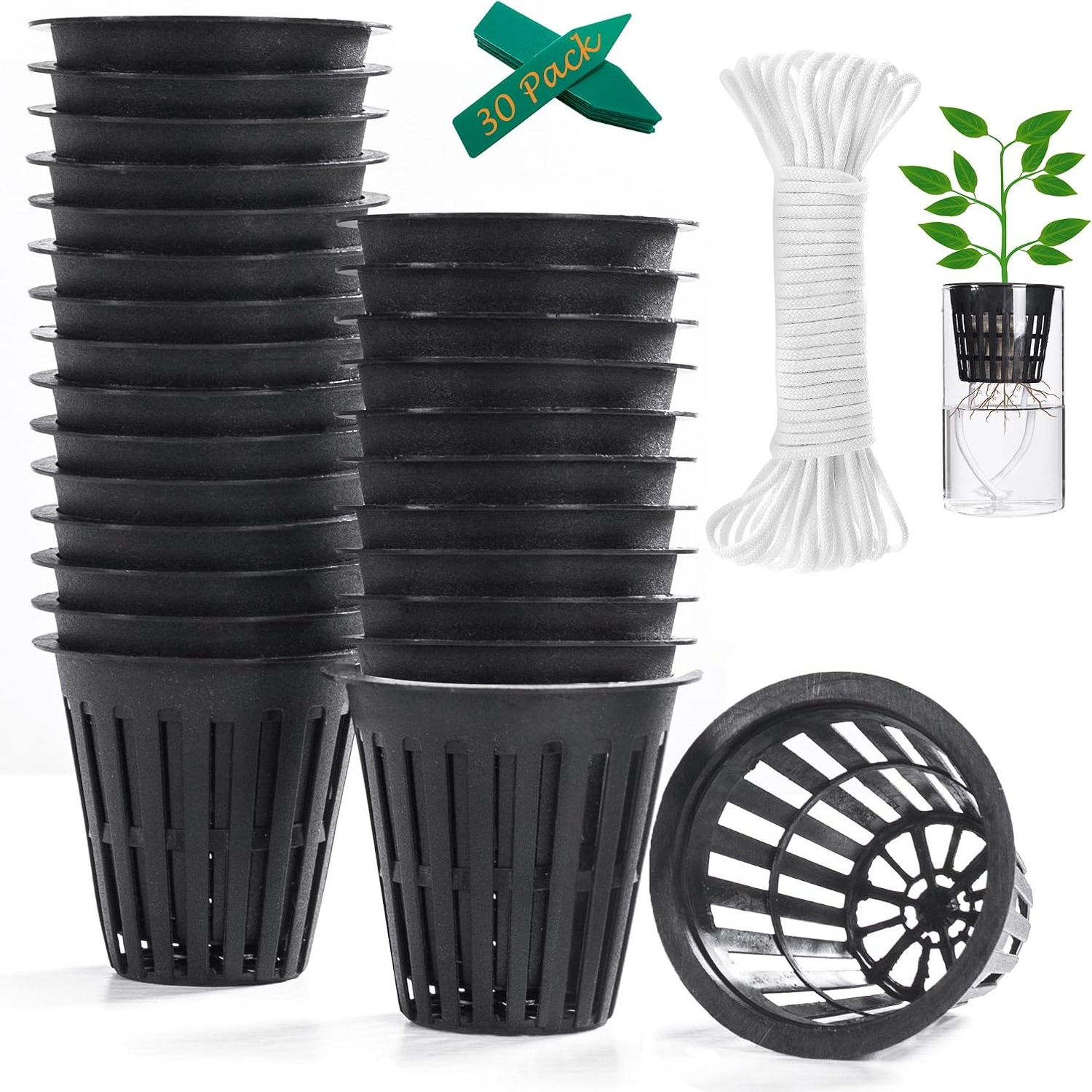
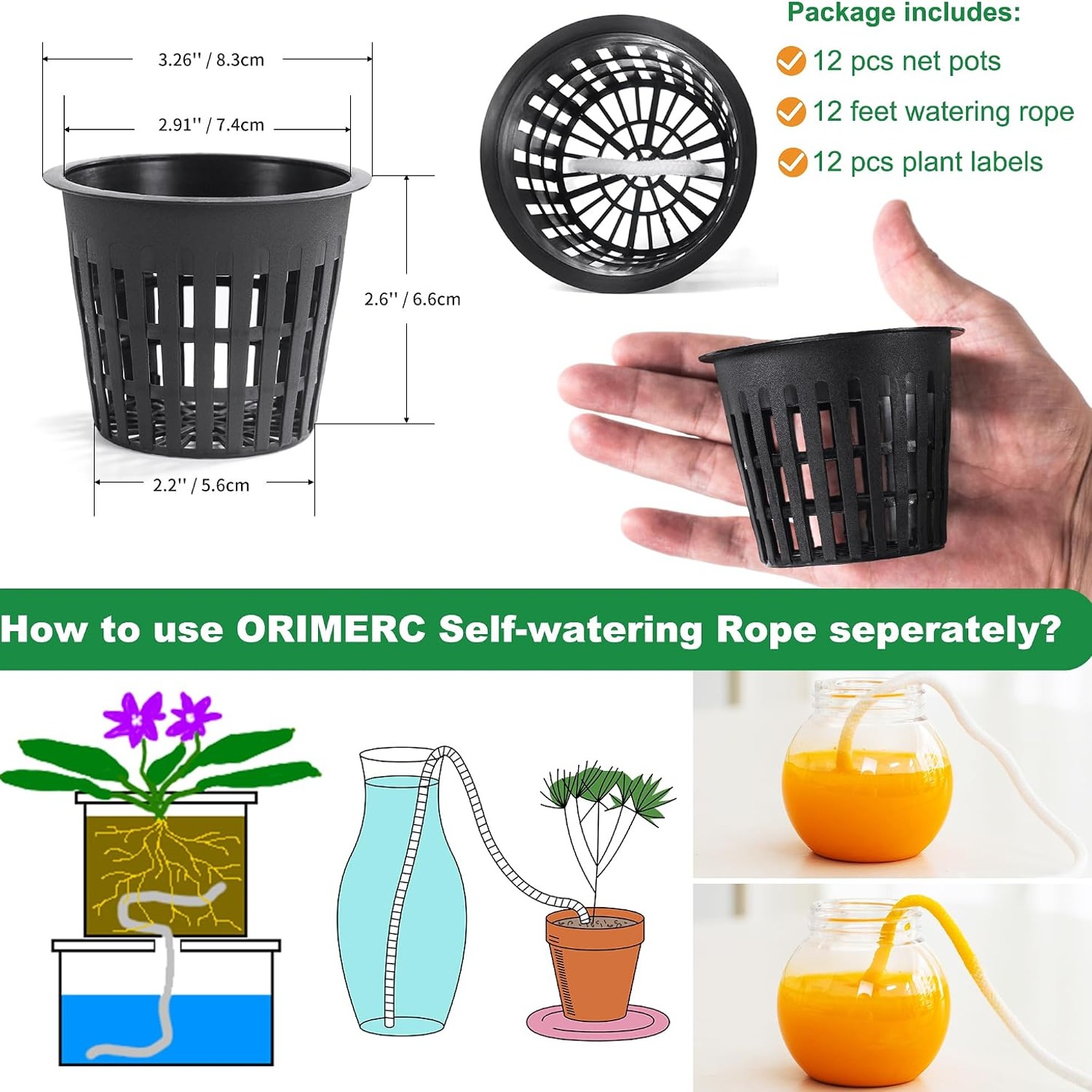
This set gives you 12 net pots in the 3 inch size, 12 feet of self-watering wick cord and 12 reusable plant labels. The cups are polypropylene, black, round, with slotted mesh running down the walls and across the bottom.
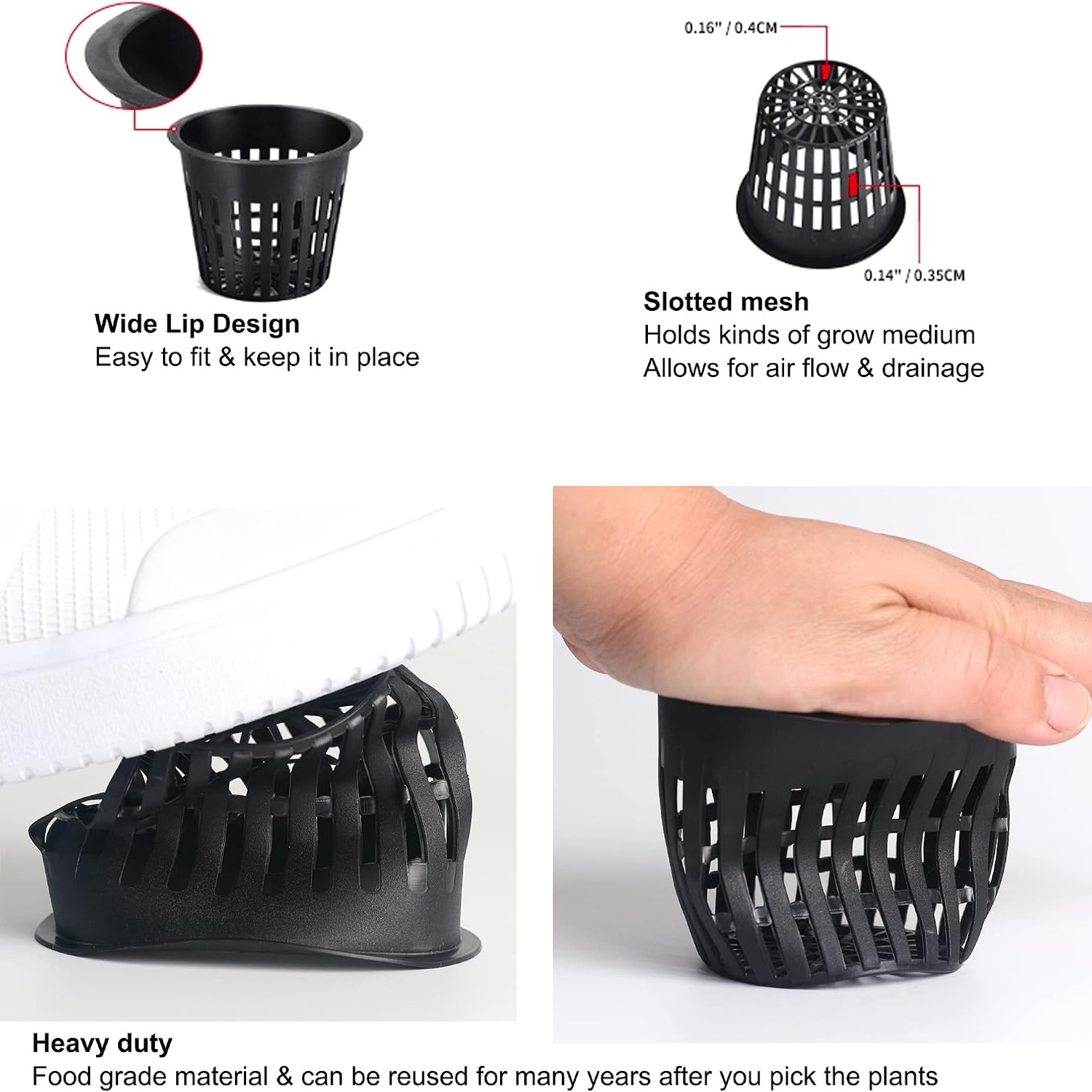
The slot spacing is the part worth noticing. It is tight enough to hold clay pebbles, rockwool and other coarse media where you put them, and open enough that water and air move freely. Soil does not pour out the sides. Roots still find their way through.
On top sits a 3.2 inch lip, wider than the body of the cup. Drop the cup into a hole in a bucket lid, a foam raft or a mason jar, and the lip catches on the rim and holds the cup at the surface. That is more useful than it sounds. It means your hole saw cut does not need to be exact, and it gives you a solid edge to grab when you lift a plant to check its roots.
The wick cord adds a second way to use the same cups. Thread a length through the mesh into the growing media, drop the other end into water, and capillary action does the rest. Water climbs the cord and keeps the media damp. You can run that on a windowsill pot, an orchid, an African violet, or a tray of starts you cannot check every day.
Who these suit
Beginners get the most out of a set like this. Twelve cups is enough to try two or three different builds without a big outlay. A mason jar kratky grow takes one cup. A bucket takes one. A small raft takes four or five. You can learn what works for your space and still have spare cups.
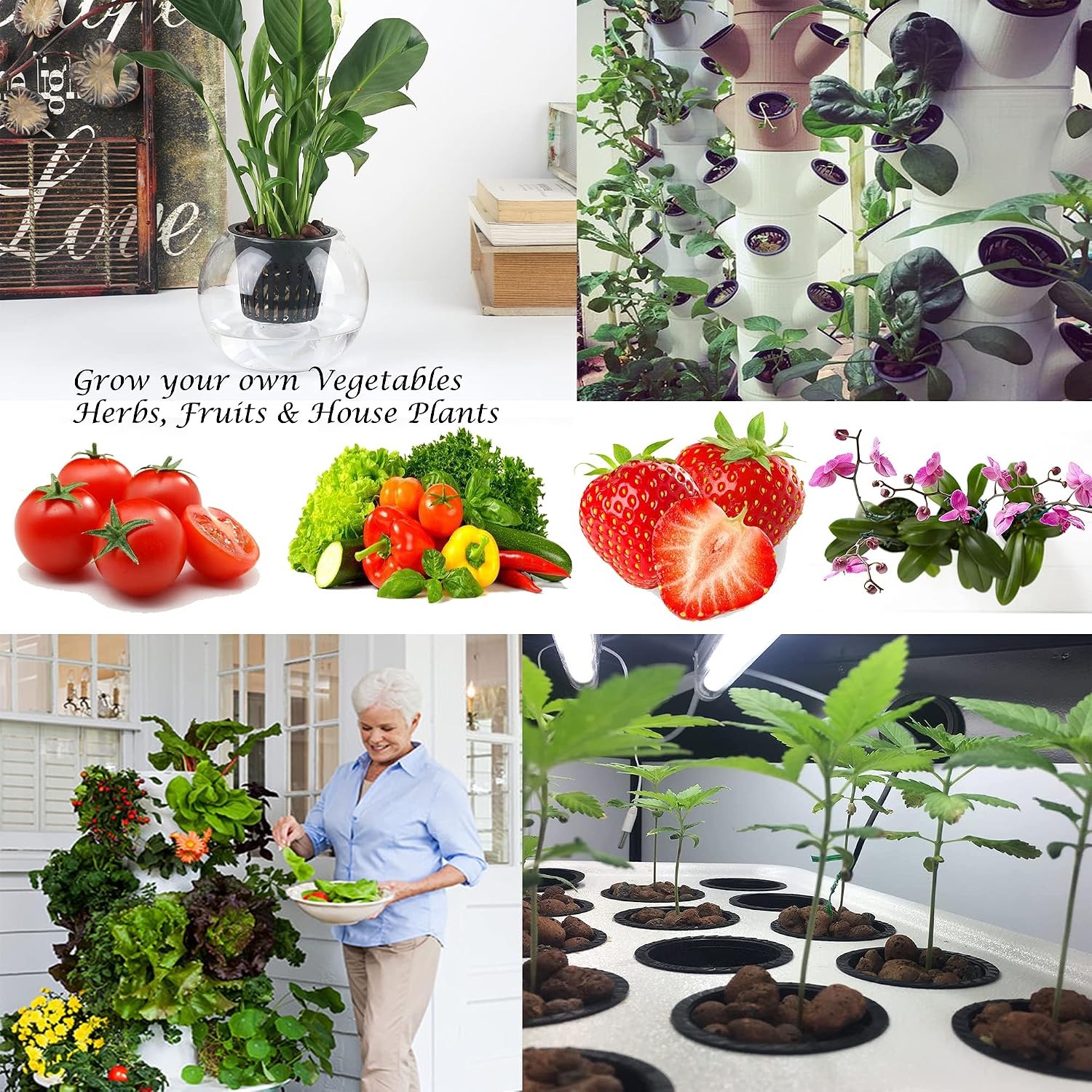
They also suit people short on outdoor room. A sunny window and a jar is all you need for a steady supply of basil or lettuce. Under a grow light in a spare room, you can run greens through winter without touching soil.
Orchid growers are a quiet second audience. Orchid roots evolved clinging to tree bark, exposed to air and rain. A slotted mesh cup filled with bark mix is much closer to that than a solid pot of potting mix. The open sides also let you see root color, which is the fastest way to tell if an orchid is happy.
If you already run a larger system, these work as spares. Aquaponics beds, PVC pipe builds, rain gutter systems, aeroponics frames, cloning trays and small tower gardens all take a standard 3 inch cup.
Choosing the right size and setup
Size follows plant. The 3 inch cup is the middle of the range and the most generally useful. It fits lettuce, spinach, arugula, basil, parsley, chives, mint, oregano, thyme, sage, cilantro and strawberries comfortably. Tomatoes and peppers will start in one happily, though they will want a bigger reservoir and more root room as they mature.
Smaller 2 inch cups suit dense plantings of seedlings and microgreens. Larger 4 inch cups suit big fruiting plants or anything you plan to keep for a long run. If you are unsure, 3 inch is the safe first buy.
Growing media matters just as much as cup size. Clay pebbles are the common choice, cheap, reusable and easy to rinse. Rockwool cubes are good for seed starting and clones. Coco coir chunks, perlite and bark all work. Plain fine potting soil does not, since it washes out through the slots. If you really want to use soil, line the cup first with coir or a paper filter.
Then think about your reservoir. Passive kratky grows need no pump at all, since the water level drops as the plant drinks and leaves an air gap for the roots. Deep water culture needs an air stone and pump to keep the solution oxygenated. Both work with the same cup. One is simpler, the other grows faster.
Spacing trips up more new growers than anything else. Crowded lettuce stays small and stringy. Give leafy greens about a hand width between cups and give fruiting plants a container each.
Keeping them in good shape
The cups are built to be reused, which is most of the value in buying a pack of 12. After a harvest, pull the root mass out, rinse the cup in warm water and run a soft brush through the slots. Root hairs and a thin film of algae are normal and come off easily.
For anything stubborn, a mild dish soap wash or a soak in diluted vinegar will do it. Rinse properly afterwards and let them air dry before stacking them away. Skip the dishwasher and skip boiling water, since heat can warp thin plastic and distort the lip that holds the cup in place.
The wick cord lasts longest when it dries out between uses. Trim frayed ends with scissors. The labels wipe clean if you write in pencil or a garden marker, so you can reuse them each season rather than buying more.
One habit worth building is covering your reservoir. Algae grows wherever light touches nutrient water. An opaque lid, a wrap of dark tape or a simple cloth cover cuts the problem down to almost nothing, and it keeps your cups cleaner between grows too.
The short version
Net cups are a small piece of plastic that solve a real problem. They give roots water and air at once, which is something a solid pot cannot do. This pack gives you 12 in the common 3 inch size, plus wick cord for passive watering and labels so you remember what you planted.
They fit mason jars, buckets, rafts, grow beds and gutter systems. They suit herbs, leafy greens, strawberries and orchids especially well. They rinse out and go again.
If you have been meaning to try hydroponics but did not want to spend much finding out whether you like it, a pack of net cups and a jar is about the cheapest honest start there is.