
The complete guide
How to Choose and Use Indoor Grow Lights That Actually Help Your Plants
The problem nobody warns you about
You buy a plant. It looks great for a month. Then the new leaves come in smaller than the old ones, the stems stretch toward the window like they are reaching for a bus, and the whole thing starts leaning. You water more. That makes it worse. You move it closer to the glass, which helps a little, until the clocks change and the afternoon goes gray at four.
Light is usually the culprit, and our eyes are terrible at judging it. Human vision adjusts so smoothly that a room feeling perfectly bright to you can be delivering a fraction of what a plant would get standing in open shade outside. Plants do not adjust. They just respond, slowly, with weak growth.
A grow light is the straightforward answer. Not a fancy horticultural rig with ballasts and reflectors, just a small LED fixture you can point at the plant and leave on a schedule. That is what this kit is.
What this light actually does
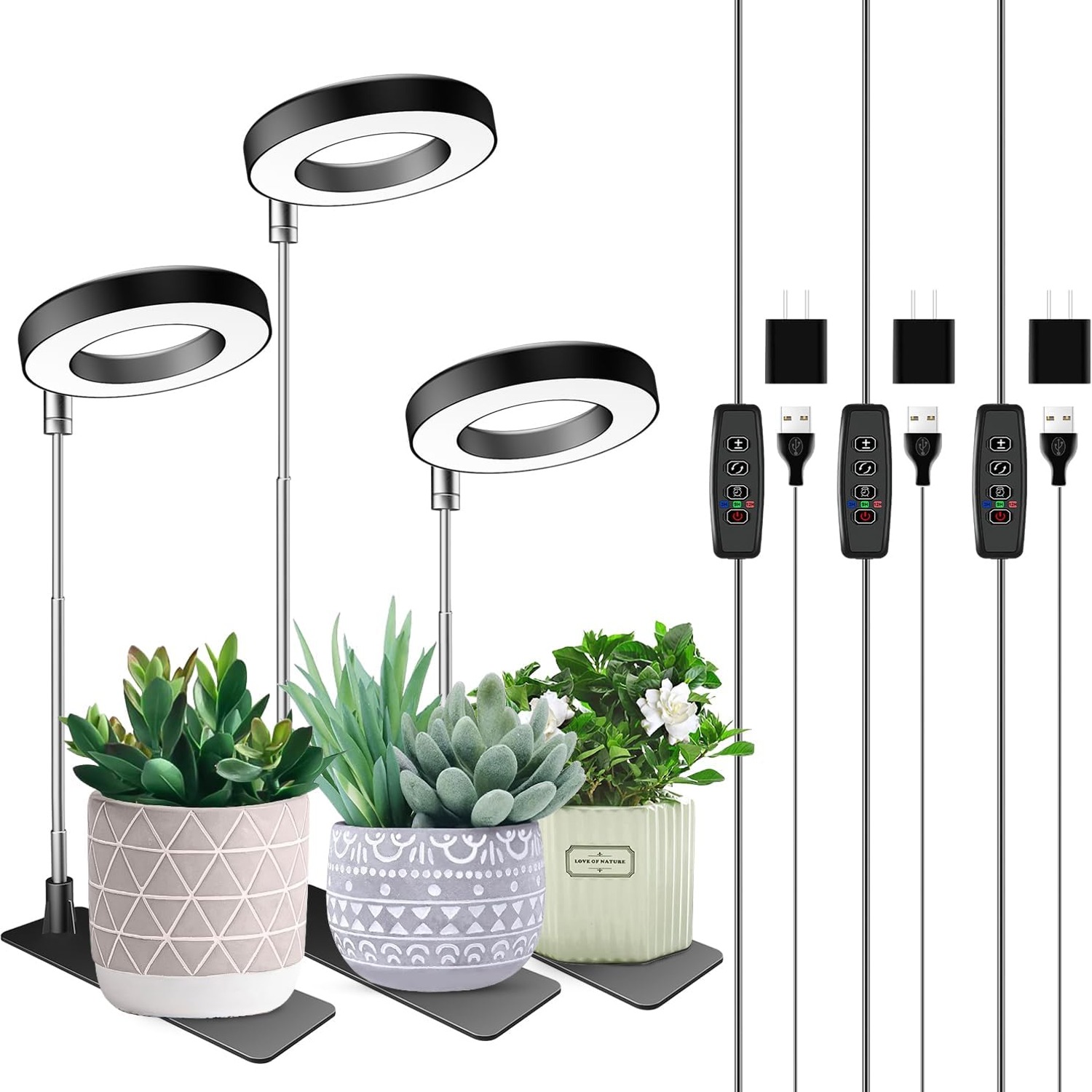
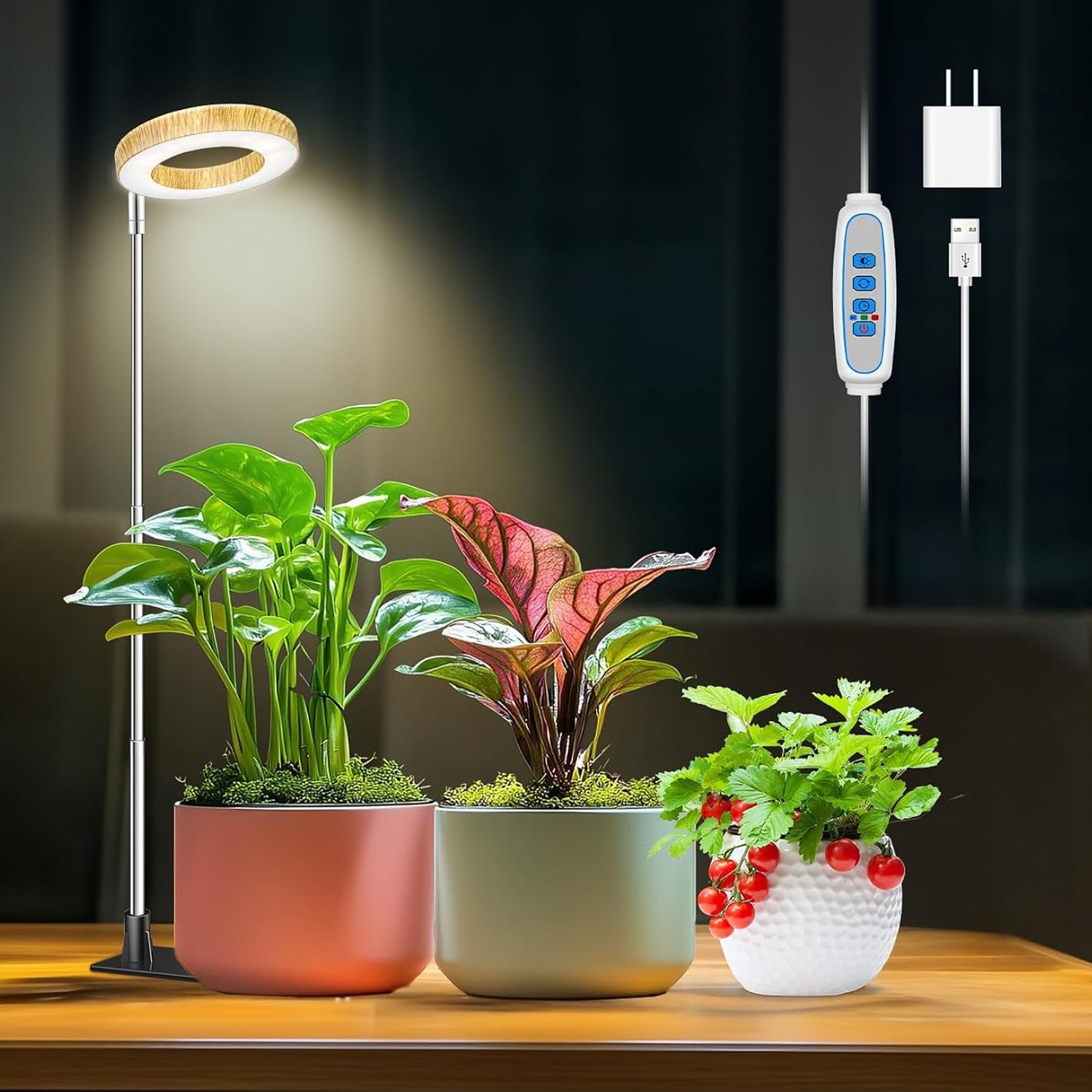
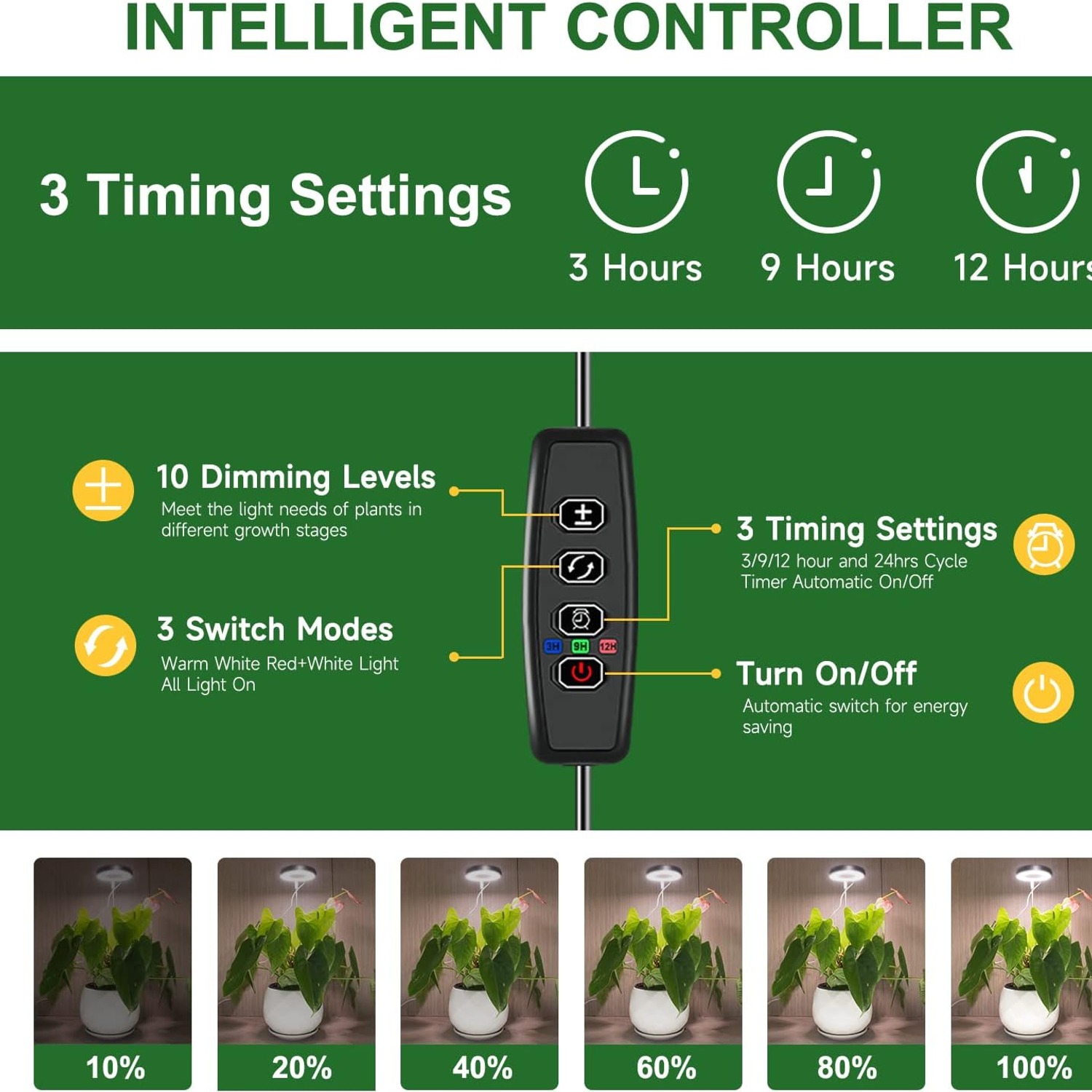
Each of the three lamps carries 48 LEDs set into a round halo. The listed spectrum runs 380nm to 800nm, which spans the blue end that keeps growth compact through the red end that supports flowering. You can select between three modes. White light on its own looks clean in a living room and suits leafy plants. Warm white mixed with red is the setting most people choose when they want a plant to bud or fruit. All LEDs on gives the strongest output for plants that are visibly struggling.
Over the top of those modes sit ten brightness steps, controlled by touch. That range is more useful than it first appears. A tray of seedlings wants gentle, close light. A mature rubber plant in a dim corner wants as much as you can give it. One fixture handling both is the difference between buying one thing and buying two.
The timer is the part that turns a lamp into a routine. Choose 3, 9 or 12 hours, and the light repeats that cycle every day for as long as the adapter stays powered. You stop thinking about it. The only catch worth remembering is that a power interruption clears the setting, so if the outlet gets switched off, set the mode again.
Setting it up in two minutes
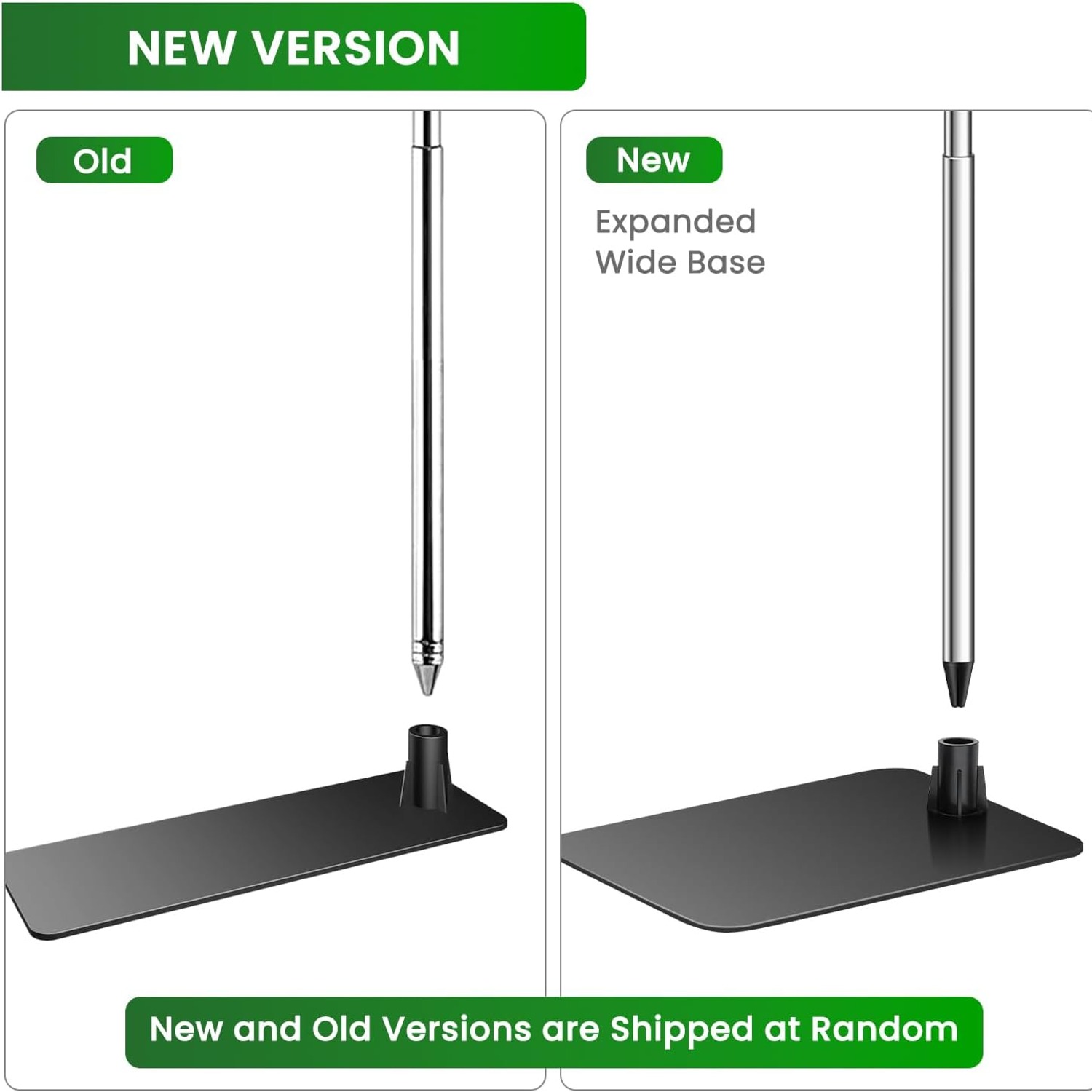
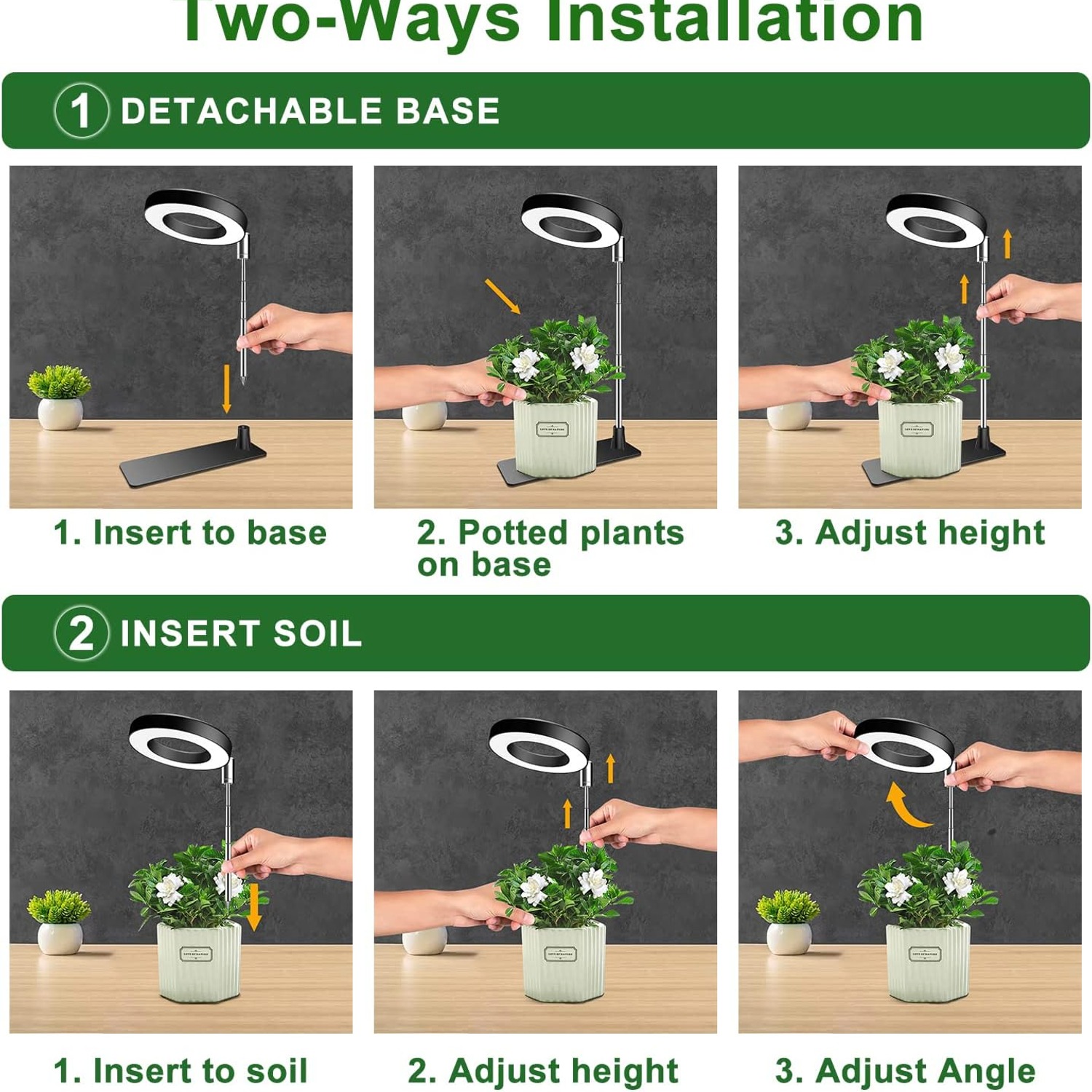
There are two ways to mount it. The simplest is to push the pole directly into the soil of the pot. That suits a single plant on a windowsill or a desk, and there is nothing extra sitting on the surface.
The second way uses the included ABS base. The pole slots into the base, and the plant pot sits on top of the base. The weight of the pot is what holds everything steady, so this works best with a reasonably heavy planter rather than a light plastic nursery pot. Left bare with the pole extended, the base is not especially stable, so treat the pot as part of the setup rather than optional.
From there, set the height. The pole telescopes from 6.5 inches up to 26 inches, and the arm rotates 90 degrees. That rotation is quietly handy on a crowded shelf, because it lets you stand the pole beside a plant and angle the halo across rather than hovering directly overhead.
Who this suits
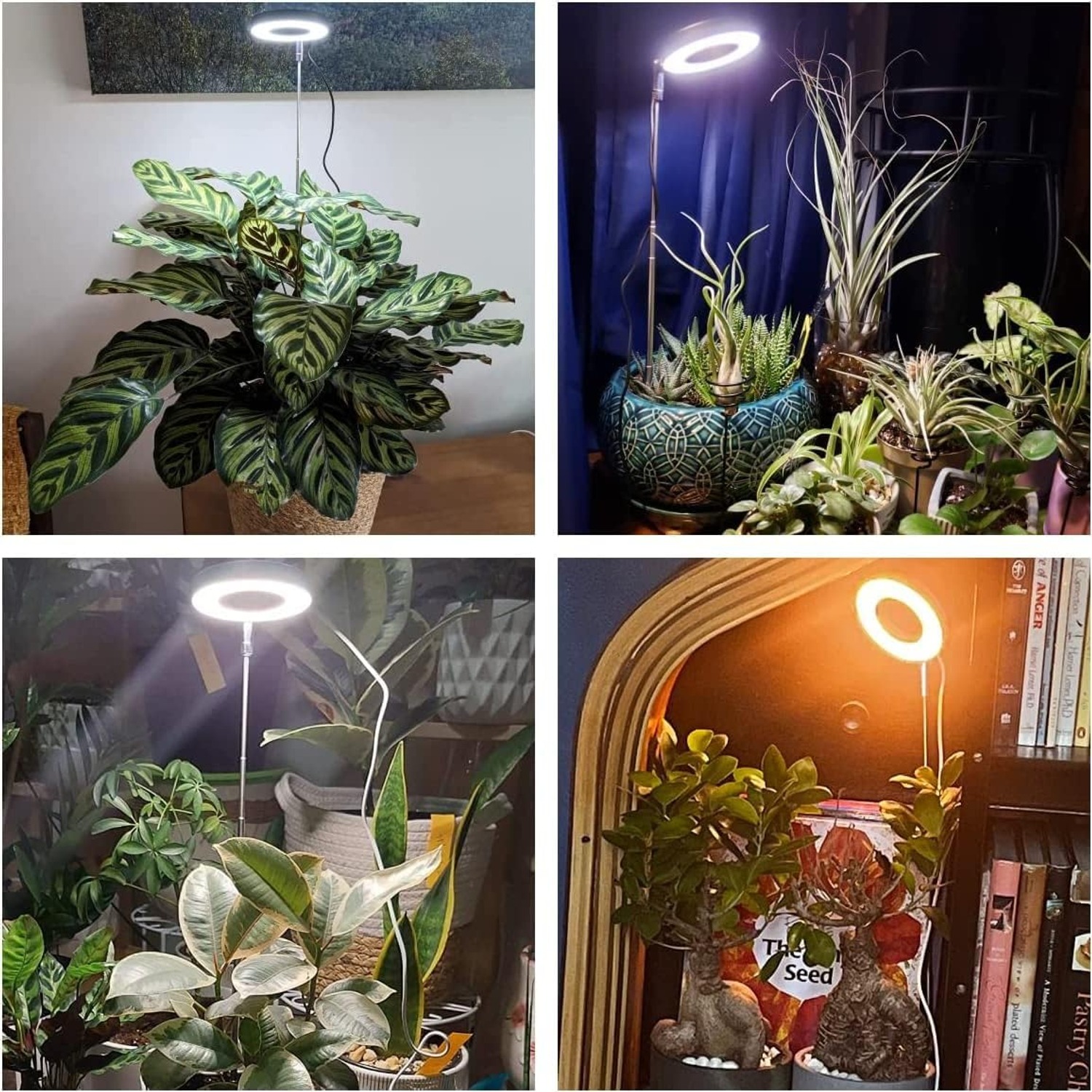
Apartment growers get the most out of it. If your windows face the wrong way or a neighbouring building eats your afternoon sun, a few small lamps change what you can keep alive. People looking for the best plant light for apartments usually want something that does not look like lab equipment, and a slim black halo on a pole passes as a desk lamp.
It also fits anyone starting seeds indoors in late winter. Seedlings stretch fast under weak light and never fully recover from it. Having the head low and dimmed, then raising it week by week, prevents that.
Office desks are the third common case. A pothos or a small ZZ plant on a desk with no window within reach will survive for a while and then quietly decline. One of these lamps, run on the 9 hour cycle during work hours, holds it steady.
Where it is less suited: large floor specimens over a meter and a half tall, dense plant walls, or anyone trying to light a whole rack from one fixture. The 3.4 inch head is a focused light, not a canopy. Those jobs want a bar fixture or several of these spread out.
How to choose between modes and heights
Start with distance. A hand span to a forearm length above the foliage covers most houseplants. If leaves start looking bleached or washed out at the top, raise the lamp or drop a couple of brightness levels. If stems keep stretching and leaves stay small, do the opposite.
Then pick a cycle. Through the darkest months, 12 hours a day works for most foliage plants. As natural daylight improves, step down to 9. The 3 hour setting is a top up for a plant that already sits in decent light but needs a nudge.
Mode choice is simpler than it sounds. Leafy plant, white. Something you want flowers or fruit from, warm white with red. Plant in real trouble, everything on until it recovers.
One habit worth building: turn the pot a quarter turn every week or so. Even with good light, growth leans toward the strongest source, and rotating keeps the shape even.
Care and the practical details
These are indoor lamps and they are not water resistant. That is the single most important line in the manual. When you water, move the pot or water carefully away from the fixture, and never mist toward the halo. Spray and electronics are a bad pairing.
Cleaning is easy. Unplug first, wipe the halo and pole with a dry or just-damp cloth, then dry it. Dust on an LED cuts output more than people expect, so a wipe every month or two is worth doing.
Each lamp runs from its own 5V adapter at 10 watts, so three of them together draw very little and share a power board happily. The supplier note is worth remembering too: if a light suddenly stops working, swap the adapter before assuming the lamp has failed, since the adapter is the usual weak point on low voltage fixtures. The product record lists a 12 month manufacturer warranty.
Keep cords tidy and out of walking paths, especially with floor planters. And if you are on a switched outlet, label it, because every time it gets flicked off you will be resetting the timer.
The short version
If you have plants that look tired in winter, or a room with no usable window, this three pack solves the problem without turning your living room into a grow tent. You get three complete lamps, each with 48 full spectrum LEDs, ten brightness steps, three spectrum modes and a daily timer at 3, 9 or 12 hours. The pole runs from 6.5 to 26 inches and rotates, so the same lamp handles a seedling tray in February and a leggy pothos in July.
Mount it in the soil or on the base with the pot holding it down. Keep it dry. Set a cycle and leave it alone. Plants respond to consistency more than anything else, and a timer is far better at consistency than any of us are.